
By A O News Service
BALASORE, July 08: This 14th century-old township wears a new look thanks to Balasore Municipality Council (BMC) for engaging women to keep the city clean and hygienic under Swacch Bharat Abhiyan.
The BMC now spread in an area of 17.48 sqkm divided into 32 wards and 28 revenue villages having total population of 1,18,162 as per 2011 census. While 1,77,751 people (90,773 males and 86,978 females) live in urban areas but its periphery has been witnessing mushroom growth of industries giving speedy rise to population.
Toeing the 17th century proverb ‘cleanliness is next to godliness’ (purity in mind and personal hygiene), the BMC has engaged only two males and 64 women, two for each ward, who right from early morning begin their cleanliness drive.
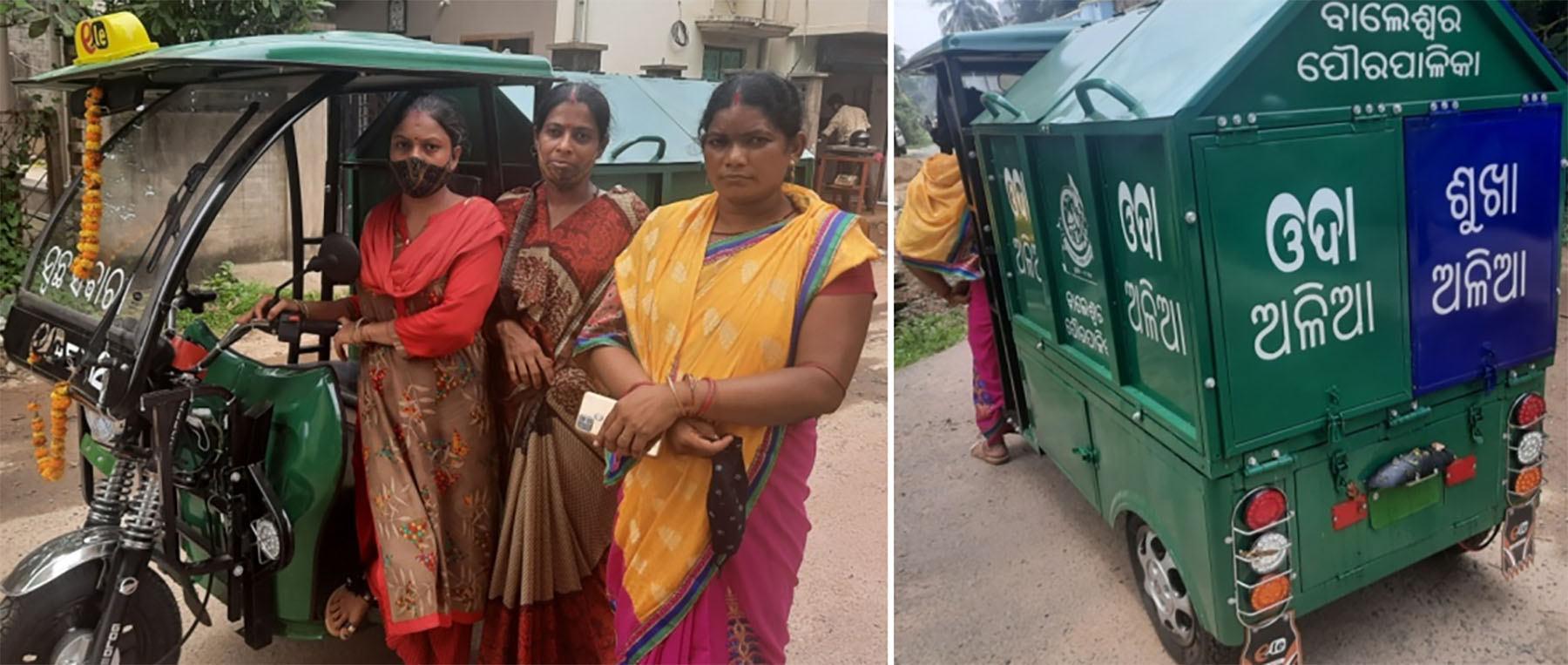
The siren of an auto rickshaw driven by Sashmita Giri rings every morning to alert residents of ward 23 to deposit their garbage. Giri assisted by Rashmita Behera and Damayanti Pandit collects the garbage regularly and deposit in Chandmaripadia ground for converting into manure by a processing plant.
However, Giri given driving training recently is the lone auto rickshaw driver while rest women are sweepers. But surprisingly, the BMC pays only Rs 6,000 pm to her and Rs 2,000 to the sweepers.
The minimum daily wage rates under the Minimum Wages Act, 1948 in India for cleaning and sweeping are Rs 645, Rs 539 and Rs 431 daily for A, B and C category respectively. This means, the wages should be Rs 19,350, Rs 16,170 and Rs 12,930 respectively.
Since labour is a concurrent subject under the Indian Constitution, minimum wage rates are determined both by the Central and state Govts and declared at the national, state, sectoral and skill/occupational levels. The centuries old BMC, set up in 1876 and headed by elected representatives now must be aware of these rules and should rise to the occasion to grant justice to the labourers.
Parliament in 2020 combined 25 labour laws into three codes, i.e., the social security code, industrial relations code and occupational safety code, health and working conditions. The code on wages, enacted in 2019, also amalgamated four relevant labour laws. Four new labour codes were supposed to be effective from 01.04.21. But considering the rise in COVID cases and potential impact of the new Codes on per employee costs for enterprises, the Govt has delayed implementation of new codes. The central and state Govts are yet to notify the rules. Once implemented, the daily wages of labourers are bound to rise.


 20
