
- Beijing needs to learn India history
By Pradeep Kumar
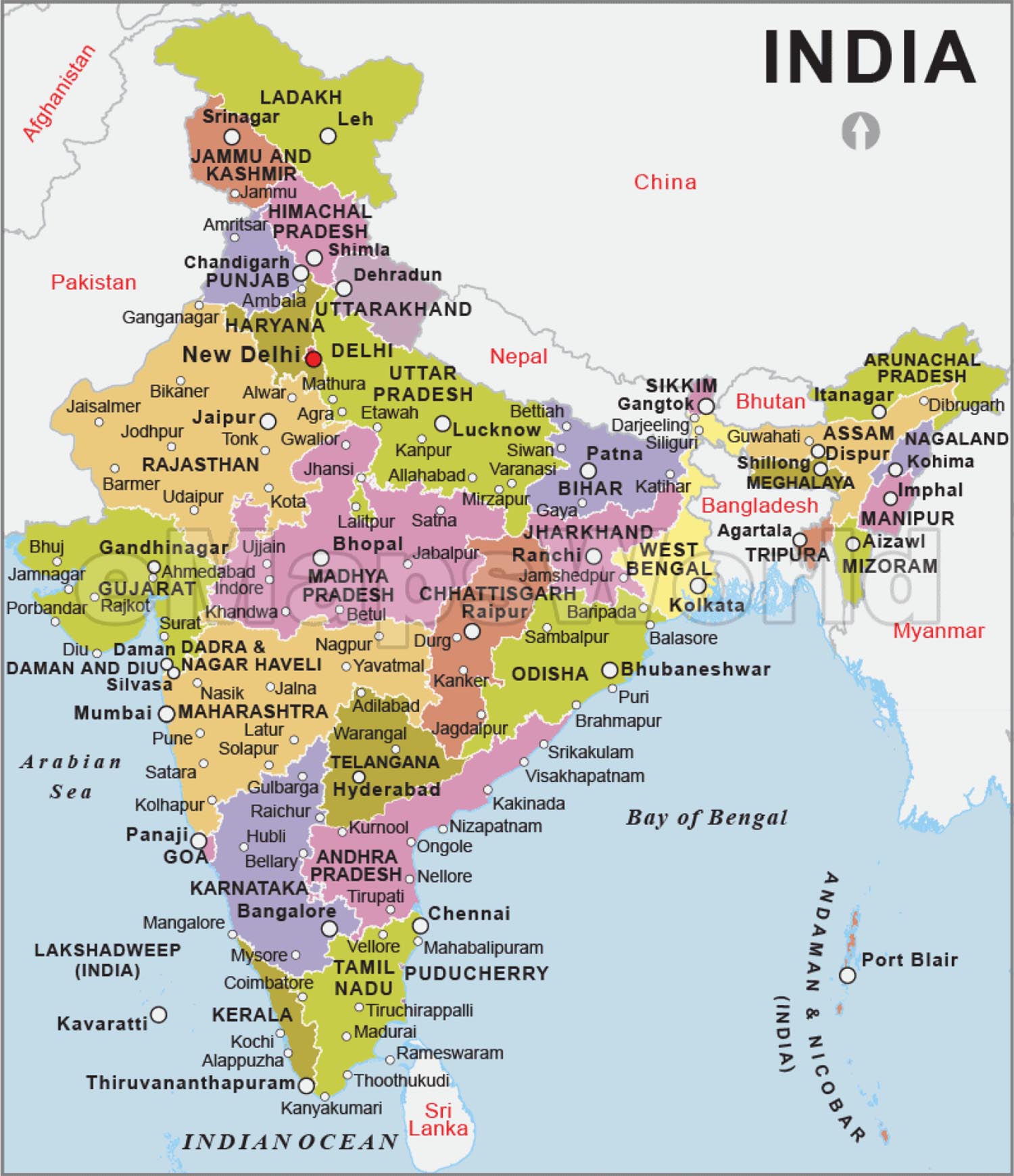
China or People’s Republic of China (PRC) has been claiming Arunachal Pradesh, particularly Tawang Monastery as its territory by adopting its ‘dog tail’ policy for India.
Interestingly, Tawang Monastery was founded by Merak Lama Lodre Gyatso in 1681 to honour the wishes of 5th Dalai Lama Ngawang Lobsang Gyatso while 6th Dalai Lama Tsangyang Gyatso was born in Tawang.
The 1914 Simla Accord demarcated the McMahon Line as new boundary between British India and Tibet. Tibet by this treaty relinquished several hundred square miles of its territory, including Tawang to the British, but it was not recognized by China (reason being only known to them).
After the outbreak of the war with Japan in 1941, the British undertook number of ‘forward policy’ measures to tighten its hold over the North East Frontier Agency (NEFA) area, which later became Arunachal Pradesh. The situation changed after India’s independence in 1947 but the PRC in 1950 seceded Tibet which lost its de facto independence.
But, Chinese Army (PLA) had aggressed into Indian Territory on 20.10.1962 through Tawang, which was under Chinese control till the end of the war (known as Chinese Aggression) on 21.11.962.China voluntarily withdrew its troops and Tawang again came under Indian administration
Why China still continues to claim Arunachal Pradesh, including Tawang as its territory is intriguing for none one speaks in Chinese language (Mandarin) in any part of Arunachal.
In fact, China became People’s Republic of China (PRC) on 01.10.1949 while Bharat became Republic of India on 15.08.1947, to become the second most populous democracy of the world. Modern humans had arrived on Indian subcontinent from Africa no later than 55,000 years ago. The basin of 9,000 years ago evolving gradually into the Indus Valley Civilization of third millennium BCE is glittering example of birth and growth of Hindustan, which gave birth to four religions – Hinduism, Buddhism, Jainism and Sikhism. By 1200 BCE, Sanskrit, an Indo-European language, had diffused into India from the northwest, unfolding as the language of Rigveda, and recording the dawning of Hinduism in India.
Thus, the rich ethnicity and uncounted languages made India the symbol of ‘Unity in diversity’. India adopted federal republic since 1950 to be governed by democratic parliamentary system. Vital to India’s self-image as an independent nation is its constitution, which put in place a secular and democratic republic. It has remained a democracy with civil liberties, an active Supreme Court, and a largely independent press. India’s sustained democratic freedoms are unique among world’s newer nations.
India is a federal union comprising 28 states and 8 UTs which are governed by democratically elected Govts. However, North-East Frontier Agency (NEFA), originally known as North-East Frontier Tracts, one of the political divisions of British India and later of Republic of India till 20.01.1972, when it became Union Territory rechristened as Arunachal Pradesh. Its capital was Shillong till 1974 before shifted to Naharlagaun, but it gained full-fledged statehood on 20.02.1987.
Tawang was part of Tibet until the British lopped it off from that country through the 1914 Shimla Accord that was never accepted by China. Even after Sir Henry McMahon demarcated the boundary between Tibet and British India, making Tawang a part of India, no attempt was made to administer Tawang until April 1938. For more than three years after Independence, Delhi did not establish its authority over Tawang. In end-1950, then Assam governor sent to Tawang a team of officials led by NEFA assistant political officer Major Ralengnao Bob Khating. Pema Gombu of Lhou village near Tawang, who guided this team, in his memoirs writes: Indian tri-colour flew in Tawang in early 1951 for the first time.
However, NEFA’s Pradesh Council was converted to a Provincial Legislative Assembly on 15.08.1975, when Arunachal Pradesh graduated to parliamentary democracy with installation of P K Thungon-led Janata Party Govt. on 14.03.1978 after first general election to 30-member house of the UT conducted on 25.02.78. While Arunachal Pradesh got a seat in Rajya Sabha in 1972, elections to two Lok Sabha seats are conducted since 1977 as per state’s political records.
Is Beijing not aware of India’s political history? If yes, claiming Arunachal Pradesh or any part of it would be foolishness. If a dog’s curled tail remains so till its death, how prudent it would be to expect China to change its ‘dog tail’ policy for India?


 20
