
Beyond the Horizon
By Pradeep Kumar
Each country has its laws, rules and regulations for its daily affairs. In many countries, even a small mistake is punished severely as per their laws. But cleanliness in public places is one of the top priorities of Singapore Govt. To ensure the cleanliness of public toilets, a heavy fine is imposed on people who do not flush after using the toilet. Sometimes, harsh punishment is also awarded to such people to teach them a lesson of cleanliness.
Singapore, a colourful country, well known for its cleanliness, and if someone doesn’t flush the toilet after using it, he/she is asked to pay a fine of over $150, (about Rs 8000). The person could be sent to jail for failure to pay the fine. The reason for such strict measures is to make everyone take cleanliness seriously. Tourists, who visit the country, are advised not to forget to flush.
The tourists and travelers are advised to always find out local traditions and laws before visiting any place. A person can be fined for spitting, roaming around naked and connecting to an unsecured Wi-Fi in Singapore. It is also illegal to sell chewing gum in Singapore but chewing gum with certain medical properties can be sold as per medical prescription. It is also illegal to irritate someone by playing a musical instrument. Influencing traffic by flying kites also attracts punishment in the country. Putting out the leftover food to pigeons can also be fined. Graffiti art is also banned on the walls and urinating in public places can also attract fines in Singapore.
Singapore or Republic of Singapore, an island city-state in maritime Southeast Asia, spread in a main island, 63 satellite islands & islets and an outlying islet in 699.1 sqkm, was founded in 1819 by Sir Stamford Raffles as a trading post of British Empire. Japan occupied it during World War-II in 1942 but returned to British in 1945 but it remained a British colony until 1959, when it joined with Malay, Sarawak and Sarban to form Federation of Malaysia, but became an independent nation on 09.08.1965. It boasts of per capita GDP of $65,641 (2019) with an annual growth rate of 1.56%. (Singapore dollar=Rs. 54.69 now).
Responsible citizenry imbibed with the spirit of speed, strict adherence to civic laws and sincerity of purposes has made Singapore one of the world’s wealthiest nations and a major center of manufacturing, banking and commerce within 40 years of its independence, as after visiting, I had written on 25.11.06: 3S hold key to Singapore success.
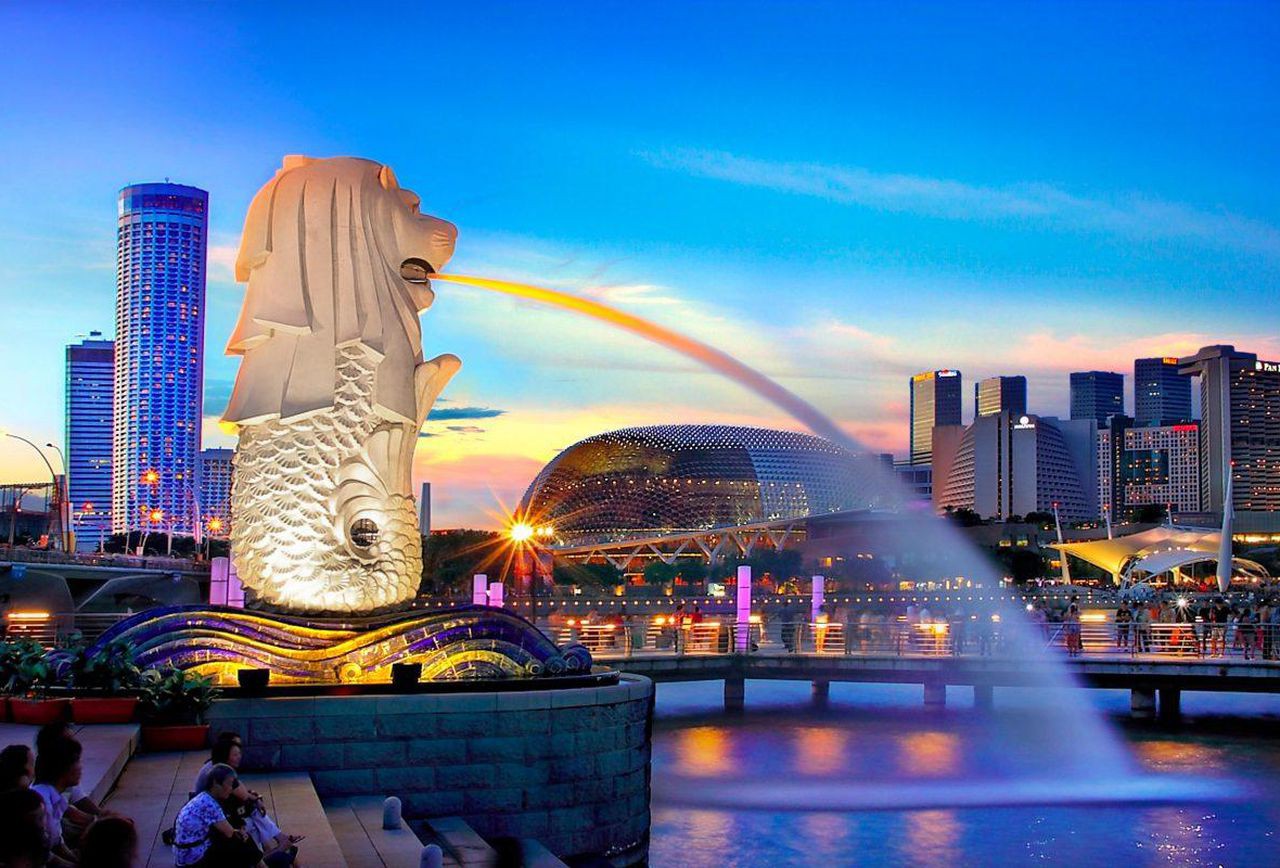
Unique is the world that best captures Singapore, a dynamic city and bridge between the East and West for centuries. Located in the heart of Southeast Asia, it continues to embrace tradition and modernity today. Brimming with unbridled energy and bustling with exciting events, the port city offered countless unique and memorable experiences.
Singapore, a friendly country, serves as a springboard for India’s economic growth because of people to people, culture to culture bilateral ties and broad-based policies for which 50,000 Indian professionals were working then. While Indians are not accustomed to civic sense and social discipline, but Singaporians’ unique sense of determination, commitment and hard work was reflected everywhere.
Despite no natural resources, it has flourished through its six harbours, industrial activities in electronics, chemicals, oil drilling, oil refining, rubber production besides banking and tourism. The port city links 123 countries through sea routes for its strategic location. Around 800 vessels arrive at each of the six ports daily and one vessel goes out of the port every three minute.
Strong political will facilitated the speedy and planned growth of Singapore. Judiciary and company laws are same like India, but cases are disposed off very fast. Crime rate is negligible, as every Singaporian male has to compulsorily serve in army for 2 ½ years within 18 years of age making them disciplined and law-abiding citizens. Singapore is the 3rd biggest oil refinery and 4th in Forex reserve in the world while its booming tourism industry recorded an all-time high of 13,97,512 persons in Aug 2019.
Despite years of turbulence and lack of natural resources, it developed rapidly to become one of the Four Asian Tigers based on external trade. It is ranked 9th on the UN Human Development Index and has 2nd highest per capita GDP in the world. Singapore is placed highly in key social indicators: education, healthcare, quality of life, personal safety, lowest infant mortality rate & longest life expectancy in the world, fastest internet connectivity and housing with a home-ownership rate of 91%.
Singapore, with a unitary parliamentary republic with a Westminster system of unicameral parliamentary Govt, is one of the five founding members of Asia-Pacific Economic Cooperation (ASEAN), where headquarters of Asia-Pacific Economic Cooperation (APEC) and Pacific Economic Cooperation Council are located. The island nation is a member of the United Nations; World Trade Organization; East-Asia Summit; Non-Aligned Movement & Commonwealth of Nations.
“We love our Majhula Singapura (onward Singapore), Singaporean tourist guide Lili of Asler Travel Services Pte Ltd had said before singing her national anthem, whose English translation is:
Majhula Singapura
Come, fellow Singaporians
Let us progress towards happiness together
May our noble aspiration bring
Singapore success
Come, let us unite
In a new spirit
Let our voices soar as one
Onward Singapore
Onward Singapore.


 20
