
By Pradeep Kumar
ITANAGAR, Oct 09: Lt Gen Sanjay Kulkarni (Retd), who had served in Tawang sector as commanding officer and brigade commander, cautioned that Chinese are unpredictable for which India should always remain prepared.
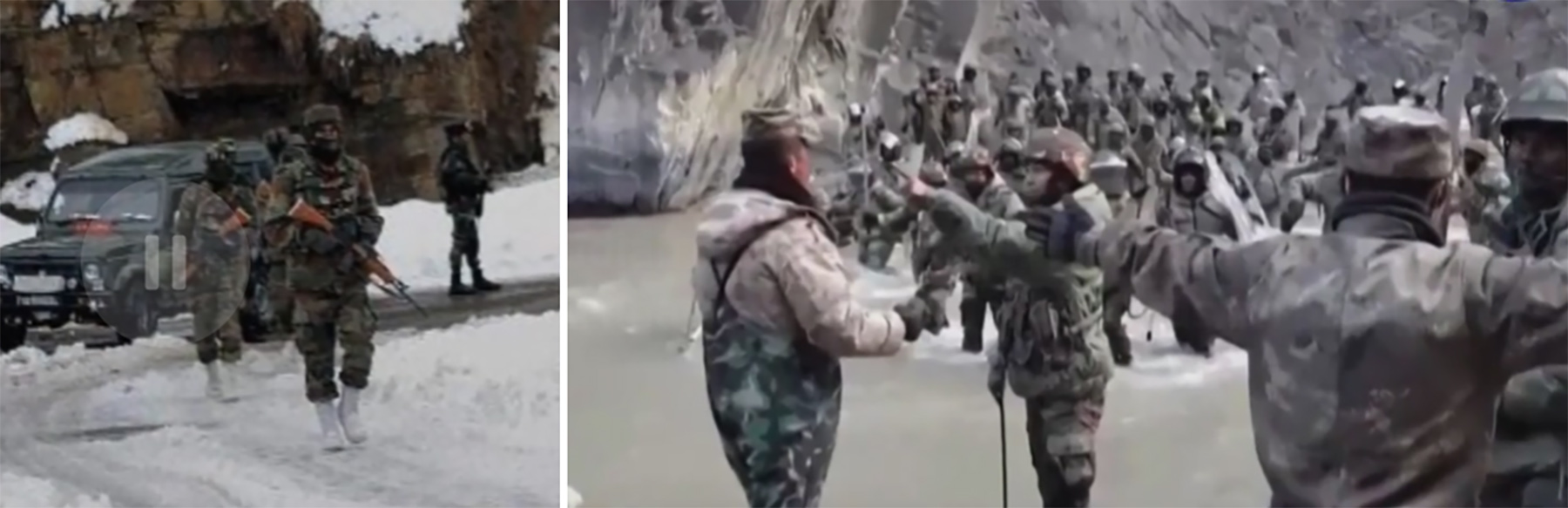
He was responding to questions during an exclusive interview by Amrita N Dutta of CNN News18.com on Saturday with reference to few jawans of a PLA patrol party transgressing into Indian side of the LAC recently were temporarily detained when around 200 Chinese jawans crossed over into Indian side from Tibet and attempted to damage unoccupied bunkers.
The incident took place last week between the border pass of Bum La and Yangtse, close to the Line of Actual Control (LAC), according to highly placed government sources. Bum La Pass is 37-km away from Tawang, a strategically important town that has road connectivity up to Brahmaputra plains.
“Chinese have been doing it being guided by their line of perception which is different. Arunachal Pradesh, located along McMohan Line, agreed in 1914 which China disputed and has been claiming as its territory as part of south Tibet though strongly contested by India.
“They did it in 1999, in 2011 and 2016 at Bum La. Chinese and Indian troops engaged in aggressive melee, face-offs and skirmishes in Galwan River valley, including near disputed Pangong Lake in Ladakh and Tibet Autonomous Region since 5th May 2020and near Sikkim border,” he recalled, adding that is why the Govt of India has taken very bold steps to maintain peace and tranquility along the border.
“The ITBP is responsible for guarding the frontier in Arunachal. But, such skirmishes might continue unless something substantial comes up. Though 20 Indian soldiers were killed in Galwan incident, but 100s of PLA jawans transgressing into Indian Territory and the way China built infrastructures – roads, airports and villages, living accommodation for PLA jawans in Ladak -, within short time has wider implications.
“China’s actions are to pressurize India. It also eyes Tawang, an important seat in Tibetan Buddhism where 14th Dalai Lama had landed after escaping from Tibet in March 1959. Interestingly, Tawang, a populated town is inhabited by 95% of staunch Buddhists. The people, including children of Tawang or whole Arunachal Pradesh in general speak in fluent Hindi and taking part Indian Idol competition reflecting their integration with mainland India which contradicts China’s claim of Tawang as part of south Tibet”, he reasoned.
Former Prime Ministers Rajiv Gandhi and Narasimha Rao had visited China in 1988 and 1993 to boost bilateral relations with India, particularly solve the border dispute which means India has accepted that the border is disputed.
He recalled that in 1950 (on November 7), a month after China’s new communist regime invaded Tibet, then Deputy Prime Minister Sardar Vallabhbhai Patel had written to PM Jawaharlal Nehru, “The Chinese government has tried to delude us by professions of peaceful intention… They managed to instill into our Ambassador a false sense of confidence in their so called desire to settle the Tibetan problem by peaceful means… The action of the Chinese, in my judgment, is little short of perfidy.”
Patel’s letter described in detail the situation along the northern border of India and warned against the possibility of invasion and advised the Government of India to take action. In his letter, Patel also pointed out about the reality of the India-China relationship,“… even though we regard ourselves as friends of China, the Chinese do not regard us as their friends. With the Communist mentality of ‘whoever is not with them being against them’, this is a significant pointer, of which we have take due note,” wrote Patel.
When Amrita asked that China had intruded into Tawang during 1962 aggression and are they intending to do so? What would be China’s strategy in next winter?
Lt Gen Kulkarni said, “They had gone back from Tawang but still occupies Aksai Chin. They know in the heart of their hearts the status of Arunachal Pradesh as a state of India now. Though the officers behave very well during border personnel meetings, even at Bum La, but their hidden agenda is visible by their actions as suddenly they change their mind. I hope good sense prevails in Chinese mind. But, we must be fully prepared”.
Interestingly, Pravin Sawhney and Ghazala Wahab, in their book – Dragon on our doorstep- have written; “If Rajiv Gandhi’s 1988 China visit downgraded the border dispute, Prime Minister Narasimha Rao’s 1993 visit complicated the border resolution by adding an additional military line to the PLA’s advantage. Rao went back to the Nehru approach of minor territorial (sectoral) adjustments instead of a ‘package deal’ for border resolution. China responded by saying that the entire border should be called the line of Actual Control, without prejudice to the border positions of the two sides. China told India that with the LAC in place, troops could be withdrawn sector-wise instead of waiting for the entire LAC and border agreements. The agreed sectors could then have ‘mutual and equal security’ as agreed by the two sides. The hand of the PLA was evident in the Chinese offer, while India-much like during the Nehru years-did not consult its army while making its border policy”.


 20

