Ya devi sarva bhuteshu, shanti rupena sangsthita
Ya devi sarva bhuteshu, shakti rupena sangsthita
Ya devi sarva bhuteshu, matri rupena sangsthita
Yaa devi sarva bhuteshu, buddhi rupena sangsthita
Namastasyai, namastasyai, namastasyai, namo namaha!
By Pradeep Kumar
BALASORE, Oct 13: Devi Durga, a major deity in Hinudism, is worshipped as a principal aspect of mother goddess, one of the most popular and widely revered among Indian divinities as Durga is referred to as Durgatinashini, which means “the one who eliminates sufferings” and symbolizes victory of good over evil.
Devi Durga is the nurturer, caregiver, protector, and at times destroyer when necessary. Durga literally means “impassable, invincible, unassailable” or “fortress, difficult to pass”.
The hymn means:
The goddess who is omnipresent as the
personification of the universal mother,
The goddess who is omnipresent as the
embodiment of the power,
The goddess who is omnipresent
as the symbol of peace,
Oh, Goddess (Devi) who resides everywhere
in all living beings as intelligence and beauty,
I bow to her, I bow to her, I bow to her again & again.
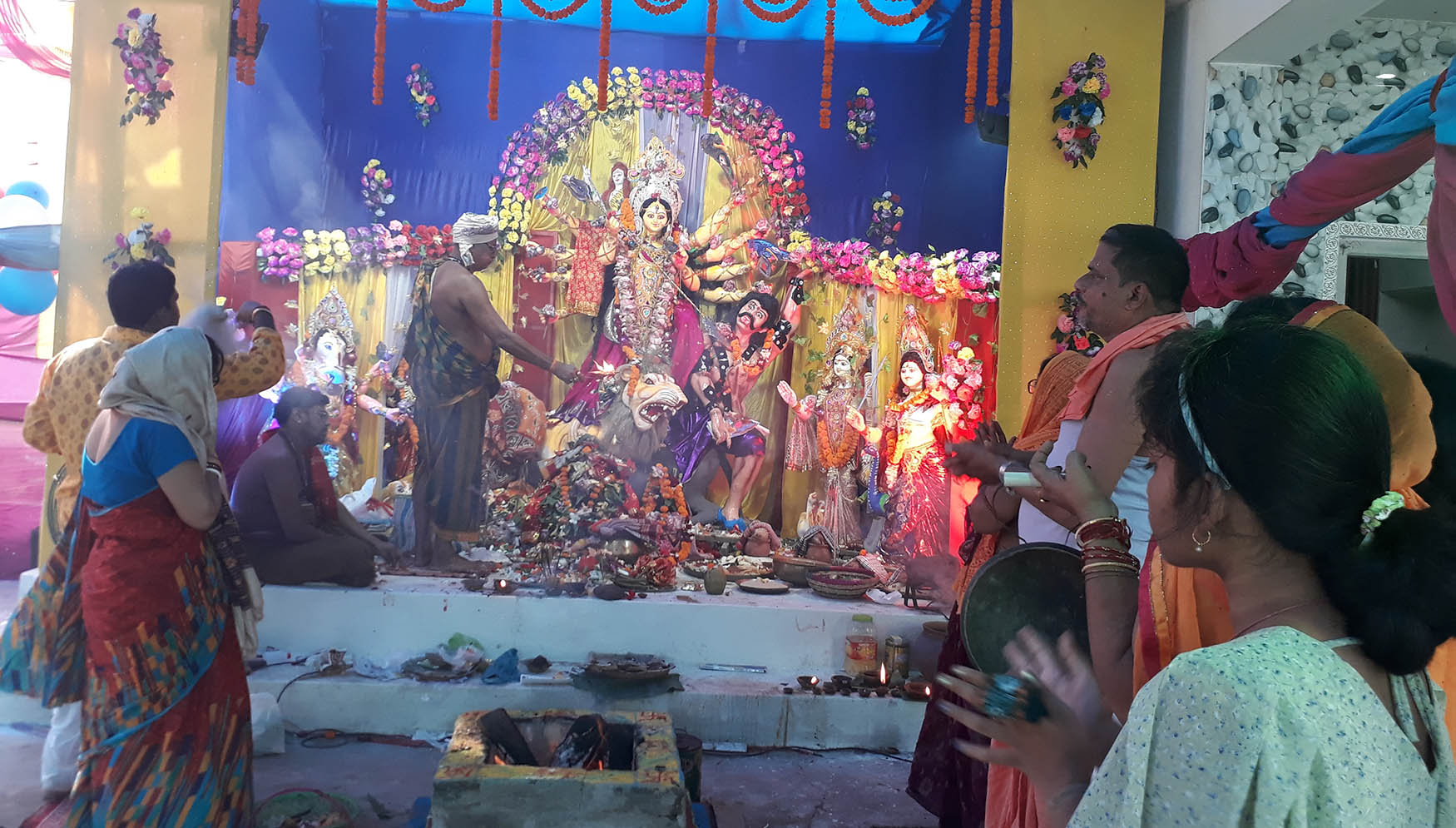
Like previous years, Dugra Puja begun at Visheswar Shiva Temple at Chnadmari Padida with Akshya Kumar Nanda as chief priest, begun on Oct 11 (Shashthi) and concluded on Oct 15 (Vijayadaśamī or Dussehra) when Devi departs for heaven.
Quoting Hindu scriptures, he said Devi Durga comes from heaven to earth on a vehicle and returns on another daily. Though she arrived on an elephant on October 11 and returned on an horse, but would arrive on a buffalo on Dashami (Oct 15) and return an elephant which is considered auspicious as it would bring plenty of rainfall for bumper harvesting in coming year, Hota added.
The temple committee headed by president Ranjan Kumar Bhoi & secretary Narendra Kumar Swain and puja committee president Akhila Ku Das & secretary Subrata Ku Dash had imposed strict restriction toeing standard operating procedure (SOPs) guidelines of Union MoHFW to contain spread of COVID-19. The entrance gate was locked while one after another worshiper only allowed to give offerings at another small entrance and burn incense sticks outside at a fixed platform.
According to Hindu mythology, Mahishasura (Mahisha–buffalo and asura–demon or Buffalo Demon) had waged war against the Devas. Mahishasura had gained the boon that no man could kill him and defeated Devas led by Indra. Thus, the Devas assembled in the mountains and combined divine energies coalesced into Goddess Durga, who riding a lion fought the battle killed Mahishasura to be named as Mahishasuramardini.
Devi’s legend centers around combating evils and demonic forces that threaten peace, prosperity, and Dharma, the power of good over evil. Durga is believed to unleash her divine wrath against the wicked to liberate the oppressed and entails destruction to empower creation. Historians of religion and art trace the earliest depiction of Durga to seals of Indus Valley Civilization. There are several indications about her in early Vedic texts and she emerges as an independent deity. Reference of Devi first appeared in 10th Mandela of Rig Veda.
Mahishasura’s legend is found in major texts of Shaktism traditions known as Devi Mahatmya, which is part of Markandeya Purana. While Vishnu Purana dates it back to approximately 1.3 billion years ago according to Maharishi Medha. Two most important texts of Shaktism – Devi Mahatmya and Devi-Bhagavata Purana – revere Devi or Shakti as primordial creator of the universe and the Brahman (ultimate truth and reality). The Devi Mahatmya is considered to be as important a scripture as Bhagavad Gita.
According to Christopher Fuller, Mahishasura represents the forces of ignorance & chaos hidden by outer appearances. The symbolism is found in Hindu art in South Asia and South-East Asia (Javanese art), where Durga is shown as a serene, calm, collected and graceful symbol of good as she pierces the heart and kills scared, overwhelmed & outwitted Mahishasura. Artwork depicting the goddess Durga slaying the buffalo demon Mahishasura is found all over India, Nepal and Southeast Asia, particularly Uttar Pradesh, Kashmir, Karnataka & Prambanan Indonesia. The temple of Mysore city’s guardian deity, Chamundeshwari, has a giant statue of Mahishasura. The earliest mention of Mysore in recorded history traced to Ashoka’s period (245 B.C.) when on conclusion of 3rd Buddhist convocation, a team was dispatched to Mahisha Mandala.
According to Hindu legends, Durga is created by the gods to defeat the demon Mahishasura, who could be only killed by a female. Durga is seen as a motherly figure and often depicted as a beautiful woman, riding a lion, with many arms each carrying a weapon and often defeating demons. She is widely worshipped by the followers of Shaktism and has importance in other denominations like Shaivism and Vaishnavism.
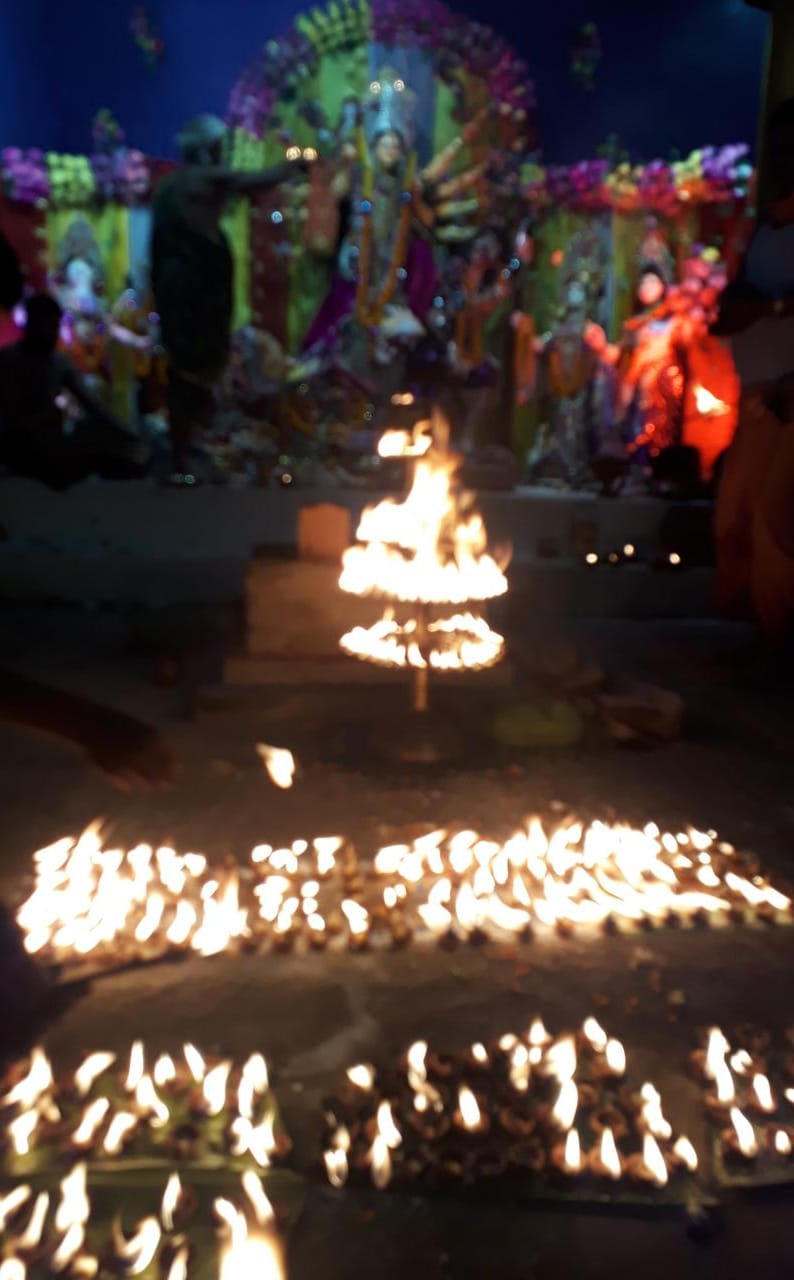
Devi Durga is worshipped all over India, particularly in West Bengal, Odisha, Jharkhand, Assam & Bihar during Durga Puja and nine-day Navratri festivals. The festival of Navratri is dedicated to nine forms of Goddess Durga, namely Shailaputri, Brahmacharini, Chandraghanta, Kushmanda, Skanda Mata, Katyayani, Kalaratri, Mahagauri and Siddhidatri. The eighth day, called Ashtami or Maha Ashtami, when devotees worship Goddess Mahagauri, fell on October 13 when 108 earthen lamps are lit during the aarti to appease the goddess and seek her blessings.
Greetings:
“Goddess Durga is a symbol of power and is also a divine form of nari shakti. Durga Puja is the celebration of the victory of good over evil,” Presidnet Ram Nath Kovind said and extended his greetings and best wishes to his fellow citizens living both in India and abroad.
“Dussehra signifies the supremacy of truth over evil,” Arunachal Pradesh Governor Brig. (Retd) B. D. Mishra said in his greeting to the people hoped that the festivity would ushers in peace, prosperity and amity in the state.


 20