
Media is a change agent for the society, said editor of this daily Pradeep Kumar Behera, while virtually addressing students and few faculty members of mass communication department of Rajiv Gandhi University on Monday.
Speaking on “Growth & development of media in NE with special reference to Arunachal Pradesh”, as part of four-day orientation special lecture series for first semester PG students, he highlighted chronological growth of print media right from Hicky’s Bengal Gazette or Original Calcutta General Advertiser, first English weekly published in Indian sub-continent from British India’s capital Calcutta on 29.01.1780 by James Augustus Hickey; Calcutta Journal by James Silk Buckingham till 1823; Miratul-Akhbar and Bengali weekly Sambad Kaumudi by Raja Ram Mohan Roy from Kolkata since 04.12.1821 while Bengali weekly Samachar Darpan, published by Baptist Missionary Society from Baptist Mission Press at Serampore in 1818 was 1st Indian-language newspaper and The Assam Tribune, published as a weekly from Dibrugarh since 04.08.1939 as NE India’s 1st newspaper.
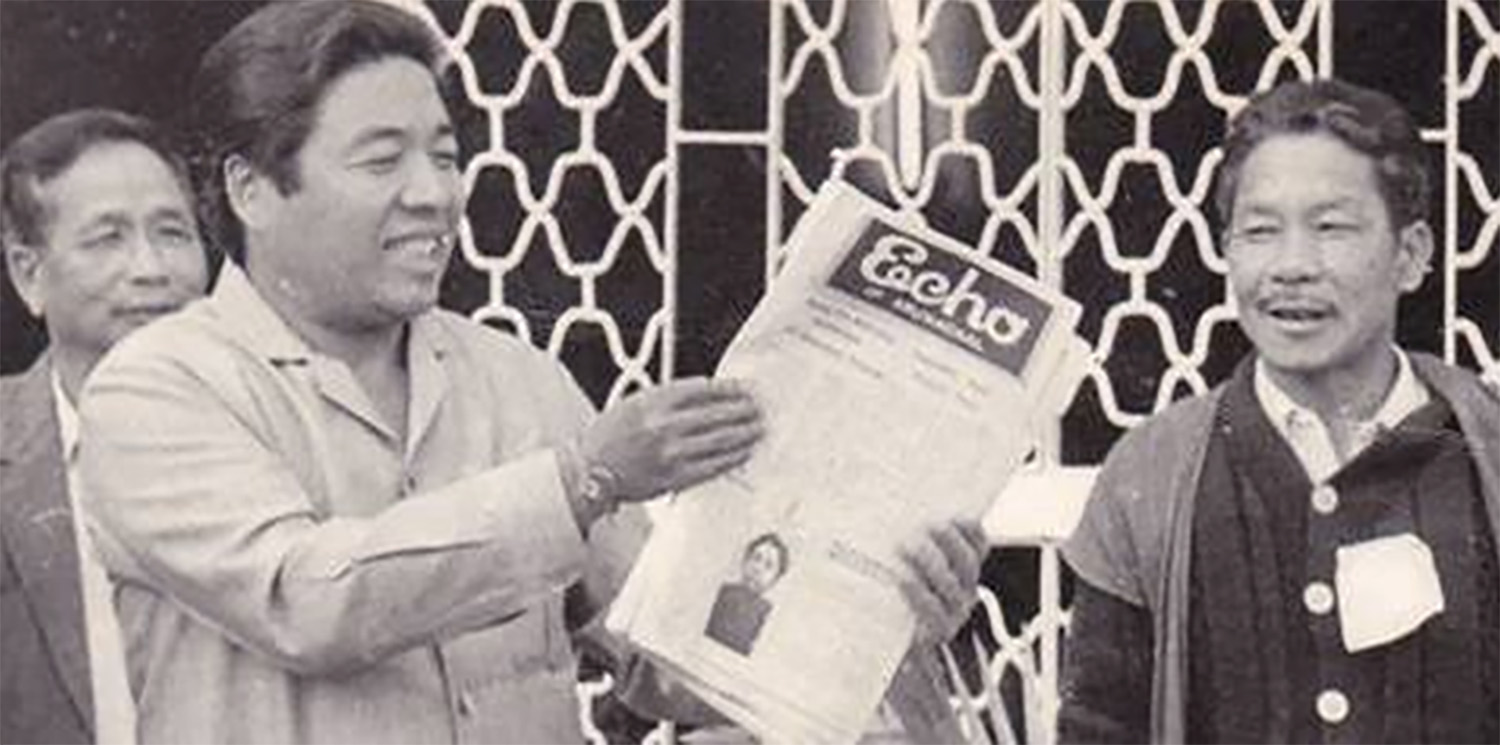
Pointing out that Echo of Arunachal (EoA) was state’s first English weekly published on 20.02.88, The Arunachal Times (AT), first English daily, launched on 06.06.89, he recalled as to how news items were composed in an automatic typewriter & headlines printed from a press for publication of EoA at Purbashree Offset Printers, Jorhat. Similarly, news items were hand composed and blocks used for picture in AT, which switched over to B&W sheet-fade offset printing press in 1996 and he had published first colour issue on 28.02.03 and took over as its editor from Taso Grayu on 23.01.03.
Referring to many trials and tribulations of print media, he hinted about introducing investigative journalism, byline stories, including ‘Bole to’ and cartoons with the help of layout artist Habung Pumbo, a deaf & dumb youth as “I had perfect wavelength to explain him very complex situations, like first PM PV Narasimha Rao to stand in witness box in Lakhu Bhai forgery case & he would draw the cartoon in 10-15 minutes”; recipe competition with award; Sunday edition for upcoming writers & poets; special column to promote Arunachal University and NERIST.
Over 16-year old English weekly Arunachal Front was taken over by Arunachal Offset Publishers and appointed him as its Editor-cum-CEO to convert it to a daily. State’s first English colour daily printed from North Lakhimpur was released on 20.08.07 jointly by then CM Dorjee Khandu, Ministers Nabam Tuki & Jarbom Gamlin. Similarly, he was instrumental behind state’s 9th daily Arunachal Observer, which was launched it on 28.01.17 with Tarh Nachung as publisher and H P Biswas as CEO.
Informing about his initiatives to introduce diploma in mass communication in 2004 in Arunachal University (RGU) at the initiative of then vice chancellor Prof Atul Kumar Sharma; journalists’ annual get-together since 2005; revived defunct Arunachal Press Club formed in 1982; set up Journalists’ Welfare Fund in 1996-97; week-long Singapore trip as media partner of Rank & Bolt award in 2006; accompanied President Dr Pratibha Devisingh Patil on a week-long trip to UAE and Syria in 2011 as part of national media entourage, he said that he has been anchor of AIR since its functioning from a Naharlagun type-III quarters in 1996 and DDK since 1996 for live telecast besides; worked as ANI consulting editor (NE), correspondent of UNI & PTI (continuing). He named the dailies, weeklies, biweekly, fortnightly and monthly magazines in English/Hindi published from the state so far, many of which failed to sustain for long. The archaic British law – The Press and Registration of Books Act – still regulates print media, he informed.
Electronic: Taro Chatung, after quitting civil service as CO in 1988, learnt basics of TV journalism and its production from Zee TV’s Mumbai office in 1997 and pioneered electronic media under an agreement with Itanagar DDK to produce a 15-minute news episode News & Views from 10.07.2000. His typical presentation – app ka ghar jal raha hai, keshe lag raha hey? – made it very famous for viewers to wait for it daily with batted breath. But the news episode was halted in May 2005 due to DD’s national policy. Though he continued with various news channels, but died in TRIHMS on 26.10.19 due to cancer, he said.
Enlisting awards conferred on him including 2014 State Award (Gold Medal) and Maja Koene International Award-2015 for peace & non-violence at Guwahati, he reiterated his media definition as mein (I) diya (gave) and said: “If the society has given us identity, name and fame, we should ask ourselves the question: mein (kya) diya?”.
Students Tana Pumin, Hofe Dada & Nuka Bengia (Pic – L to R) had posed relevant questions: What are the initial challenges for media in the state? How to serve society beyond conventional journalism? What is funding source of Arunachal Pradesh Union of Working Journalists? Should a journalist get registered? The senior journalist responding to the trio, said: “Media being a change agent for the society; one has to act sensitively to meet aspirations of the masses as media has still miles to go in this Himalayan state whose many uniqueness are yet to be brought to limelight”.
RGU coordinator mass communication assistant Prof-cum-research scholar Yami Teli earlier introduced the speaker as pioneer of state’s print and electronic journalist since 1988 with 33-year experience and punctuated intermittently to encourage the students.
His lecture was followed by Morung Express associate editor Dr. Moalemba on “Growth and development of press in Nagaland & current trends, future scopes and prospects of media industry in NE India; RGU dean (IT) Pro Kh. Kabi on “Role of Christian Missionaries in development of press & ownership patterns and status of journalists in NE” and People’s Chronicle news editor Satyajit Usham on “Growth and development of press in Manipur & problems and challenges of press in NE”.


 20

