
- A reminder of Siang’s Dec 2000
By Pradeep Kumar
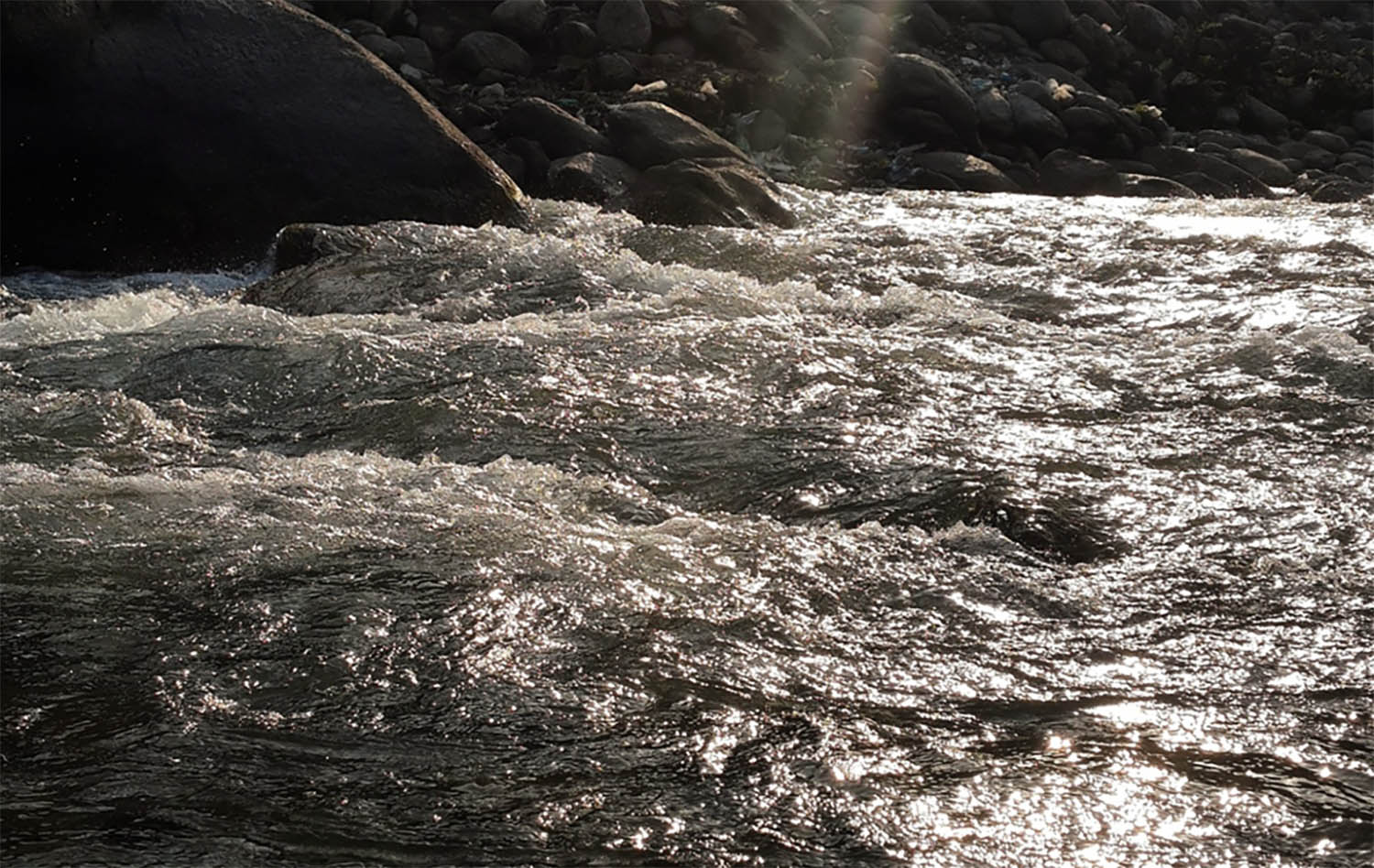
ITANAGAR, Oct 30: The clean water of Kameng River has turned yellow since Friday while large numbers of dead fish washed up to its shores prompting East Kameng administration to issue an advisory to avoid venturing into the river and desist from selling or consuming the dead fish which have died of ‘unknown causes’.
Authorities have clarified that high total dissolved solids (TDS) in the river has resulted in its turbidity and the low oxygen led to the massive death of fishes.
The 264-km long river originates in Tawang district from the glacial lake below snow-capped Gorichen mountain range along India-Tibet border. One of the major rivers of the state, it passes through several districts with a couple of them deriving their names after it.
The sudden change of colour in river water has become the talk of area with people fearing of unknown aspects, which holds ground given China’s aggressive activities upstream.
It may be recalled here that the mighty Siang River had turned muddy in December 2017 raising concern that China might be constructing infrastructure to divert its waters despite Beijing’s denial.
According to recent reports, China is constructing a 1,000-km long tunnel, world’s longest, to divert water from Yarlung Tsangpo (in Tibet, China), which is known as Siang/Dihang River in Arunachal Pradesh, Luit/Dilao/Brahmaputra in Assam to the parched but dry Xinjiang region.
Large scale fish deaths along the river banks reported from Tuting and Geling in Upper Siang district close to Chinese border also raised alarm about the possible use of toxic substance in the upper reaches.
Moreover, a 30-feet high wave of Siang River had submerged the historic Pasighat township in June 2000 midnight killing at least 30 people and more than 100 had gone missing. People were fast asleep and none expected flood as there was no rain.
Then SP Robin Hibu, present Delhi Police special commissioner, with the help of IAF helicopter had rescued many people who had survived by luck while a mother and her two kids stuck on a tree top could not be rescued due to approaching evening around 4.30 pm and their bodies were recovered later.
It was reported later that a huge landslide had blocked Yarlung-Tsangfo in Tibet which got breached because of water forces and huge volume of water had raised Siang water level leaving a trail of devastation.
Siang is a tributary of 6,380-km long Yangtze River, the longest river in Asia and the third longest in the world. The river is the longest in the world to flow entirely within one country but 6th largest river in the world by it discharge volume.
Siang, originating from Mansarovar Lake region located on northern side of the Himalayas, flows through Bhutan as Yarlung-Tsangfo and enters India at Jogigjopa in India’s Arunachal Pradesh, giving its name to districts of East Siang, West Siang and Upper Siang. Numerous tributaries join before it enters Assam as Brahmaputra, a trans-boundary river, one of the major rivers of Asia, flows through China, India and Bangladesh as Padma to merge with Meghna before emptying into the Bay of Bengal.
Water warfare as predicted long before, is clearly on display with China having the advantage point of many of the rivers in South East Asia originating from Tibetan plateau. It has used it as a political tool and as leverage on a downstream country –India.
China gave flood-related hydrological data to India for few years before stopping it. Data on upstream river flows is essential for flood forecasting and warning in order to save lives and reduce material losses.
For long, China has been damming its many rivers as a way of flexing its muscles with co-riparian India with sans regard of the consequences.
The issues of downstream communities must be treated from a humanitarian perspective as in many cases this has resulted in greater frequency and severity of flooding, drought and pollution. International cooperation on shared water resources is critical and must be strengthened and adhered to at all costs.
Arunachal government should mount pressure on the Centre to take up the issue expeditiously in international forum.


 20
