
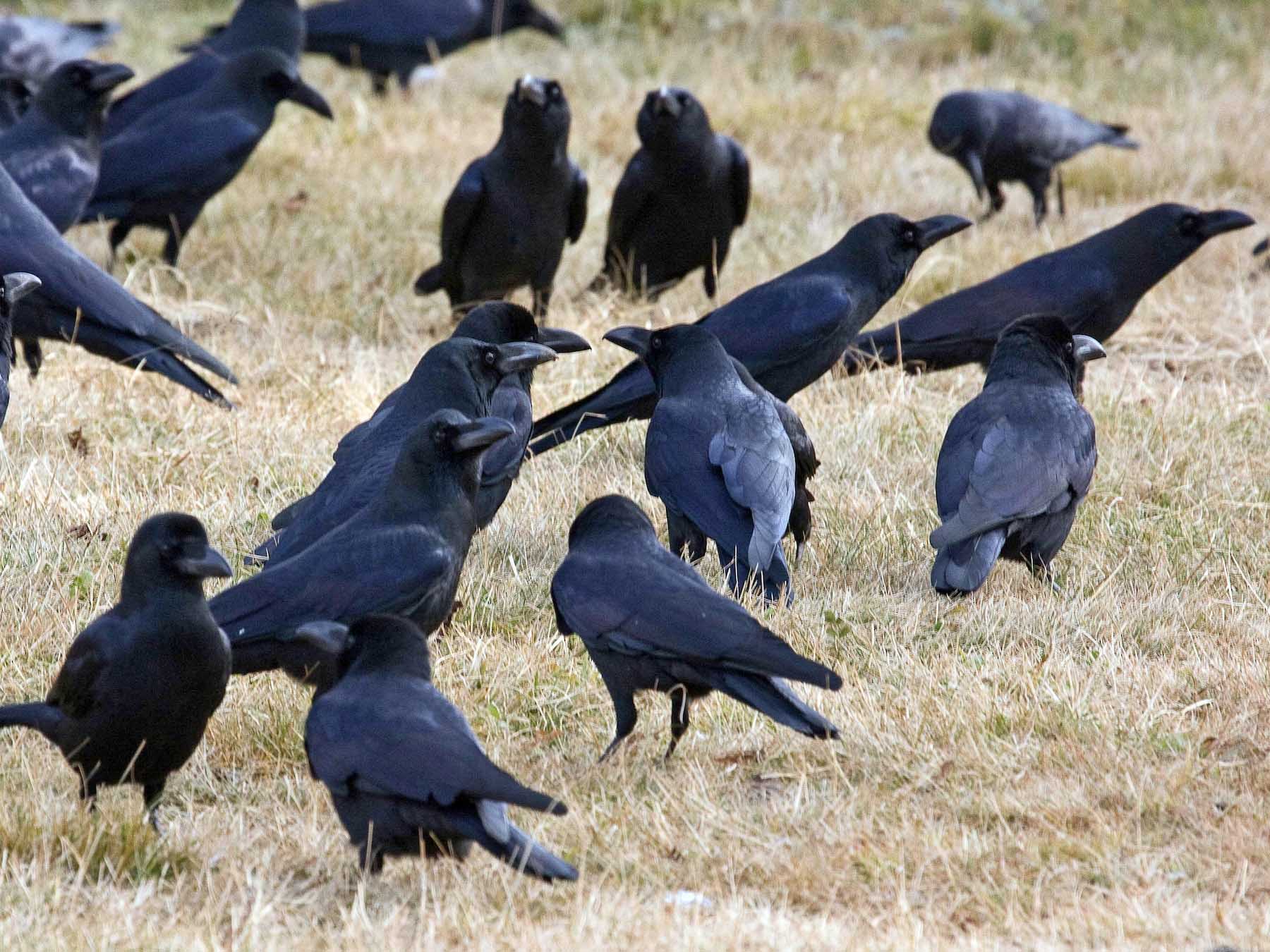
‘Crows scared of falling prey’
“Wanton killing of flora and fauna is the prime factor for the intelligent bird not to venture into the state n0ot to fall prey,” retired senior forest officer Umesh Kumar said, adding every bird species has different habitat area subject to various conditions.
Admitting that even house crows are not seen in Arunachal, K D Singh, former PCCF-cum-secretary to CM, responding to questions, said “It is subject to research”.
“The house crow population is diminishing fast as these birds also eat insect pests causing death”, said Singh, a known writer.
He is right as 173 species of birds out of 1,250 found in India, 13% or one in every 13 species, are facing threat of extinction, according to 2014 Red List of International Union for Conservation of Nature (IUCN), which keeps track of animal species in danger and prepare data.
By Pradeep Kumar
Beyond the Horizon
ka…ka…ka cawing by crows signals onset of morning with sun rays touching the earth and mothers awaking their children – “get up, it is morning” – is a common scene across rural India.
Crows, ravens & rooks, belonging to genus Corvus family, extremely intelligent birds, are known for their adaptability, problem-solving and amazing communication skills. When a crow encounters a human being, it will teach other crows how to identify the person. Research shows that crows don’t forget a face.
Diet: These birds are omnivorous and eat small animals, like mammals, amphibians, reptiles, eggs, carrion, insects, seeds, grains, nuts, fruit, non-insect arthropods, mollusks, worms and even other birds. Crows have also known for eating garbage and store food in caches, short-term, in trees or on the ground making them garbage collectors, according to University of Michigan’s Animal Diversity Web (ADW).
The history of when and how the House Crow forsook the forest to live amid human dwellings in villages, small towns and cities is lost in time. Corvus is placed at the pinnacle of bird classification order for its known intelligence, appropriating time for basic necessities of life, raising a family, indulging in play among themselves and other animals.
Interestingly, India State of Forest Report 2019 first time assessed biodiversity of all states and union territories and found that Arunachal Pradesh, one of the top 12 global biodiversity hotspots in the world, with 79.63% forest cover of its total 83,743 sqkm geographical area has maximum richness of species in terms of trees, shrubs and herbs followed by Tamil Nadu and Karnataka.
This Himalayan state also called ‘Land of Dawn-Lit Mountains’ or ‘Land of Orchid’ or ‘Land of Festivals’ is a treasure trove of flora and fauna. The rich variety of birds surpasses 700 and ranking it after Assam in India. Apart from majestic state bird Hornbill, many unique species of birds are found, like Bugun Liocichla, one of the endangered species, first discovered in 1995 at Eaglenest Wildlife Sanctuary. These birds are orange-yellow in colour and have red and white patches. Their fluty voice is distinct amongst all birds in the forest. But, it is intriguing that not a single crow is seen in state, even in capital Itanagar. Any ornithologist could alone clarify, why?
Lifestyle: These black birds identified as clever tricksters are often symbols of good luck in some cultures and bad luck in others. Many types of crows are solitary, but often forage in groups. Others stay in large groups. A group of crows is called a murder. When one crow dies, the murder will surround the deceased. This funeral isn’t just to mourn the dead but to find out what killed their member. Then, the murder of crows will band together and chase predators in a behavior called mobbing. With some crow species, the yearlings and non-mating adults live in a group called a roosting community. Some crows migrate and when needed travel to warmer areas of their territory. A crow may live 13 years in the wild and more than 20 years in captivity.
Behaviour: A house crow cheekily tugging at the tail of a cow or ox in slumber or suddenly swooping down from the tree to give a peck on a child’s head in rural areas or heckling birds of prey, flying foxes at their roosts or even on their own kind, and apparently enjoying these pranks in towns are common scenes. Sometimes they bury seeds or store them in crevices in bark. They occasionally steal food from other animals, sometimes cooperating with other crows to raid food from otters, vultures and water birds.
Highly intelligent crows can be masterful mimics. They have been trained to count aloud up to seven, and some crows have learned more than 100 words and up to 50 complete sentences; others have been known to mimic their owners’ voices in order to call dogs and taunt horses. They also exhibit great curiosity, fueling a reputation as inventive pranksters and calculating thieves. They fly off with people’s mail, pull clothespins off lines, and make off with unattended objects such as car keys. Two species – New Caledonian crow (C. moneduloides) and ‘alalā, or Hawaiian crow (C. hawaiiensis) – use stick-type foraging tools to obtain food from small holes and crevices. Such sophisticated tool use is only practiced by a handful of animal species.
Habitat: Crows are found all over the world in a variety of habitats. For example, American crow lives all over North America and prefers open areas – agricultural land and grasslands – with trees nearby. They also thrive in suburban neighborhoods, according to the ADW.
The common raven is one of the most widespread birds worldwide. They are found in northern Europe, Scandinavia, Iceland and Greenland; throughout Asia, from the Pacific Ocean to the Himalayas to India and Iran; across northwestern Africa and the Canary Islands; and in North and Central America as far south as Nicaragua. They prefer open landscapes, too — seacoasts, treeless tundra, rocky cliffs, mountain forests, open riverbanks, plains, deserts and scrubby woodlands.
Rooks are smaller than crows and found across Europe and western Asia, prefer wide open spaces, river plains and steppes, notes the ADW.
Size: There are about 40 species of crows of different sizes, according to PBS. Their approximate measurement — American crow (17.5 inches), fish crow (19 inches), common raven (27 inches) and weigh between 337 to 1,625 grams. Rooks are smaller than crows and have distinct wedge-shaped tails and light-colored bills and average 18 inches long. American crows differ from common ravens in several ways. Ravens are bigger; their voices are hoarser; and they have heavier bills, according to ADW. Ravens’ tails and wings come to a point.
American crows can be harmful to crops, but they also may prevent damage by eating insect pests, according to the ADW. Recent studies have shown that 60 to 90% of insects eaten by rooks are agricultural pests. As foragers, they also clean up dead animals and garbage. In fact, crows are often blamed for overturning garbage cans; however, the real culprits are usually raccoons or dogs, according to the Washington Department of Fish and Wildlife (WDFW). The Northwestern crow has been observed playing games while flying.
Species: Some common crows are American crows (C. brachyrhynchos) of North America and carrion crow (C. corone) of Europe and most of Asia. A subspecies of the carrion crow with gray on the back of the neck and breast is called hooded crow (C. corone cornix). Sometimes considered a separate species, it is found between Western Europe and eastern Asia and in the northern British Isles. Other crows include house crow (C. splendens) of the Indian subcontinent (introduced in eastern Africa); the pied crow (C. albus), with white nape and breast, of tropical Africa; and the fish crow (C. ossifragus) of southeastern and central North America. Other members of the genus Corvus not called crows are the raven, jackdaw and rook. For birds in other families sometimes called crows are see currawrong or piping-crow; drongo or king crow; kokako or wattled crow; and rockfowl or bald crow.
Offspring: Crows live in large, close-knit families, like social mammals. Crows are cooperative breeders. They often stay close to the place where born, help raise and defend the area’s young chicks. When it is time to have offspring, a mating pair will build a nest 15 to 60 feet above the ground using branches, twigs, hair, twine, bark, plant fibers, mosses, cloth and other materials. Nests are 1.5 to 2 feet in diameter. The female lays four to five eggs and incubates them for 18 days. At four weeks, the chicks are able to leave the nest, though their parents still feed them until they are around 60 days old, according to WDFW.
They defend territories and care for the young together. Young crows may spend up to six years with their parents before breeding on their own. As winter approaches, northern crows gather into large night-roosting groups. These flocks can include tens of thousands of birds and occasionally hundreds of thousands. Possible reasons for this seasonal gregariousness are warmth, protection against predators such as owls, or information exchange.
According to International Union for Conservation of Nature (IUCN), most crows are not endangered, but the Flores crow is one of the exceptions. It is listed as endangered because it has a very small population that is on the decline as deforestation threatens its home in Indonesian islands of Flores and Rinca. Its population is around 600 to 1,700 mature individuals, as per IUCN.
The Hawaiian crow is extinct in the wild. Ravens, members of the same genus, are larger birds with bigger bills. Common ravens have 15 to 33 recorded categories.


 20