

- India boasts of 2,967 tigers; Arunachal 29
Beyond the Horizon
By Pradeep Kumar
Is the tiger just a charismatic species or just another wild animal living in some far away forest? The tiger is a unique animal which plays a pivotal role in the health and diversity of an ecosystem. It is a top predator which is at the apex of the food chain and keeps the population of wild ungulates in check, thereby maintaining the balance between prey herbivores and the vegetation upon which they feed.
Therefore, presence of tigers in the forest is an indicator of the well being of the ecosystem. The extinction of this top predator is an indication that its ecosystem is not sufficiently protected, and neither would it exist for long thereafter. Tiger population of India was estimated at 2,967 in 2018 as against 1,706 in 2010 & 1,411 in 2006, according to National Tiger Conservation Authority (NTCA) survey, which noted 6% annual rise of tigers from 2006 to 2018.
After releasing status of tigers in India on Global Tiger Day (29.07.19), Prime Minister Narendra Modi had said: “Today we can proudly say that India is one of the world’s largest and most secure habitats with about 3,000 tigers. Around 80% of world’s population of tiger is found in our country”.
“The number of Protected Areas in India in 2014 was 692, which has increased to more than 860 in 2019. The number of community reserves has also increased from 43 in 2014 to 100,” he had said.
Around 3,900 tigers remain in wild across the globe, according to World Wildlife Fund (WWF). Since the beginning of 20th century, over 95% of the world’s tiger population is lost as there may have been over 100,000 tigers that roam in the planet about a 100 years ago, a WWF report says.
India probably had many thousands of tigers in the wild by the turn of the 20th century. The Wildlife Institute of India (WII) and the NTCA have been conducting tiger estimation surveys in partnership with NGOs. The WWF was key NGO partner of WII and NTCA in conducting comprehensive country-wide tiger estimation exercise in 2010-11, which revealed a mean tiger population estimate of 1,706.
Based on a census using the pug mark technique, the number of tigers in 2002 stood at 3,642. As per 2014 tiger estimation exercise conducted by WII in association with the NTCA using camera traps, there were only 2,226 wild tigers left in India.
If the tiger go extinct, the entire system would collapse. For example, when the Dodos went extinct in Mauritius, one species of Acacia tree stopped regenerating completely. So when a species goes extinct, it leaves behind a scar, which affects the entire ecosystem. Another reason why we need to save the tiger is that our forests are water catchment areas.
Therefore, it’s not just about saving a beautiful animal. It is about making sure that we live a little longer as the forests are known to provide ecological services, like clean air, water, pollination, temperature regulation etc.
The present Sundarban National Park was declared as core area of Sundarban Tiger Reserve in 1973, a wildlife sanctuary in 1977 and a national park on 04.05.1984. It is a UNESCO World Heritage Site since 1987 and designated as a Ramsar site since 2019. It is considered as a World Network of Biosphere Reserve (Man and Biosphere Reserve) since1989.
Appreciably, the tiger count in Sunderban delta, the only mangrove forest in the world inhabited by tigers, rose from 88 (2018-19) to 96 (2019-20), according to West Bengal forest department. The delta is densely covered by mangrove forests and is one of the largest reserves for Bengal tigers.
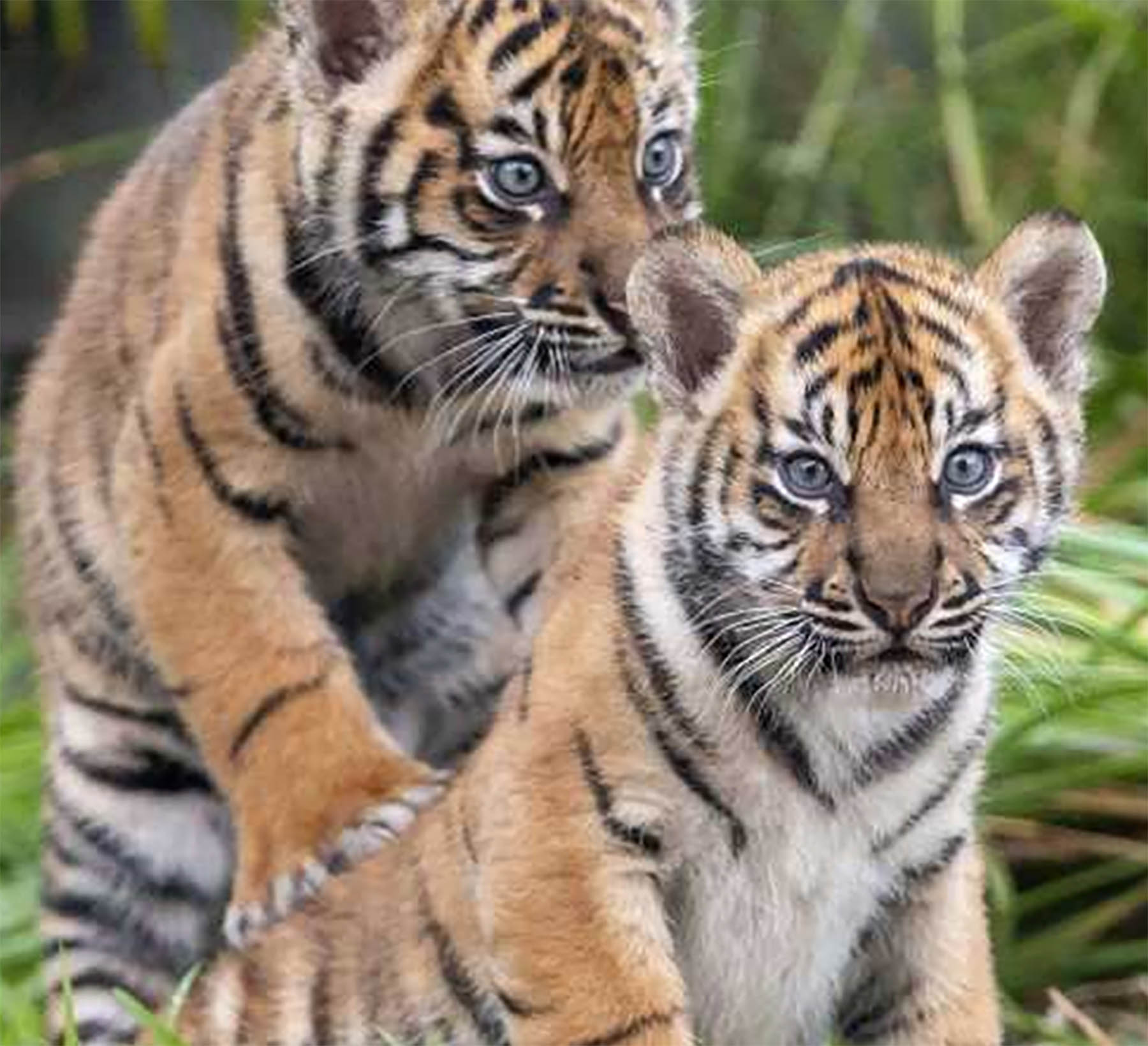
Arunachal Pradesh had scripted a success story in tiger conservation as from nothing in 2010, 29 tigers were spotted in Dibang-Kamlang-Namdapha block in 2018, as per above survey report. This is the only state which boasts of four major varieties of big cats – Tiger, leopard, clouded leopard and snow leopard. It is also home to lesser known feline species, like Golden cat and Marbled cat.
“Back in 2006, the tiger population in this Himalayan state was 14. The next census in 2010 sprang a surprise without recording a single tiger. But 28 tigers were sighted in 2014 and the number rose to 29 in 2018. Forest officials attributed the turnaround to better protection and mapping in a scientific manner.
Present PCCF-cum-E&F principal secretary R N Singh could not be contacted despite repeated attempts.
“The growth is primarily due to better protection of the tiger habitats and use of scientific technology,” Arunachal’s then PCCF (Wildlife) Dr. M Surya Prakash had said, adding “The state was getting a lot of assistance from the NTCA under Project Tiger which had helped to lay large number of camera traps.
“We basically rely on three methods to count the animal – camera traps, scats and traditional pug marks. We collect fecal matters which are called scats. We send them to the WII, Dehradun for DNA analysis. We also count the animal by studying pugmarks besides most common camera trap. We have a dedicated pool of workers engaged in animal’s protection. State’s tiger population could be higher as many virgin forests remain unexplored,” Prakash had said.
Arunachal tiger habitats are: Namdapha Tiger Reserve (Wildlife Sanctuary in 1972, National Park & Tiger Reserve in 1983); Kamlang Tiger Reserve (as India’s 50th tiger reserve in 1989); Debang Wildlife Sanctuary (in 1992) and Pakke Tiger Reserve (since 19.04.01).
“Arunachal has a geographical area of 83,743 km². Many areas haven’t been surveyed. There are virgin forest areas which are yet to be explored. There is no road connectivity and as the state falls under a high rainfall area, we have limited accessibility,” he had reasoned.
Assam, the other NE state, has constantly done well in tiger conservation as the population rose from 70 (2006) to 190 (2018).


 20
