
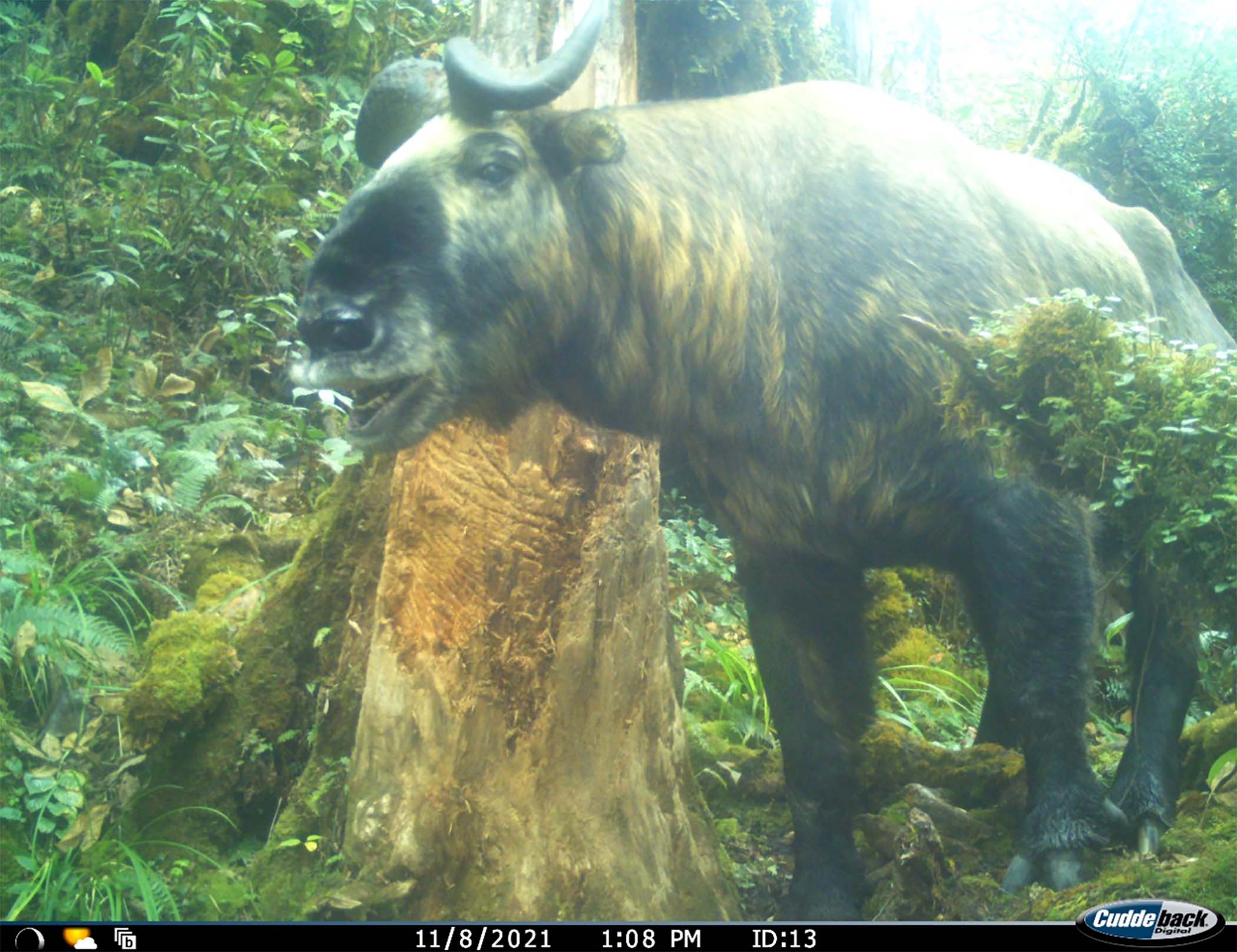
ITANAGAR, Dec 18: Takin, one of the rarest mammals, was caught by a trap camera above 3,500 metres in East Kameng district in Arunachal Pradesh bringing cheers among the forest officers.
The takin also called cattle chamois or gnu goat, is a large species of ungulate of the subfamily Caprinae found in the eastern Himalayas.
It is first photo of takin from East Kameng district, DFO Vikas Swami said. The takin is adapted to its mountainous environment in Asia.
“We got a camera trap image in November. Seppa Forest Division had installed cameras above 3500 metre altitude as a part of Snow Leopard Survey programme with help of WWF-India (knowledge partner),” Swami said.
Exact number of individuals is not known to us, he said, adding: “But it’s the largest mammal which is very rare to sight in wild.
Much of the ownership of the land rests with the local communities in the state and effectively a very small area falls under forest department. Several pockets have community driven conservation programmes while several have seen widespread hunting, both for sustenance and game.
Takin are found from forested valleys to rocky, grass-covered alpine zones, at altitudes between 3,300 and 14,800 ft above sea level. The Mishmi takin occurs in eastern Arunachal Pradesh, while the Bhutan takin is in western Arunachal Pradesh and Bhutan. Dihang-Dibang Biosphere Reserve in Arunachal Pradesh is a stronghold of both Mishmi, Upper Siang (Kopu) and Bhutan takins, as per wikipedia.
Behaviour: Takins are found in small family groups of around 20 individuals, although older males may lead more solitary existences. In the summer, herds of up to 300 individuals gather high on the mountain slopes. Groups often appear to occur in largest numbers when favorable feeding sites, salt licks, or hot springs are located.
Mating takes place in July and August. Adult males compete for dominance by sparring head-to-head with opponents, and both sexes appear to use the scent of their own urine to indicate dominance. A single young is born after a gestation period of around eight months. Takins migrate from the upper pasture to lower, more forested areas in winter and favor sunny spots upon sunrise. When disturbed, individuals give a ‘cough’ alarm call and the herd retreats into thick bamboo thickets and lies on the ground for camouflage.
Takin feed in the early morning and late afternoon, grazing on a variety of leaves and grasses, as well as bamboo shoots and flowers. They have been observed standing on their hind legs to feed on leaves over 3.1 m (10 ft) high. Salt is also an important part of their diets, and groups may stay at a mineral deposit for several days.
The takin is listed as Vulnerable on the IUCN Red List and considered Endangered in China. It is threatened by overhunting and the destruction of its natural habitat. It is not a common species naturally, and the population appears to have been reduced considerably. Takin horns have appeared in the illegal wildlife trade in Myanmar; and during three surveys carried out from 1999 to 2006 in Tachilek market, total 89 sets of horns were seen openly for sale.


 20

