
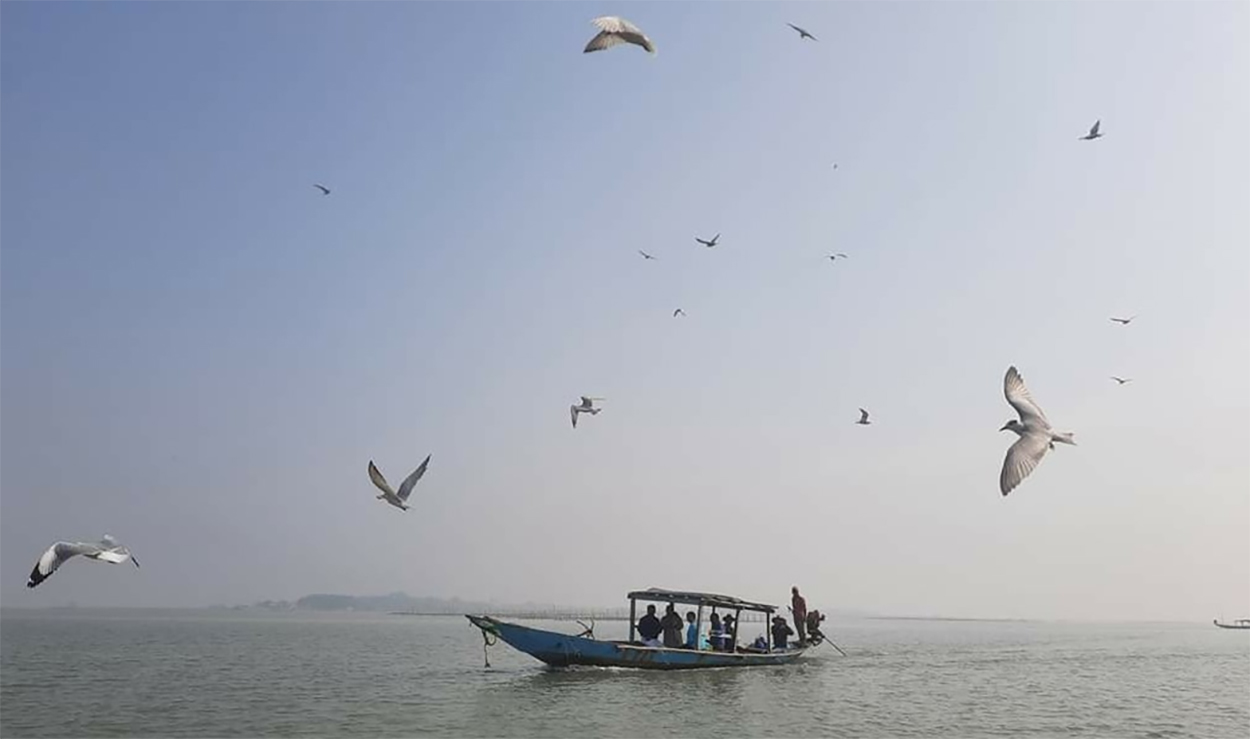
Pic – Moti Pangkham
By Pradeep Kumar
Chilika Lake is a brackish water lagoon covering an area of over 1,100 km2, spread over Puri, Khurda and Ganjam districts of Odisha at the mouth of Daya River, flows Bay of Bengal. It is the largest salt water lake in India and largest brackish water lagoon in the world after New Caledonian barrier beef and listed as a tentative UNESCO World Heritage site.
It is the largest wintering ground for migratory birds on Indian sub-continent and home to a number of threatened species of plants and animals. The lagoon hosts over 160 species of birds in the peak migratory season. Birds from Caspian Sea, Lake Baikal, Aral Sea, other remote parts of Russia, Kirghiz steppes of Kazakhstan, central & Southeast Asia, Ladakh and Himalayas travel great distances, few possibly as much as 12,000-km to reach Chilika Lake. Russia’s Siberian crane flies 4,500-km to 6,000-km over Mongolia, Kazakhstan, Afghanistan during winters to Chilika Lake is the glittering example.
According to a survey, 45% of birds are terrestrial in nature, 32% waterfowl and 23% waders. The lagoon is also home to 14 types of raptors, 37 species of reptiles & amphibians while around 152 rare and endangered Irrawaddy dolphins have also been reported. Microalgae, marine seaweeds, sea grasses, fish and crab also flourish in the brackish water. Especially the recovery of seagrass beds in recent years is a welcoming trend which may eventually result in re-colonization of endangered dugongs.
The lagoon water spread area ranges between 1165 km2 and 906 km2 during the monsoon and summer respectively. The lake is a highly productive ecosystem with large fishery resources and sustains more than 150,000 fisher–folk living in 132 villages on the shore and islands. A 32-km long, narrow, outer channel connects the lagoon to Bay of Bengal near Motto village. A new mouth opened recently by CDA to bring a new lease of life to the lagoon. In 1981, Chilika Lake was designated the first Indian wetland of international importance under the Ramsar Convention.
Geological evidence indicates that Chilika Lake was part of the Bay of Bengal during later stages of Pleistocene period (1.8 million to 10,000 years BP). Excavations were conducted by Archaeological Survey of India at Golabai Sesan, north of Chilika lake in Khurdha district, provides evidence of a sequence of Chilika area culture maritime trade of ancient period, a boat-building centre, a major harbour for maritime commerce known as the “Lord of the Sea” when King Kharavela ruled Kalinga (c. 209 BCE–after 170 BCE).
Legend has it that once a girl, named Jai, was traveling along with her father in a boat to the island for her marriage. But the boat was hit by a cyclone. All on board survived except Jai. Many fisherman after the incident claimed to have been listening her cries for which they begun worshipping. Bankad (now Banapur) King Sri Jagannath Mansingh in 1717 had built Maa Kalijai temple, according to Parikud history. Whoever travels to Chilika Lake seek Maa Kalijai blessings for good fortune.


 20

