
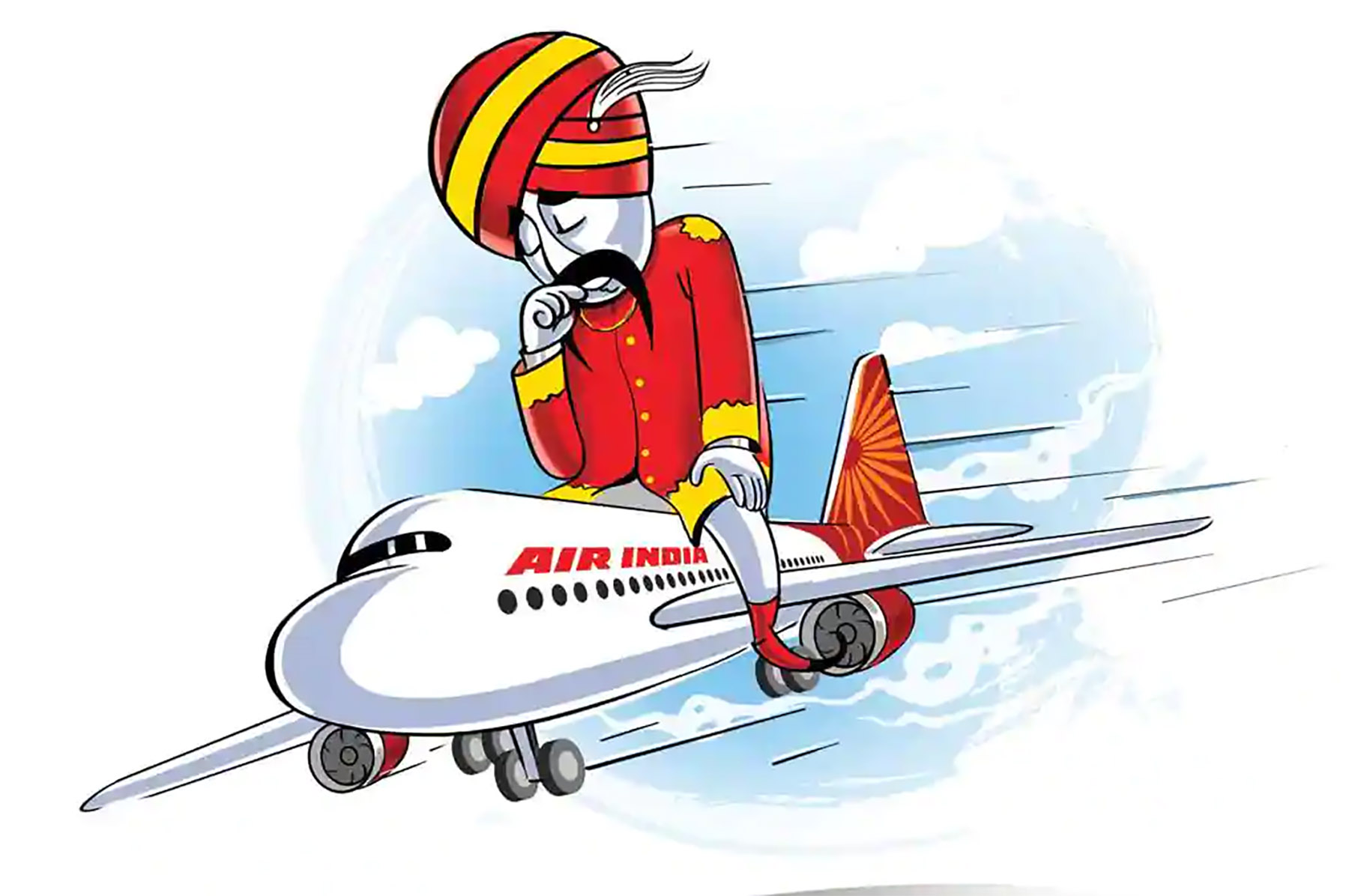
- Will it remain national airline?
Beyond the Horizon
By Pradeep Kumar
As Tata Group, the salt-to-steel conglomerate, took over Air India on Thursday after nearly 70 years as it had won the bid to take it over in October after years of struggle by the government to privatise the airline, I was reminded of ‘Gentle flows the Kud, faster grows Kimin: From hamlet to polis, a 100 year journey’ in this column on 27.08.07.
“Political officer R G Menzis based at Kimin had opened Ziro as undivided headquarters of Subansiri in 1952. Before that Jorhat-based directorate of supply and transport had opened a godown of central purchase organization (CPO) at Lilabari for supply of ration to all out posts by hiring Biju Pattanaik’s Kalinga Airlines to transport ration. Dakota planes used to charge Rs. 900 per sortie to carry 27 quintals of rice”, then octogenarian Jagjit Prasad Jain, who lived in Kimin since 1950, had recalled about ration supply process that time.
After a hiatus of nearly two decades, the Govt’s CPSE privatisation programme started off with flying colours with Tata group buying the debt-laden Air India. , The Govt had announced privatization policy in 2021-22 Budget to privatize public sector enterprises, barring those in strategic sectors of atomic energy, space & defence; transport & telecommunications; power, petroleum, coal & other minerals; and banking with a divestment target of Rs 1.75 lakh crore for that fiscal year.
With the new owner shelling out Rs 18,000 crore for the buyout of ‘Maharaja’ this would be the highest ever amount garnered through privatization or even the cumulative sum garnered through strategic sale in 1999-00 to 2003-04. The Govt had had garnered roughly over Rs 5,000 crore during that five-year period by privatizing 10 CPSEs. Besides, three hotel properties of Hotel Corporation of India and 18 of ITDC were also sold off by way of slump sale.
“The Govt could no longer sustain Air India. There is a staggering loss and the burden was on the taxpayer. That is just not right. Then this deal came through. This is a win-win transaction and Air India is back now with its erstwhile owners and I am certain that under their stewardship Air India has a bright future ahead,” Union Civil Aviation Minister Jyotiraditya Scindia said on Friday.
Terming it as a landmark transaction under which all debt had been taken care of and “everyone is a winner”, he said the Govt formally handed over the airline to Tata Group at a ceremony here.
Responding to a question – Will Air India be no longer India’s national airline? -, Scindia said “I think Air India was, is, India’s national airline, and always will be. It will be India’s national airline in your heart. It will be India’s national airline in my heart. It will be India’s national airline in every Indian citizen’s heart.”
Of 39 airlines currently operating in India including scheduled, regional, chartered and cargo airlines, Air India has been privatized. The scheduled airlines are the primary carriers who command a majority of the domestic market share. A majority of these scheduled airlines operate in the budget segment.
Seven scheduled airlines are — Air Asia India, Air India, Air India Express, Go First, Indi Go, Spice Jet and Vistara; four regional airlines are — Alliance Air, Fly Big, Star Air and Tru Jet; four cargo airlines are — Blue Dart Aviation, SpiceXpress & Quikjet Airlines and 22 charter airlines are — Baron Aviation, Chhattisgarh Air Link, Club One Air, Confident Airline, Deccan Charters, Dove Airlines, Fly Divine, Fly Hornbill, Ghodawat Aviation, Global Vectra Helicopter, Jagson Airlines, Jal Hans, Pawan Hans, Pinnacle Air, Safefly Aviation, Spirit Air, Supreme Airlines, Taj Air, Taneja Aerospace and Aviation Ltd, Titan Aviation, Venture AirConnect and VRL Air.


 20
