
By Pradeep Kumar
Beyond the Horizon
This daily in its 16.08.20 edition quoting Col (Retd) Amar Patil, VSM, had unraveled glorious chapter of 1962 Chinese aggression when 2 JK Rifles rifleman Havildar Shere Thapa had killed 155 Chinese jawans in Tama Chung Chung sector of Arunachal Pradesh on 18.10.1962.
Patil as 2nd lieutenant was commanding officer of Hav Thapa when he was posted at Taliha in Upper Suabansiri sector, where Indian Army had defeated China’s People’s Liberation Army, octogenarian Patil from Pune had informed Lok Sabha member Tapir Gao over telephone.
Pointing out that former union finance minister Jaswant Sinha as army captain had gone up to Ashapila, he had said that unfortunately after 1980 all these areas were captured by China, developed double lane road and a hydropower project on Longju River.
Gao had assured him to raise the issue in Lok Sabha and write to the Prime Minister, Defence Minister and Chief of Army Staff for conferring gallantry award on him (Hav Thapa) posthumously.
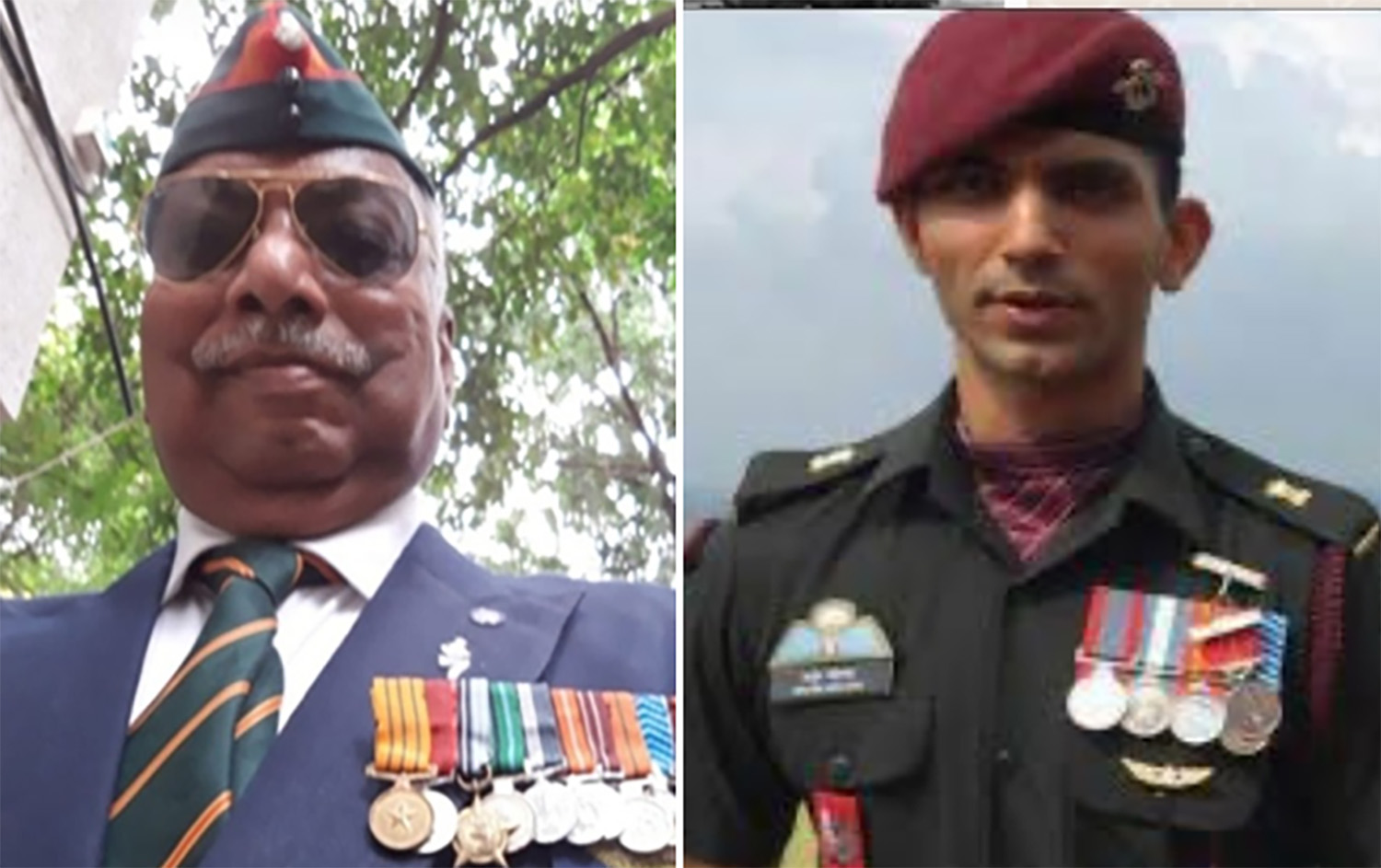
In fact, I was shocked to receive a letter from Col (Retd) Patil explaining the entire details of Tama Chung Chung sector war. Similarly, I learnt on Wednesday that his grandson Arjun Galoth worked in 4 Para Special Forces (PSFs) of Indian Army, won a sena medal and retired as a major.
Responding to a question during an interview by a TV channel as to how he joined the army, Arjun said that he was born and brought up in army atmosphere as his grandfather worked with British Army and Indian Army after independence. His father was also in Army which contributed to his joining the Army.
Responding to a volley of questions, he said his first jump from IAF plane as a para-trooper after training was hilarious. Recalling an encounter in Kashmir, he said that they were informed over telephone about 12.30 midnight by police about a terrorist hiding inside a house. They marched to the spot within 10 minutes, but the local contact was unable to identify the exact house. They waited till day break when the elderly, women and children came out of a double-storied building and the ultra fired. One of his colleagues was hit by a bullet on his shoulder, but the operation continued with a target and the terrorist was ultimately shot at.
“The greatest lesson learnt was that one has to remain alert and disciplined to follow the taught procedures as a team. And many encounters followed after that, he said, adding many of his colleagues are still in service but they have developed ‘never say die’ spirit due to tough training.
When asked if the trainings were enough for any combat operation, he said that continuous training and experience help learn many things, but none can predict about any combat except remaining fully prepared to face it. The training teaches A, B C & D but a combat could be A, X & Z. Training does prepare one for combat operations, but never teaches a computer-fed process.
Asked to define about PSF and difference between success and failure, he said that “We never give up. Fighting is not the only job in a very volatile J-K situation where we have to mix up with the local people, positively influence them, conduct good will operations, like helping the local populace which is done all over the world and changing the dynamic of the region would be considered as success. However, not doing the job of a soldier and loss of life would be failure though loss of life is inevitable in many situations.
Explaining about the toughest combat operation, he recalled a 2016 incident when five terrorists were holed up in a house and Rashtriya Rifles team had gone for search but caught inside the house and unable to come out. Then PSF team was called in being more reactive. An armoured fighting vehicle (AFV) was called as with tanks, armoured cars, assault guns, self-propelled guns etc offers operational mobility with offensive and defensive capabilities.
“We first fired and managed to rescue about 8 to 10 Rashtriya Rifles personnel including an officer. We went for room intervention and two of our personnel who had entered the house were regrettably killed. Ultimately, we killed five terrorists and recovered bodies of both martyrs. Even, National Security Guard personnel have suffered casualties,” he disclosed.
“Comparing life with a map as he used to do in J-K, he said that one has to memorize the map which offers so many opportunities, like from where the ultras come, where they go and how to coordinate for a combat. The same thing is happening in my life post-Army service too. It is always wise to keep all options open, analyze and work to achieve them. The Army has taught to be honest and maintain honest relations with the people. Possibilities are open and never give them up to move forward. I hope to instill the same spirit in my children in future too,” he said with conviction.
Is it necessary to be vegetarian or extrovert to be in PSF? He denied saying many serving are docile but become extrovert when needed.
Ask to draw a comparison between India’s PSFs and that of other nations; he said “it depends upon so many factors as every nation based on its economy has its own standard and sets of equipments. But Indian PSF personnel possibly are far far ahead in physical motivation and mental toughness. The equipments would improve. The Indian Army’s training; equipments and foods are quite good in comparison to British Army, the United States Navy Sea, Air, and Land (SEAL) or Austrian. But, we have a long way to go,” he concluded.
This justifies the ancient proverb – like father, like son – having reference to Thomas Draxe (Bibliotheca, 1616), has been stated in English in slightly varying versions since 1300s. This means that someone resembles their parents in some way, either in terms of appearance or because of their behavior. In other words, the grandson may be similar to his dad.


 20
