
Military: China Vs Taiwan
But perhaps most pertinently, China has been building and modernizing its military at an unprecedented rate, while Taiwan relies on moderate US arms sales.
In sheer size, the PLA simply dwarfs Taiwan’s military. China has an estimated one million troops, almost 6,000 tanks, 1,500 fighter jets and 33 navy destroyers, according to the latest US Defnce Department report. Taiwan’s ground force troops barely number 150,000 and are backed by 800 tanks and about 350 fighter aircrafts, the report found, while its navy fields only four destroyer-class ships.
In its 2019 report to Congress,the US Department of Defense said China, which has one of the largest navies in Asia, had at its command 37 amphibious transport docks and 22 smaller landing ships, as well as any civilian vessels Beijing could enlist. That might be enough to occupy smaller islands, such as those in South China Sea, but an amphibious assault on Taiwan would likely require a bigger arsenal — and there is “no indication China is significantly expanding its landing ship force,” the report said.
Beyond the Horizon
By Pradeep Kumar
As China pushes the world to avoid official dealings with Taiwan, leaders across the globe are realizing just how dependent they’ve become on the island democracy.
The situation across Taiwan Strait has seemed to be on the brink of crisis since 2018. Beijing has sent numerous sorties of military aircraft to conduct exercises near Taiwan and frequently crossed the median line of the nation. It has been rumoured that the mainland is considering seizing Taiwan’s outlying islands, suggesting that it is increasingly eager to take Taiwan by force.
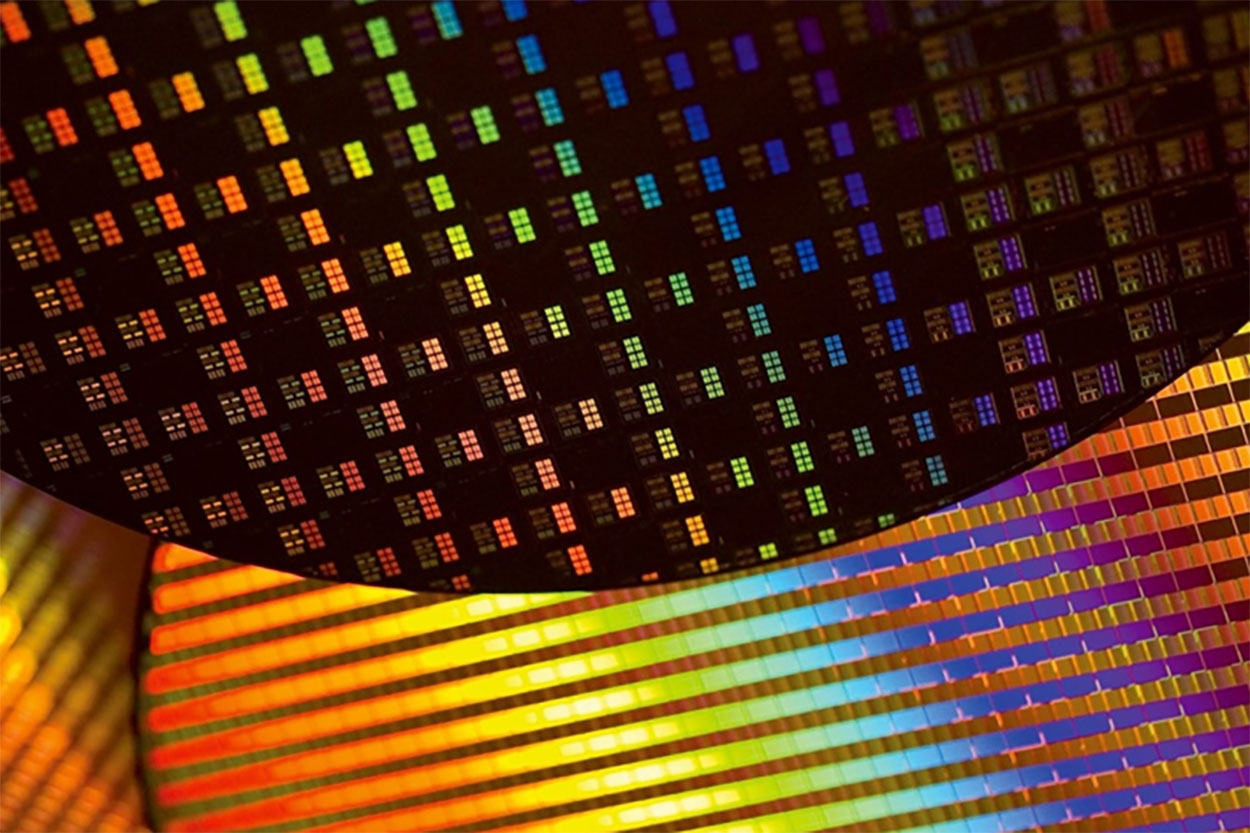
Taiwan, which China regards as a province, is being courted for its capacity to make leading-edge computer chips. That’s mostly down to Taiwan Semiconductor Manufacturing Co (TSMC), the largest producer of chips for Apple Inc. smartphones, artificial intelligence and high-performance computing.
Taiwan’s role in world economy came to notice recently as auto industry suffered shortfalls in chips used for everything from parking sensors to reducing emissions. Carmakers, including Germany’s Volkswagen AG, Ford Motor Co of the U.S. and Japan’s were forced to halt production and idle plants, making Taiwan suddenly too important to ignore.
The U.S., European and Japanese automakers are lobbying their Govts for help, with Taiwan and TSMC being asked to step in. Chancellor Angela Merkel and President Emmanuel Macron discussed the potential for shortages in 2020 and agreed on the need to accelerate Europe’s push to develop its own chip industry, according to a French official with knowledge of the matter.
The auto industry’s pleas illustrate how TSMC’s chip-making skills have handed Taiwan political and economic leverage in a world where technology is being enlisted in the great power rivalry between the U.S. and China — a standoff unlikely to ease under the administration of Joe Biden.
Taiwan’s grip on the semiconductor business — despite being under constant threat of invasion by Beijing — also represents a choke point in the global supply chain that’s giving new urgency to plans from Tokyo to Washington and Beijing to increase self-reliance.
By dominating the U.S.-developed model of outsourcing chip manufacture, Taiwan “is potentially the most critical single point of failure in the entire semiconductor value chain,” said Jan-Peter Kleinhans, technology and geopolitics project director of Berlin-based think tank Stiftung Neue Verantwortung.
The Trump administration exploited that pinch point to deny Beijing access to technology. By banning access to all U.S. chip technology including design, it was able to cut off the supply of semiconductors from TSMC and other foundries to Huawei Technologies, hobbling the advance of China’s biggest tech company. It also negotiated with TSMC to establish a $12 billion chip fabrication plant in Arizona. South Korea’s Samsung Electronics Co is set to follow, with a $10 billion facility in Austin, Texas.
The “Chips for America Act” introduced to Congress last year aims to encourage more plants to be set up in the U.S. Michael McCaul, a Texas Republican, plans to reintroduce the bipartisan bill this year with a view to securing $25 billion in federal funds and tax incentives. McCaul said in a statement he’s working with colleagues in the House and Senate “to prioritize getting the remaining provisions of CHIPS signed into law as quickly as possible.”
News that Intel Corp, onetime industry leader, was considering outsourcing production of some chips to TSMC under its former CEO underscored the need for a U.S. player that can fabricate at the leading edge, said a member of Foreign Affairs Committee on condition of anonymity.
The European Union aims to bolster the bloc’s “technological sovereignty” through an alliance armed initially with as much as 30 billion euros ($36 billion) of public-private investment to raise Europe’s share of the global chip market to 20% (without a target date) from less than 10% now.
Taiwan is the center of gravity of Chinese security policy,” said Mathieu Duchatel, director of Asia program at Institute Montaigne in Paris. Yet while Taiwan’s status in the global chip supply chain is a “huge strategic value,” it’s also a powerful reason for Beijing to stay away, said Duchatel, who’s just published a policy paper on China’s push for semiconductors.
There’s only really one enemy that Taiwan’s armed forces are preparing to resist — China’s People’s Liberation Army (PLA). And as China’s reputation as an economic and military superpower has grown in recent years, so too has that threat of invasion, according to security experts.
Taiwan has been self-governed since separating from China at the end of a brutal civil war in 1949, but Beijing has never given up hope of reuniting with what it considers a renegade province.
With nearly 1.4 billion people, the People’s Republic of China has the largest population in the world. Taiwan has fewer than 24 million people — a similar number to Australia. China has the fifth largest territory in the world, while Taiwan is the size of Denmark or the US state of Maryland. And Beijing runs an economy that is second only to the United States, while Taiwan’s doesn’t rank in the world’s top 20.


 20

