
By Pradeep Kumar
NAHARLAGUN, Mar 13: Arunachal Pradesh, spread in 83,743 km² area with only 17 population density as per 2011 census, shares 1126-km of total 3,488-km-long Line of Actual Control (LAC) of Indo-China border, while Myanmar shares 440-km and Bhutan 160-km. Of total 60 Assembly constituencies of the state, 20 touch international borders, 13 of them with China.
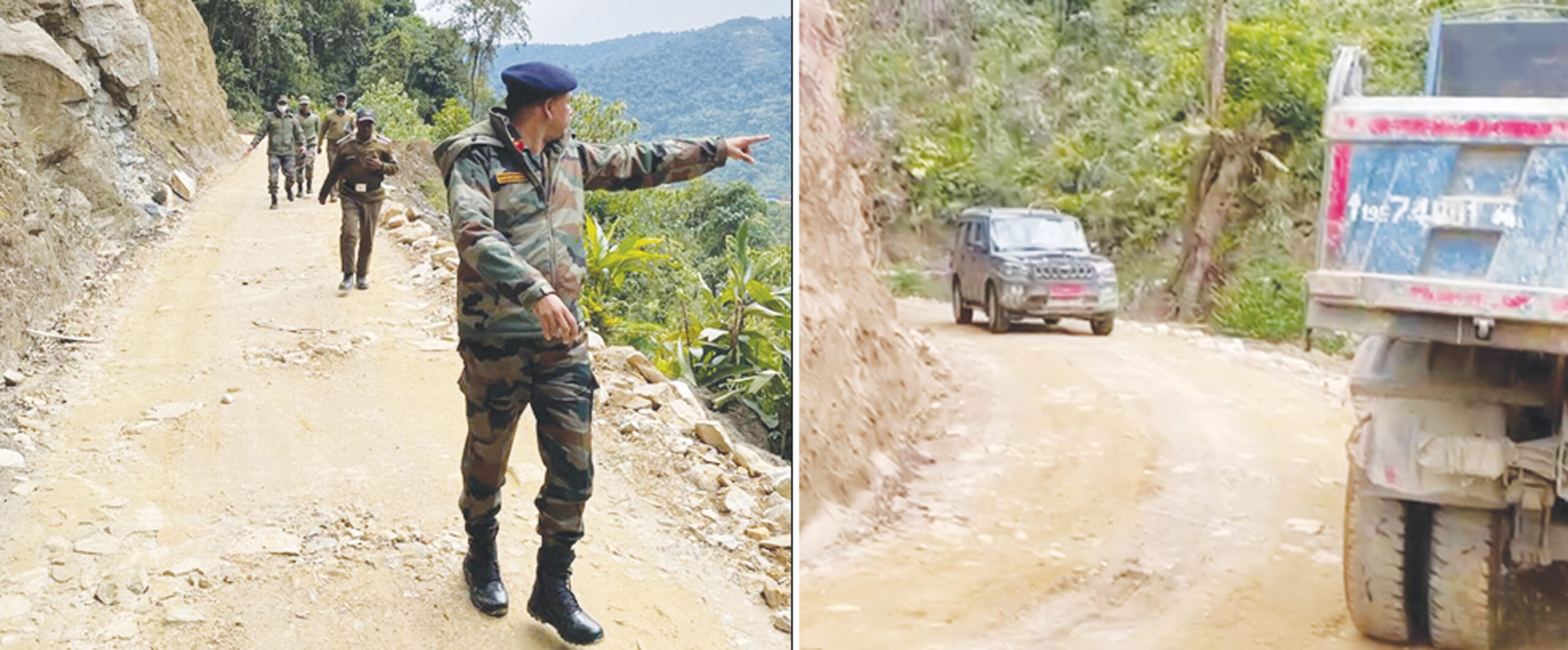
BRO Director General (DG) Lt Gen Rajeev Chaudhry, who inspected porter tracks in forward areas of Kurung Kumey district on Saturday, appreciated Project Arunank as those were motorable to facilitate speedy movement of security forces with heavy vehicles.
That is why applauding the works being executed by committed officers and men of BRO’s Project Arunank, the DG awarded DGBR commendation card 9 (on the spot) in recognition of their efforts.
Foot tracks: Then Koloriang MLA Lokam Tassar, through a calling attention motion in the assembly on 04.07.12, had raised the porter track issue.
The Indo-Tibetan Border Police (ITBP) guarding the border faces tough time in transporting their men and materials to their station at Tapa as the last motorable road is up to Huri, 5-km from Damin, in state’s most remote district along Indo-China-Tibet border, then Koloriang lawmaker Lokam Tassar had said in an exclusive interview to this daily as published on 18.12.19.
The 28-km road up to Damin from Koloriang was made motorable by the BRO in November 2018 and construction up to Tapuk is more important, he had said.
One of the remotest circle HQs of the state for which the locals used to conduct arduous foot trekking to reach Damin till 2018, the road upto 30-km was made trafficable from Bodh tri-junction near Sarli, he had said.
It would be worth mentioning here that during his first tenure as MLA, Tassar had drawn attention of the state Assembly that Kurung Kumey had the singular distinction of having state’s many unconnected circles, namely Damin, Pip-Sorang, Tali, Parsi-Parlo, Chambang, Gangte, Tarak & Passang. About 50,000 of district’s total 94,000 population used to live in those circles then.
Tasar had told the tell-tale situation of local people and security personnel guarding the border as many security personnel fall into hundreds-meter deep gorge below when ramshackle wire suspension bridges built during 1950-60 and dilapidated foot tracks collapse making the security personnel traceless.
Porter tracks only provide link in Kuru and Kumey valleys, which have Jumu and Mukpa pass, 80-km and 130-km from Sarli circle; Lutin, Chimpongl and Dharmu passes under Damin (Huri) circle for the people, the ITBP and para-military forces to move to guard the border, MLA had said and wondered “Shouldn’t we care for our people and jawans?”
This had earned Tassar the sobriquet ‘Porter track MLA’, as his emotional expression was an SOS message to the GoAP on the horrifying situation in the remote district along Indo-China-Tibet border.
This had also prompted then visionary chief minister Dorjee Khandu to move the Centre to seek Rs 500 crore as peace bonus for maintenance of the porter tracks and road links to all 52 unconnected circles in the state.
There have been over 250 incursions by China into Indian territory in less than two year, CM Dorjee Khandu had said, adding topmost priority should be given to rapid economic and infrastructure development in border areas to face the challenge, The Indian Express had reported on 22.09.09.
Dismissing claims that the UPA Govt has shown a meek response to Chinese challenge, he had lamented that development activities on Indian side of the border are still quite poor. While China has developed two-lane roads right up to the McMahon Line, we do not even have porter tracks in most of the border areas on our side. Absence of motorable roads has not only affected the people living there, but it will also hamper movement of troops in the event of real trouble, he had said.
Proliferation of Chinese TV, radio and telecommunication channels into Indian side has also impacted on Indian people living in border areas while our BSNL network is very poor in the border areas, he had pointed out.


 20

