
By A O News Service
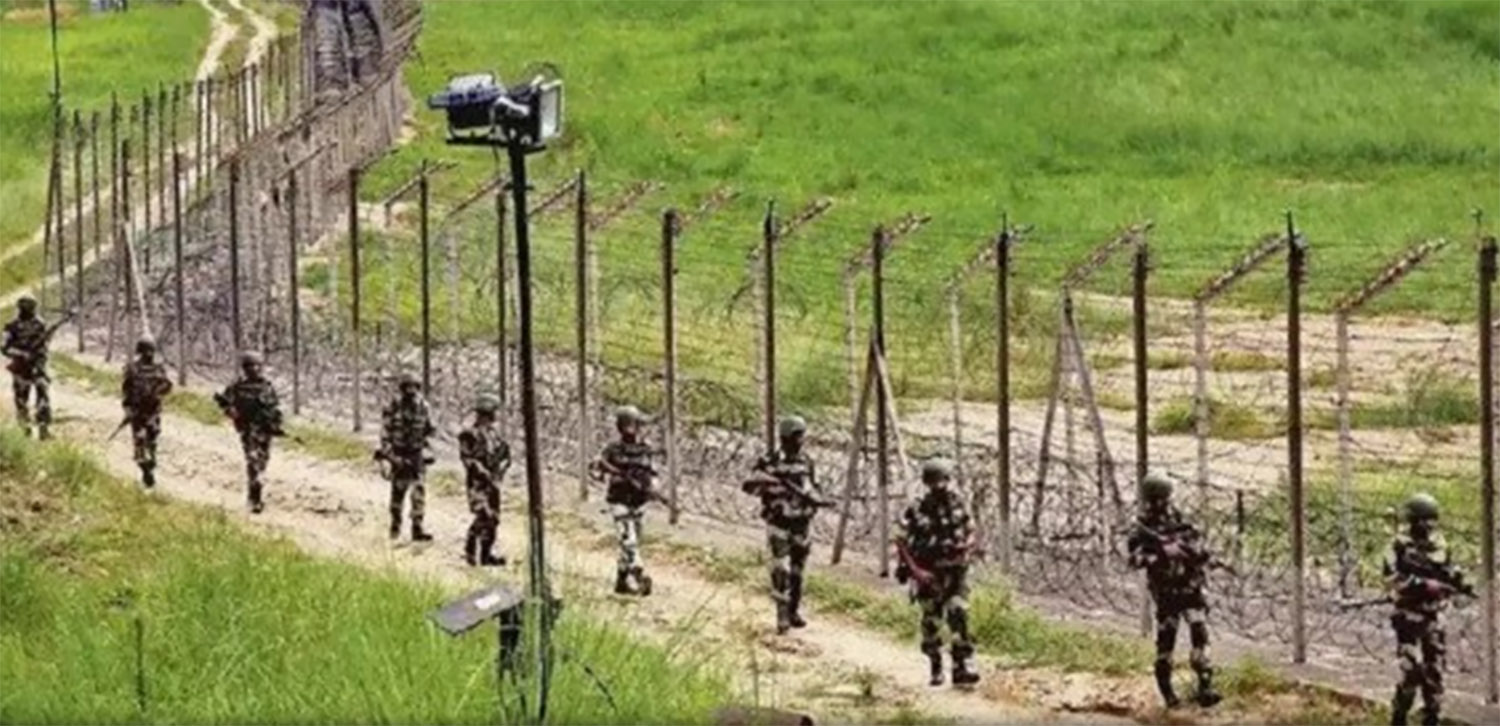
ITANAGAR, Mar 28: The Defence Ministry has increased surveillance along the Indo-China borders with the help of searchlights which continuously rotate for 360 degrees.
These lights made with indigenous technology by a Kanpur firm have a radius of up to one kilometer and will keep a check on enemy movement as enemy movements can be seen clearly being installed on the outskirts.
Total 4,000 lights have been supplied first time for the borders of Punjab, Gujarat, Ladakh, Arunachal Pradesh and Uttarakhand, according to Carpet Lights Company MD Mahendra Awasthi agency reports from New Delhi.
Awasthi, who had demonstrated the searchlights, said that his company has been working for 25 years to make such lights.
“When Galwan Valley incident happened, that time we got the order for lights for the India-China Border,” Awasthi said. In Galwan Valley clash on June 15, 2020, 20 Indian Army men and unspecified number of Chinese troops died. The major reason for their deaths was pitch-black darkness in the area. The forces had to face difficulty during the incident.
Arunachal Pradesh would be immensely benefitted as the Sino-Indian border dispute is an ongoing territorial dispute over the sovereignty of relatively large, and several smaller, separated pieces of territory of two Asian giants. The other disputed territory is south of the McMahon Line, that separated Arunachal Pradesh (formerly known as North-East Frontier Agency).
The McMahon Line was part of 1914 Simla Convention signed between British India and Tibet, which China disowns stating that Tibet was never independent when it signed the Simla Convention.
Thus, the 1962 Sino-Indian War was fought in both disputed areas. Chinese troops attacked Indian border posts in Ladakh in the west and crossed the McMahon line in the east. There was a brief border clash in 1967 in Sikkim region. In 1987 and in 2013, potential conflicts over the two differing Lines of Actual Control (LAC) were successfully de-escalated. A conflict involving a Bhutanese-controlled area on the border between Bhutan and China was successfully de-escalated in 2017 following injuries to both Indian and Chinese troops.
Agreements signed pending ultimate resolution of boundary disputes were concluded in 1993 and 1996. This included “confidence-building measures” along the LAC. To address the boundary question, formalised groups were created, like Joint Working Group (JWG) to be assisted by Diplomatic and Military Expert Group. In 2003, Special Representatives (SRs) mechanism was constituted while in 2012 another dispute resolution mechanism, Working Mechanism for Consultation and Coordination (WMCC) was framed too.
While the border dispute continues, both nations are also competing to build infrastructure along the border (LAC). India’s construction of a new road to a high-altitude air base is seen as one of the main triggers for multiple brawls.


 20
