

Devotee Bipasha Paul offering obeisance to the Goddess Basanti
By Pradeeep Kumar
NAHARLAGUN, Apr 10: Capital Complex of Arunachal Pradesh known as ‘mini India’ as people of all beliefs, faiths and religions from across India live here harmoniously and celebrate various festivals and pujas in various parts of the state in close cooperation with indigenous people that has earned the sobriquet ‘Land of Hospitality’ for the state.
Basanti Puja or Chaitra Durga Puja, is being celebrated as usual during Chaitra Navratri (April 7 to 11). This puja is based on the belief that Durga Puja was originally held during spring or Basant season to observe the spring equinox. It was Lord Ram who changed worship period of Goddess Durga from Chaitra to Ashwin (October – November). He had invoked Goddess Durga in Ashwin month to get her blessings before starting his campaign against demon King Ravana in the Ramayana.
Kali Bari Puja Committee here headed by chairman Mrinal Kanti Dey and member-secretary Pradip Dutta is worshipping Basanti puja with head priest Dhananjay Chakraborty.
The name Basanti Puja is famous in eastern parts of India, especially in Bengal, Assam, Manipur, Tripura, Orissa, Arunachal Pradesh and Jharkhand. Mother Goddess is worshiped in north and western parts of India during the same period for nine days starting from Chaitra Shukla Paksha Pratipada.
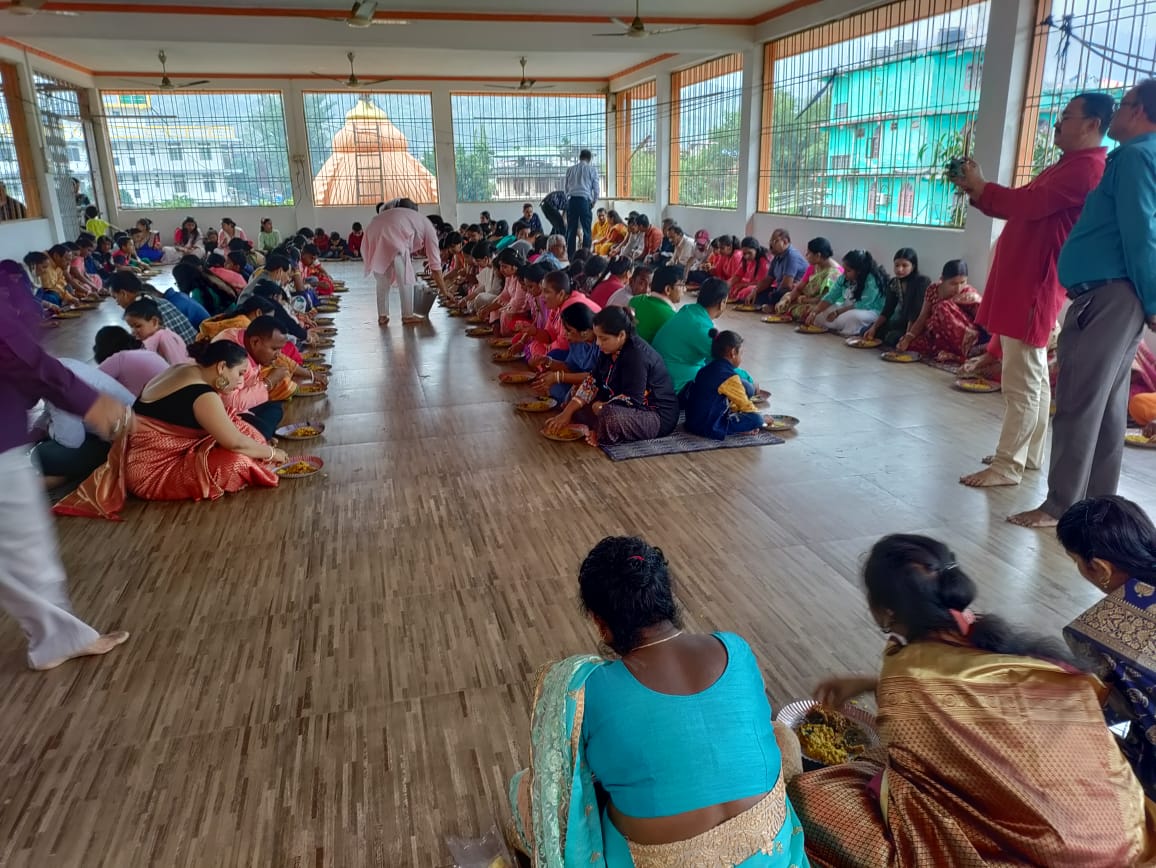
It is still popular with Goddess Durga worshippers as Goddess Basanti, who observes fast on Ashtami and Navami days. Numerous devotees made a beeline to Kali Bari on Sunday to pay obeisance while hundreds were offered prasad who relished with slogans ‘Jai Maa Kal’…‘Jai Maa Basnati’.
Basanti Puja finds mention in numerous Hindu Scriptures. It is said that King Suratha, an ideal king, was the first to worship Mother Goddess Durga. He performed the pujas and ritual in the month of Chaitra (March) during the spring season. That puja was known as Basanti Puja. People followed this pattern till Lord Ram changed it.
Basanti Puja is famous as Malini Mela along with a big fair in Malinithan in Arunachal Pradesh. The famous Malini temple, dedicated to Goddess Durga and large number of devotees from both plain and hills offer obeisance to the goddess during the period.
The Malinithan archaeological site is located at Malinithan is an archaeological site which consists of ruins of a Hindu temple of early medieval period on the northern bank of Brahmaputra River on the foothills of Siang mountains in Likabali town of Lower Siang district.
The archaeological studies of the ruins indicate that the temple was built with granite stones by Chutia kings in 13th-14th century during influence of Hinduism in the region. It was the period when the Chutia kings had started setting Brahmins in different areas of their kingdom offering them land grants.
Kechai-Khaiti, a tribal goddess found among the Bodo-Kachari groups is the chief deity who was worshipped in the ruined temple. The location of a narrow stream named Akashiganga similar to the site of Tamreswari and Bura-Buri Temples of Sadiya indicates that sacrifices were once performed in the temple.
Malinithan, situated on a hill that rises to a height of 69 ft, offers a commanding view of the plains around it and Brahmaputra River. A legend was implanted around the site in 16th century, connecting the place to the mythological king of Bhismaka (Lord of Vidarbha) of the epics.
As per the mythology, Lord Krishna had eloped with Rukmani, daughter of King Bhismak, and travelling from Bhishmakanagar to Dwarka and halted at Malinithan, where they were received by Goddesses Durga. The name of the place is derived from the word ‘Malini’ as Durga had welcomed them with a garland (mala) of choicest flowers of her garden.
While the ruins of Bhismak Nagar have been found in Dibang Valley district, Malinithan, found in ruins provides proof of the union of Shakti cult and Baishnabisim. Places associated with such mythological stories could easily attract pilgrims, but the places could not get due attention because of lack of communication facilities, mainly absence of rail link to the land-locked strategically located state with 1,680-km international border with China, Myanmar and Bhutan.
The archaeological finds at the site of sculptures of Durga, a Shiva linga and a bull, the mount of Shiva, relate to worship by people of the Shiva cult. Based on these, archaeologists have inferred that the Shakti cult was practised in the region. It was one of the three leading centers of Shaktism; the other two centers are stated to be Bhaghawati, the mother goddess at Gorehoga village in North Lakhimpur and Tamresari in the east.
The temple doesn’t find any mention in 10th-11th century Kalika Purana. From all archaeological evidences, archaeologists have opined that the temple was built in 13th century. Stone mason marks found in Malinithan were also found in sites of Sadiya like Tamreswari temple, Bura-buri, Padum pukhuri and other places like Nakshaparbat and Buroi.
Malinithan ruins reflect Kaḷinga architectural style for which it is believed that Chutia kings had invited Odia artisans to build the temple.


 20

