
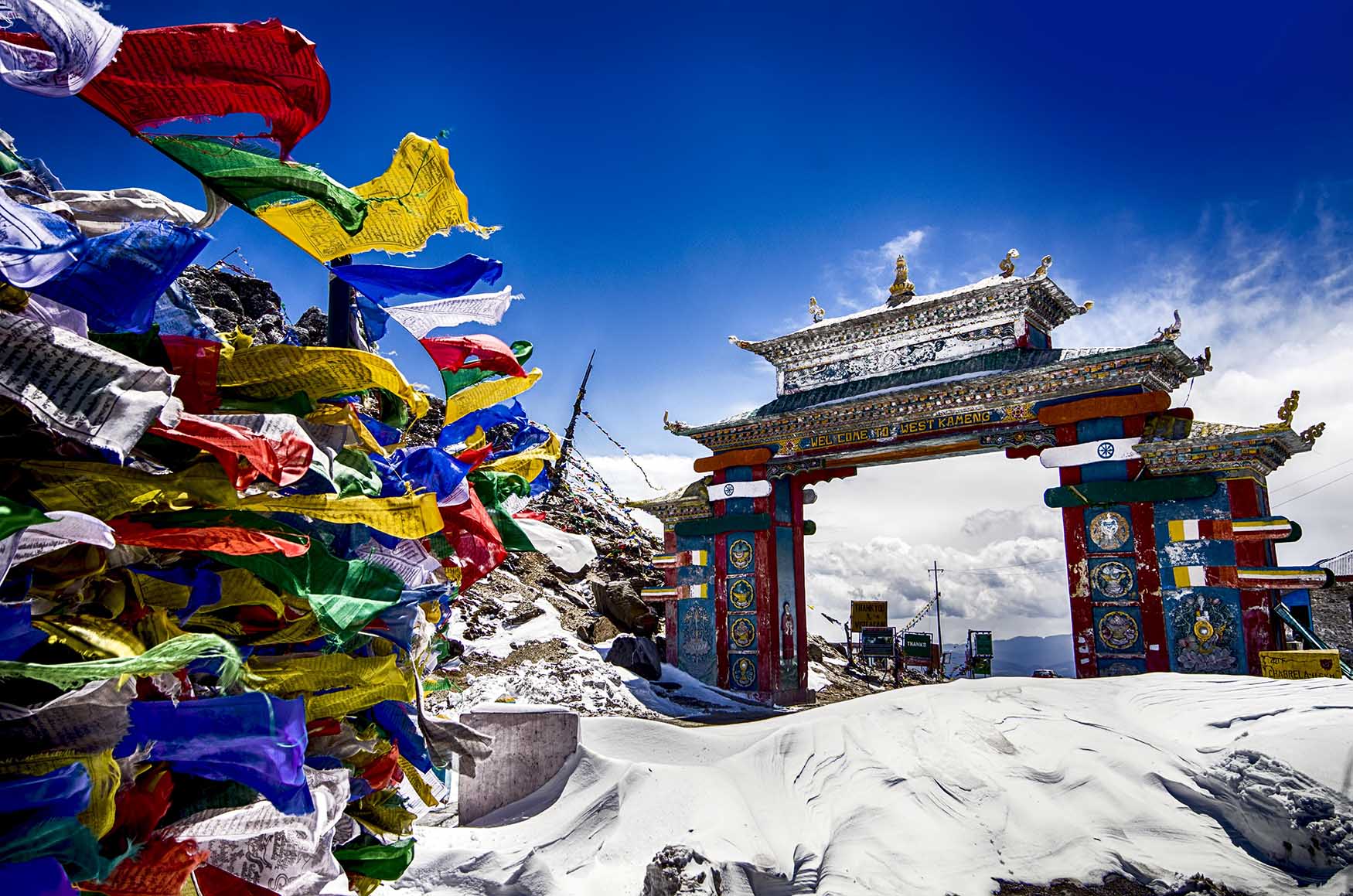
Sela Pass on way to Tawang
Beyond the Horizon
By Pradeep Kumar
For China, control over Tawang is linked to the legitimacy of its hold over Tibet. It fears that spiritual leader 14th Dalai Lama may ordain his successor in Tawang.
In September 2021, nearly 200 Chinese soldiers crossed into Indian Territory in Tawang, the north-western district of Arunachal Pradesh, which shares a boundary with Bhutan to its west and Tibet in the north.
The incident marks the escalation by the People’s Liberation Army (PLA) on the Line of Actual Control (LAC) with India. The two sides have increased deployment of troops and heavy equipment all along the Himalayan frontier since the standoff in eastern Ladakh began in May last 2021, and which continues at some friction points.
In fact, Tawang was historically part of Tibet. The 1914 Simla Accord defined the McMahon Line as new boundary between British India and Tibet. By this treaty, Tibet relinquished some of its territories, including Tawang, to the British. But it was not recognised by China.
In 1950, Tibet lost its de facto independence and was incorporated into the newly established People’s Republic of China. Later, in 1959, when Dalai Lama fled Tibet and came into India through Tawang.
During the Sino-Indian war of 1962, Tawang fell briefly under Chinese control, but China voluntarily withdrew its troops at the end of the war. Tawang again came under Indian administration, but China has not relinquished its claims on most of Arunachal Pradesh, including Tawang.
However, China is reportedly ‘gravely concerned’ as it would ‘seriously damage’ the bilateral ties.
His Holiness Dalai Lama had not visited Arunachal Pradesh since 2009. But his itinerary to visit Arunachal in July 2018 had initially evoked threats from Beijing, but eventually bilateral concerns outweighed them.
The Chinese Govt would not allow tensions with India over the issue of Arunachal Pradesh to spill into other spheres of engagement.
The bid for NSG membership and having Masood Azhar placed on the UN terrorists’ list have occupied much of the bilateral canvas, while the larger issue of the boundary resolution hasn’t been addressed adequately.
Recent developments, such as visits to Tawang by American diplomats, and an official dinner at the U.S. Embassy attended by leader of the Tibetan Govt in exile, could be interpreted as messages aimed at China, even if they did not signify any policy change.
Thus, New Delhi has to fine-tune its moves to avoid misperception that it is indulging in political power-play.


 20
