
Beyond the Horizon
By Pradeep Kumar
Mostly White, Green, Computer & IT, Missile and Aadhar card revolutions have catapulted India on a path of all out development for all sections of the society without any distinction. But those who masterminded these revolutions were from lateral fields, not from bureaucracy.
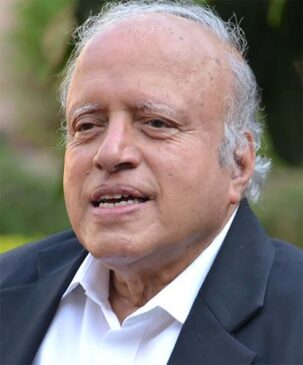
Green Revolution was launched by Indian Govt in 1965 with the help of a geneticist M.S. Swaminathan. It continued till 1978 and was a great success and to change the country’s status from a food-deficient economy to one of the world’s leading agricultural nations. This earned Dr Swaminathan the sobriquet father of the Green revolution.
Green Revolution was a term used for rapid increases in wheat and rice yields in developing countries that brought about by improved varieties combined with expanded use of fertilizers and other chemical inputs. It has had a dramatic impact on incomes and food supplies in many developing countries.
India’s initiative led to an increase in agricultural production, especially in Haryana, Punjab, and Uttar Pradesh. Major milestones in this undertaking were development of a high-yielding variety of seeds of wheat and rust-resistant strains of wheat.
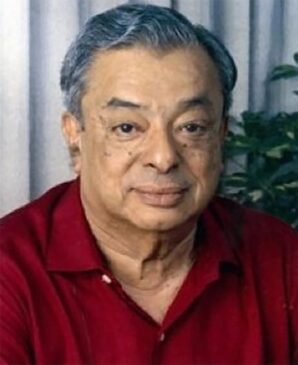
White Revolution: Dr Verghese Kurien is the brains behind the birth of India’s biggest milk manufacturer, Amul. For his mammoth efforts in dairy field, Dr Kurien (Zoheb Akbar Dr Verghese Kurien) is also known as ‘Father of White Revolution in India’ or ‘The Milkman of India’.
Born in Calicut (now Kozhikode), Kerala in 1921, had obtained B.Sc (physics) from Loyola College in Madras and went to the US on a Govt scholarship to pursue mechanical engineering. On returning to India, he was assigned to five-year officer’s job in Govt’s Dairy division as payback for his scholarship. That’s when he saw the ruthless exploitation of dairy farmers in the villages. Till mid-20th century, they were always exploited by milk distributors, with entire regions under the tight control of shrewd businessmen. Looking at their struggle, Dr Kurien, along with Tribhuvandas Patel, took steps to unite them.
Dr Kurien quit his job and started milk cooperative movement, later rechristened as Amul. ‘Operation Flood’ was launched in 1970 by him to kick start India’s White Revolution as an experiment. It created a national milk grid in over 700 towns and cities by linking producers across India & reducing seasonal price fluctuations to ensure milk producers get a major share of the income generated from consumers. It also ensured farmers to get fair market prices regularly. The village milk producers were backbone of ‘Operation Flood’.
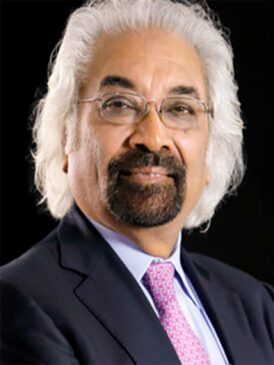
Computer & IT Revolution: Sam Pitroda, born on 04.05.42 in Titlagarh, Odisha to a Gujrati family, is a telecommunication engineer, inventor and entrepreneur. As an advisor to then Prime Minister Rajiv Gandhi, he had helped bringing computerization and served a advisor to PM Dr Manmohan Singh too. Thus, he is popularly known as the Father of India’s Computer and IT Revolution.
Pitorda with a master’s degree (physics and electronics), went to the United States in 1964 and obtained PG degree (electrical engineer) from Illinois Institute of Technology. Chicago. While working for GTE in Chicago, he pioneered hand-held computing after inventing Electronic Diary in 1975. In 1974, he joined Wescom Switching, one of the first digital switching companies. He developed 580 DSS switch in over nearly four years and released in 1978.
Wescom acquired by Rockwell International in 1980, where Pitroda became vice president. Pitroda, during his four decades as an engineer, filed scores of patents in telecommunications and holds around 100 technology patents besides involved in many start-ups. His latest set of patents was mobile phone-based transaction technology, both financial and non-financial.
He was nearly a decade with PM Gandhi, who intended to build Indian information industry and extend digital telecommunications to every corner of the country, including remote villages. Pitroda launched Center for Development of Telematics (C-DOT) and served as Advisor to the PM on Technology Missions related to water, literacy, immunization, oil seeds, telecom and dairy. He is also founding chairman of India’s Telecom Commission.
Pitroda returned to India again in 2004 to focus on building knowledge institutions and infrastructure. He served National Knowledge Commission chairman (2005–2009), a high-level advisory body to the PM, to give policy recommendations for improving knowledge-related institutions and infrastructure. He submitted around 300 recommendations on 27 focus areas during its term.
Pitroda founded National Innovation Council in 2010 and served as advisor to the PM with a cabinet minister rank on Public Information Infrastructure and Innovation, to help democratize information. He had founded and served as chairman of C-SAM company with its HQs in Chicago and offices in Singapore, Tokyo, Pune, Mumbai & Vadodara.
Besides started several businesses as an entrepreneur (Wescom Switching, Ionics, MTI, Market, WorldTel, C-SAM, etc.) in the US and Europe., Pitroda also served as an advisor to United Nations and in 1992.
His biography Sam Pitroda: A Biography was published and became a bestseller on The Economic Times list for five weeks. He is living in Chicago, Illinois since 1964 with his wife and two children besides having residence in Delhi.
Missile Revolution: Mysorean rockets were the first iron-cased rockets that were successfully deployed for military use. Kingdom of Mysore used them effectively in conflicts against the British East India Company. In addition, wheeled rocket launchers capable of launching five to 10 rockets almost simultaneously were used in war. These rockets were re-engineered as Congreve rockets by British opening the door of development of advanced rocketry further in Europe
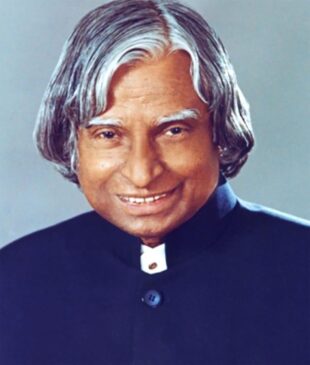
However, Dr. A.P.J. Abdul Kalam, born on October 15.10,1931 and passed away on 27.07.2015, aeronautical engineer by training and aerospace scientist, played an instrumental role in May 1998 Pokhran-II nuclear tests. His involvement in nuclear power in India earned him the title “Missile Man of India”.
Dr Kalam, is one of India’s most celebrated scientists and statesmen, was President of India from 2002 to 2007. He significantly advanced rocketry in India’s Defense Research and Development Organization (DRDO) and Indian Space Research Organization (ISRO). Heir to the vision of Professor Vikram Sarabhai, who set India on a course of a socio-economically oriented space program, Dr. Kalam was the man who raised India’s eyes to the stars, and raised India to join the community of spacefaring nations.
Dr. Kalam was regarded as one of the greatest minds, visionaries, and peacemakers of the early 21st century. His integrity and deep belief in everything influenced Indian people strongl. Kalam was voted one of India’s two most trusted men during a period in which India deeply distrusted its politicians. He received many honorary degrees and other honors, including India’s highest civilian award, Bharat Ratna. He is the author of many books, including an autobiography Wings of Fire.
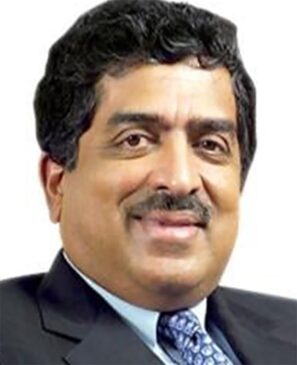
Aadhaar card: Nandan Mohanrao Nilekani (born 2 June 1955), who co-founded Infosys, with a bachelor’s degree (electrical engineering) from Bombay IIT, started his career in 1978 with Mumbai-based Patni Computer Systems, where he was interviewed by N R Narayan Murthy. He headed GoI’s technology committee, TAGUP. But, in 1981, Nilekani, Murthy, and five others left Patni to start their own company, Infosys. Nilekani became Infosys CEO in March 2002 and became co-chairman of board of directors in April 2007 and become chairman in 2017.
Nilekani left Infosys in July 2009 to serve as UIDAI chairman, a cabinet-ranking position, offered by Prime Minister Dr Manmohan Singh. He as UIDAI chairman implemented Multipurpose National Identity Card or Unique Identity card (UID Card) project in India to provide a unique identification number for all Indian citizens, “the biggest social project on the planet.”


 20
