
Beyond the Horizon
By Pradeep Kumar
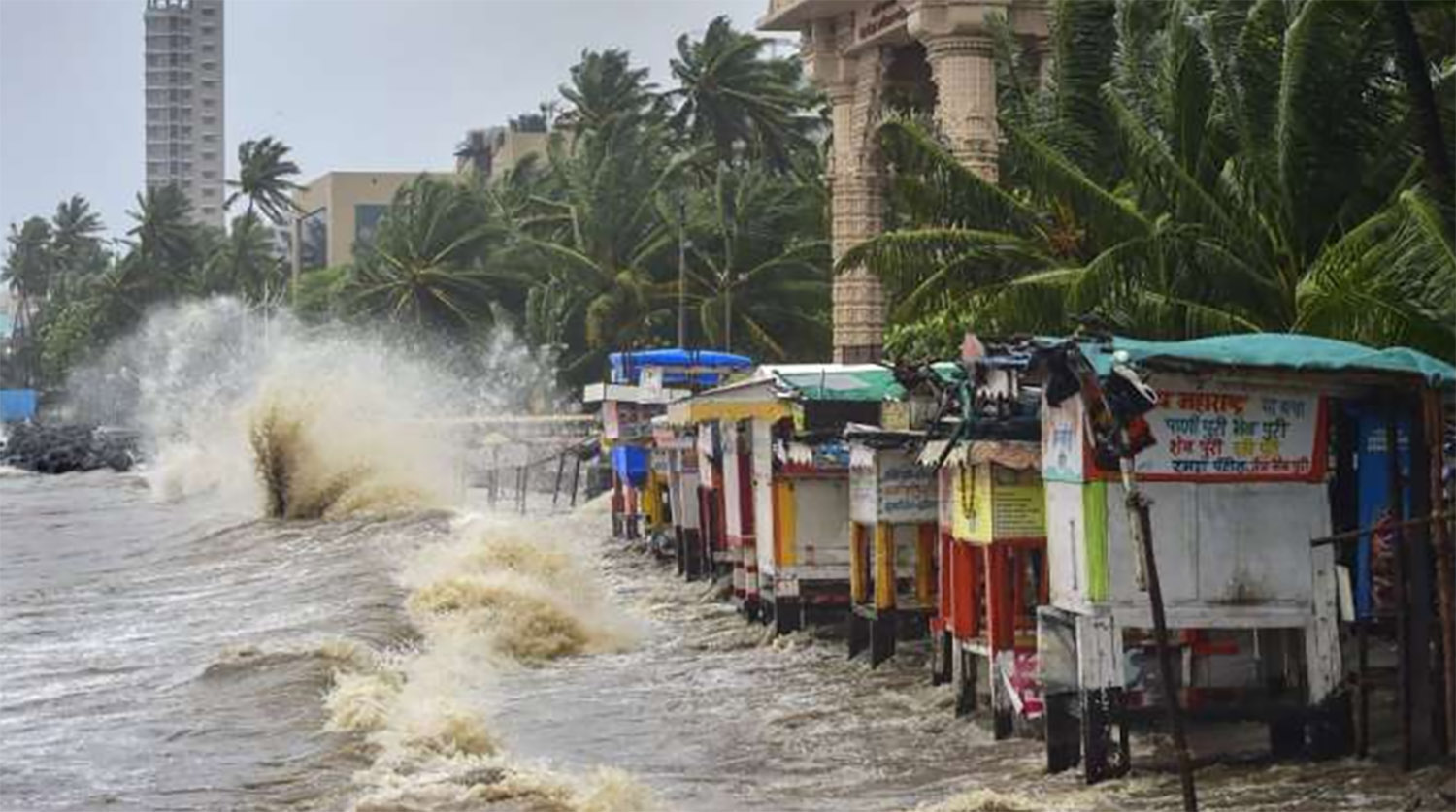
People in India rejoice with the onset of monsoon and feel relief from the heat while in some parts of the world there is devastation every year while many parts of India were flooded recently, due to heavy rains.
China is believed to be the reason behind the floods in India states to a large extent. A 2018 report shows that China had released water into the Brahmaputra River, which led to a flood alert in Arunachal Pradesh and Assam.
China had informed India that the water level of Tsangpo River had risen. After which a warning was issued in three districts of Arunachal and Upper Assam. The water released by China into Brahmaputra River was the highest level in last 50 years. The river is called Tsangpo in Tibet, Siang in Arunachal and Brahmaputra in Assam, reports allsarkarinaukari.in.
Assam: Every year people lose their lives due to floods in Assam and this year at least 118 people have died due to the floods. Massive floods had engulfed 32 out of 36 districts while 54.5 lakh people were affected since April.
Assam has received 53.4 mm of rain till June 19. Only in the first two weeks of the last month, 528.5 mm of rain was recorded, 109% higher.
Destruction was seen in Nagaon, Hojai, Cachar and Darang while Silchar was worst hit in Barak Valley. Landslides occurred in Dima-Hasao, Goalpara, Morigaon and Kamrup. Floods also created havoc in Meghalaya. Bihar also witnessed a flood-like situation. Floods caused human and economic destruction in Jammu and Kashmir too.
Reasons responsible: Environmentalists and climate change risk analysts have cited three reasons behind Assam’s annual floods. Increase in such weather events due to climate change, continuation of construction activities and rapid industrialization.
Govt’s response: When there is annual flood, the state is given full support by the Centre. Not only financial help but army is also sent for relief and rescue work. Regarding the flood, the NDRF says that the facility to gauge how frightening the flood can be, is less. Now the GoI is preparing for a new formula as decided in a meeting last month chaired by Home Minister Amit Shah. Poor planning: Council on Energy, Environment and Water in Assam programme head Abhinash Mohanty said: Assam is witnessing a large number of landslides. There is no plan to prevent landslides caused by climate change. When the river overflows, the water-absorbing canals are not being managed and developed. Uncontrolled and unplanned development has been going on for many years. Urbanization is increasing, development plans are neither being checked nor executed. Such infrastructure is not being prepared at ground level, which does not affect the climate.
Bihar: At least 33 people have died due to floods in Bihar this year and Bhagalpur district was the worst affected. There was also flood in August 2021. The level of Ganga Tiver was recorded at 34.75 mts (metre ton second), up from 34.72 mts in 2016. The highest flood level (HFL) of Ganga at Hathida, Patna was recorded at 43.33 mts.
Bad infrastructure: Poor infrastructure planning was blamed for devastation caused by heavy rains last year. Environmentalists say the weak embankment along Kosi River, which caused the floods last year, is a prime example of poor engineering.
J&K also saw floods and landslides after heavy rains. One of the reasons behind this is climate change. The rivers flowing on the mountainous areas are unable to carry much water due to narrow mark for which the water level of river rises after the rains and a flood-like situation arises. This also poses challenges in evacuating people to safe place. This also disrupts infrastructure, communication facilities and power supply.


 20
