
- Strengthen health care services: Dr Matur
ITANAGAR, July 20: Expressing concern over very high rate of cancer incidences in Arunachal Pradesh, National Centre for Disease Informatics and Research (NCDIR) director Dr. Prashant Mathur said that the Monitoring Survey of Cancer Risk Factors and Health System Response (MSCRFHSR) was conducted to provide the society, policy makers and decision makers in particular, about what is fueling the cancer burden in the state.
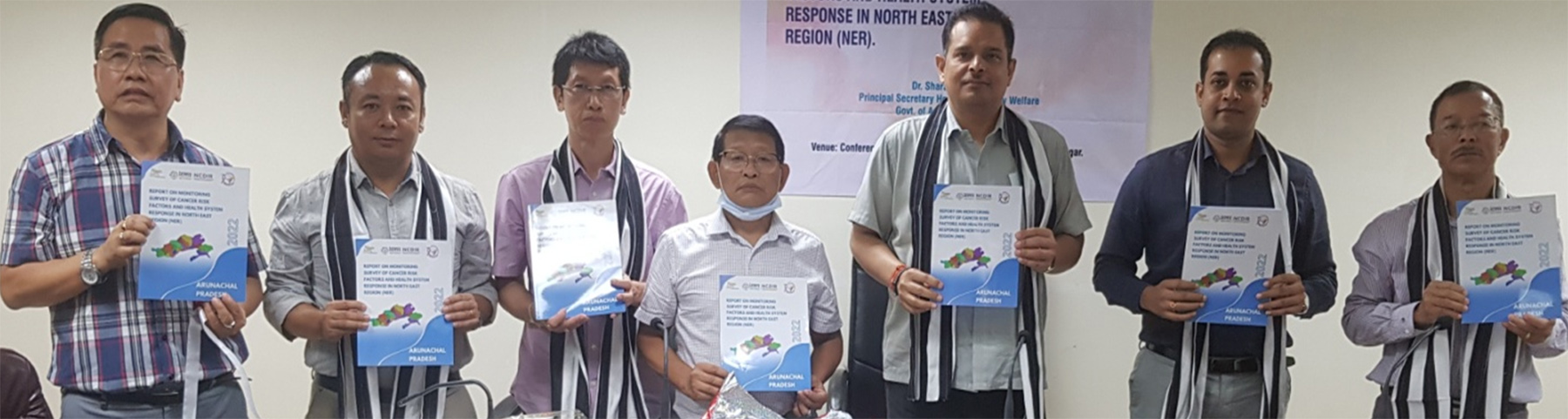
Dr Mathur was virtually addressing a function here on Wednesday that saw release of MSCRFHSR report by state’s Health & Family Welfare (H&FW) principal secretary Dr. Sharat Chauhan. H&FW special secretary Vivek H, health services director Dr. M Lego, TRIHMS director Dr. Moji Jini, director (medical education training & research) Dr. H. Ambing and cancer control programme nodal officer Dr. Shyam Tsering were present in the event.
“Cancer incidence will not decrease in future unless we reduce the risk factors drastically,” Dr Mathur said and gave three recommendations for the state government to consider: 1) To notify cancer as notifiable disease, 2) work closely with cancer registries as part of cancer intelligence system in the state to strengthen cancer registries through state investment for collecting and analysing cancer data timely and 3) strengthening secondary and tertiary health care services within the state to reduce number of patients seeking treatment outside the state.
Dr. Chauhan, in his address, stressed the need to changes lifestyle and eating habits, particularly consumption of tobacco and alcohol. The habit of consuming smoked and fermented foods and living beside the fireplace with smoke may not be possible to change overnight and report of such study may convince the mass to change their behavior and lifestyle, he said and assured to consider recommendations of Dr. Mathur.
Dr Jini advocated more such research projects by involving faculty and students of TRIHMS.
Highlighting the report earlier, principal investigator-cum-joint director (medical education) Dr. Sopai Tawsik said that prevalence of current tobacco use (smoked or smokeless) was 36.1%. The prevalence of smokeless tobacco use (24%) was higher than smoked tobacco use (19.1%). Over a quarter (28.7%) of current tobacco users (smoked or smokeless) were daily users. The mean age at initiation of use was 18.3 years while average duration of tobacco use among past smokers was 14.8 years.
Only 22.7 % of the smoked tobacco users had made self-attempts to quit smoking and only 3.3% had been advised to quit tobacco use by doctor/health worker, he said, adding over half of the respondents (57.9%) reported exposure to second hand tobacco smoking in past 30 days, either at home, during travel or at the work place.
About 12.6% of respondents were current users of non-tobacco betel products in the form of pan masala, betel quid or areca nut and use of arecanut (7.6%) was highest among current users, he informed.
Over 1/3rd respondents (36.7%) had consumed alcohol over past 12 months, while over a quarter (27.4%) had consumed alcohol over the past 30 days. The mean age of initiation of alcohol use was 17.7 years. Among those who consumed alcohol in the past 12 months, 9.6% were daily users and 3.5 % felt the need for a drink first thing in the morning every day. 11.5 % of the respondents engaged in heavy episodic drinking and only 2.2% of the respondents had been advised to quit alcohol use by doctor/health worker, he disclosed.
While giving detailed current health system scenario of the state, the survey conducted in Population Based Cancer Registry (PBCR) areas of the state reiterated the need for mass awareness on cancer and strengthening health care system for effective treatment, Dr Tawsik added.


 20

