
By Pradeep Kumar
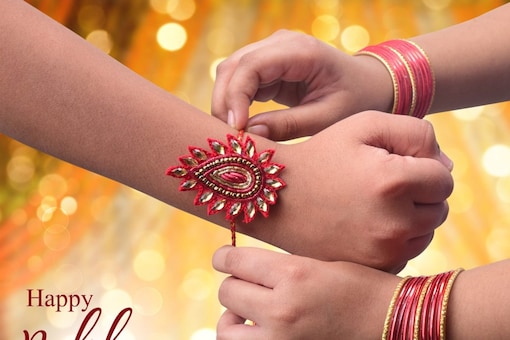
Raksha Bandhan is a popular annual ceremony, celebrated across the world significantly influenced by Hindu culture. On this day, sisters of all ages tie a talisman, or amulet, called Rakhi, around the wrists of their brothers, symbolically protecting them, receiving a gift in return, and traditionally investing the brothers with a share of the responsibility of their potential care.
Raksha Bandhan is observed on the last day of Hindu lunar calendar month of Shravana, which typically falls in August. The expression “Raksha Bandhan,” (the bond of protection, obligation, or care), is now principally applied to this ritual. Until mid-20th-century, the expression was more commonly applied to a similar ritual, also held on the same day, with precedence in ancient Hindu texts, in which a domestic priest ties amulets or threads on the wrists of his patrons and receives gifts of money.
In contrast, the sister-brother festival, with origins in folk culture, had names which varied with location, with some calling it as Saluno or Silono or Rakri. It is a ritual associated with Saluno including the sisters placing shoots of barley behind the ears of their brothers.
Of special significance to married women, Raksha Bandhan is rooted in the practice of territorial or village exogamy, in which a bride marries out of her natal village or town, and her parents, by custom, do not visit her in her married home. In rural north India, where village exogamy is strongly prevalent, large numbers of married Hindu women travel back to their parents’ homes every year for the ceremony. Their brothers, who typically live with the parents or nearby, sometimes travel to their sisters’ married home to escort them back. Many younger married women arrive a few weeks earlier at their natal homes and stay until the ceremony. The brothers serve as lifelong intermediaries between their sisters’ married and parental homes, as well as potential stewards of their security.
In urban India, where families are increasingly nuclear, the festival has become more symbolic, but continues to be highly popular. The rituals associated with this festival have spread beyond their traditional regions and have been transformed through technology and migration, the movies, social interaction, and promoted politically by the nation state.
Among women and men who are not blood relatives also show voluntary kin relations, achieved through the tying of rakhi, which have cut across caste and class lines and Hindu and Muslim divisions.
The Christians (Habesha), Muslims (Quran) and Hinds (Ayurveda) have clear meaning of relations to define brothers and sisters and this day is for them to celebrate.
Ramayana: The “evil” brother-sister duo Ravana and Surpanakha is known in Ramayana. Blinded by rage and love for his sister, Ravana led the way to violence and war with Rama through the abduction of Sita.
In Mahabharata, Lord Krishna once cut his finger accidentally when Draupadi tore a piece of from her saree and tied it on his finger to stop the bleeding. The piece of cloth then became a sacred thread. Krishna promised her that he will protect her from all evils throughout his life. When the Kauravas tried to disrobe Draupadi after pulling her by her hair, dragging her to the court and manhandling her, Krishna salvaged her dignity by providing immeasurable reams of cloth to keep her covered.


 20

