
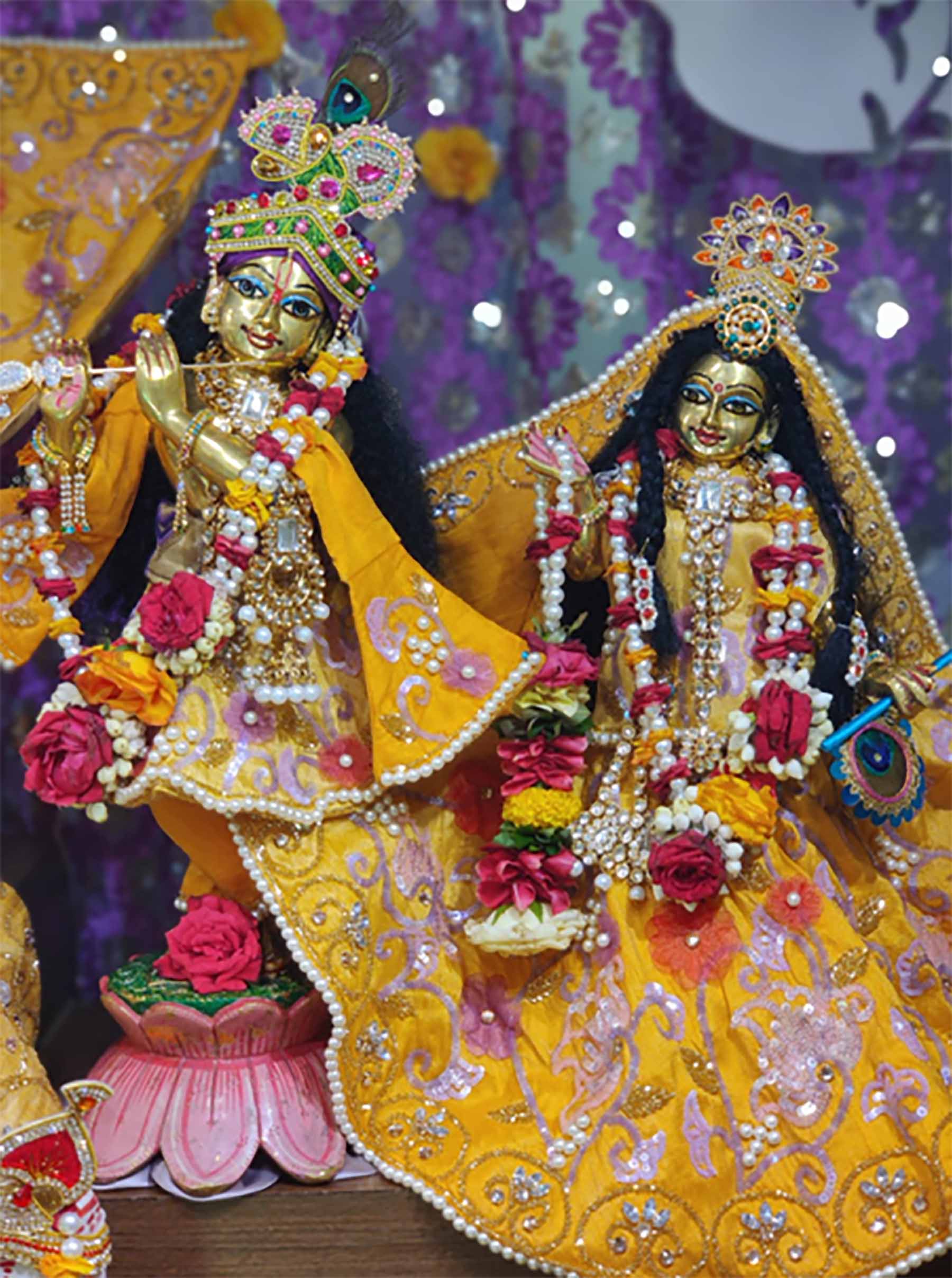
ISKCON temple at Remuna
Beyond the Horizon
By Pradeep Kumar
Krishna Janmashtami or Janmashtami or Gokulashtami is celebrated annually to mark the birth of Lord Krishan, 8th incarnation of Lord Vishnu, across the world, particularly at Vrindaban in Uttar Pradesh and Dwarka & Junagarh in Gujarat either in August or September.
The two-day festival which was celebrated with religious fervouor punctuated by rainfalls, the way it was rained heavily during his birth to swell Jamuna River, concluded on Friday. Thousands of devotees visited Remuna-based International Society for Krishna Consciousness (ISKCON) temple, built by Acharya Vaktivendanta Swami Srila Prabhupada, near Khirachora Gopinatha Temple, where statues are made of black stone brought from Vrindavana by devotee Chaitanya Dasa Babaji in about 1938. It is believed that Lord Sri Rama had carved Gopinatha with his arrow during his exile to Chitrakut jungle to show Sita his next incarnation Utkala King Langula Narasingha Deva had brought this deity from Chitrakuta to Remuna in 13th century.
Krishna was born to Mathura’s Yadava chief Vasudeva and his wife Devaki. Devaki’s brother, a tyrant named Kansa. But during Devaki’s wedding, Kansa’s fortune tellers had predicted that Devaki’s 8th child would kill him. Kansa imprisoned Vasudeva and Devaki and continued to kill one after another their newborn.
But after Krishna was born, Vasudeva secretly took him in a basket crossing overflowing Yamuna River to her sister’s Yashoda, wife of Gokula chieftain Nanda and exchanged him with Yashoda’s daughter Yogmaya. When Kansha tried to kill her, she slept away and appeared in the sky to warn that his killer is already born in his kingdom before disappearing, according to Puranas.
Krishna grows up near modern-day Mathura. Two of Krishna’s siblings also survived, namely Balaram and Subhadra.
The legends of Krishna’s childhood and youth describe him as a cow-herder, a mischievous boy whose pranks earn him the nickname Makhan Chor (butter thief), and a protector who steals the hearts of the people in both Gokul and Vrindavana. For example, Krishna had lifted Govardhana hill to protect Vrindavana inhabitants from devastating rains and floods. Other legends describe him as an enchanter and playful lover of the gopis (milkmaids) of Vrindavana, especially Radha. These metaphor-filled love stories are known as Rasa Lila and romanticized by poet Jayadeva in Gita Govinda. Gopis in true sense are saints meditating for ages for nirvana.
After quelling several assassination attempts of tyrant king Kansa, Krishna, according to legends, kills his uncle, reinstates Kamsa’s father Ugrasena as king of Yadavas and becomes a leading prince at the court. He then leads Yadavas to newly built city of Dwarka.
Kuru Kingdom princes Pandavas rose in eminence and Krishna befriended with them, particularly Arjuna and played a key role in the Mahabharata as Arjuna’s charioteer.
Bhagavata Purana describes eight wives of Krishna as Rukmini, Satyabhama, Jambavati, Kalindi, Mitravinda and Nagnajito or Satya. Dennis Hudson describes it as a metaphor where each of eight wives signifies a different aspect of him while George Williams in Vaishnava texts mention all Gopis as wives of Krishna, but spiritual symbol of devotional relationship and total love to each and everyone devoted to him.
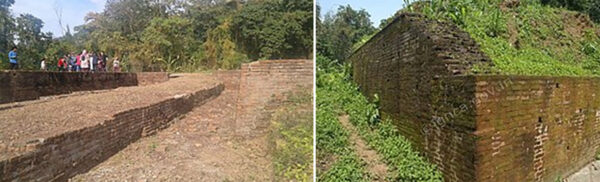
Krishna had eloped with Rukmini, daughter of Vidharbha or Kundilpur or Bhismaknagar and married her. It was built by King Bhismak or Bishmook, father of Rukmini (C Allen, 1928). Bhismaknagar ruins (in pic) have been found near Lower Dibang Valley district HQs Roing in Arunachal Pradesh. The archeological ruins (dated 11th-15th centuries), a fortified city spread over an area of 10 sqkm with 4.5-meter tall and 6-meter wide wall made of granite stone, is presumed to be capital of Chutia king Lakṣmīnārāyaṇa of early 15th century based on brick inscription or paleographical analysis. Bhismaknagar, first found mention in 1928 Assam District Gazetteer or Chutia chronicles, is historically known as Sadhayapura as per copper inscriptions.
The anecdotes and narratives of Krishna’s life are called Krishna Leela and he is a central character in Mahabharata, Bhagavat Purana, Brahma Vaivarta Purana and Bhagvat Gita that portray him in various perspectives: as a god-child, a prankster, a model lover, a divine hero and the universal supreme being. His iconography reflects these legends, and shows him in different stages of his life, such as an infant eating butter, a youth playing a flute and with Radha surrounded by female devotees; or a friendly charioteer giving counsel to Arjuna.
The name of Krishna has been traced to 1st millennium BCE literatures. In some sub-traditions, Krishna is worshipped as Svayam Bhagavan (Supreme God), sometimes known as Krishnaism, an outcome of medieval era of Bhakti Movement. Krishna-related literature has inspired numerous performance arts, such as Bharatnatyam, Kathakali, Kuchipudi, Odissi and Manipuri dance. The worship of Krishna has also spread to the Western world and Africa since the 1960s by ISKCON.
The name “Krishna” originates from Sanskrit word Kṛṣṇa, means “dark” or “dark blue” or “all-attractive” but also known by various epithets, like Mohan “enchanter”, Govinda “chief herdsman”, Keev “prankster”, Gopala “Protector of the ‘Go’ (souls)”, Vasudeva, Muralidhar ‘One who holds a flure’, Chakradhar ‘One who holds a chakra’ and Jagannatha ‘Lod of the World’ but ‘Shri’ is always used as honorary title reflecting the philosophy of omniscient, omnipresent and omnipotent.
Vasudeva was a god of Vrishnis tribe of 5th-6th century BCE found in the writings of Panini and of 2nd century BCE found in epigraphy in Heliodorous pillar.
Around the 4th century CE, another tradition, Krishna tradition refers to cult of Gopala-Krishna, protector of cattle, while a Mora stone slab found at Mathura-Vrindavan archaeological site with Brahmi inscription kept in Mathura Museum now, dated to 1st century CE and mentions five Vrishni heroes, namely Saṃkarṣaṇa, Vāsudeva, Pradyumna, Anirudha and Samba.
The inscriptional record for Vāsudeva starts in 2nd century BCE with the coinage of Agathocles and Heliodorus pillar, but the name of Krishna appears rather later in epigraphy. At Chilas II archaeological site dated to first half of the 1st-century CE in northwest Pakistan, along Afghanistan border, are engraved two males, along with many Buddhist images. The larger of the two males held a plough and club in his two hands. The artwork also has an inscription with it in Kharosthi script, which has been deciphered by scholars as Rama-Krsna, and interpreted as an ancient depiction of the two brothers, Balarama and Krishna.
The first known depiction on the life of Krishna himself comes relatively late, with a relief found in Mathura, dating back to 1st-2nd century CE. This fragment shows Vasudeva, Krishna’s father, carrying baby Krishna in a basket across the Yamuna. The relief shows at one end a seven-hooded Naga crossing a river, where a Makara crocodile is thrashing around, and at the other end a person seemingly holding a basket over his head.
This mythological account, based on literary details from Mahabharata, Harivamsa, Bhagabat Purana and Vishnu Purana narrate Krishna’s life as Krishna charitas.


 20
