
- Railways not to disturb water bodies for track laying: Nalo
By A O News Service
ITANAGAR, Sep 08: A BJP MLA in the state on Thursday alleged lack of coordination between departments for successful implementation of Pradhan Mantri Krishi Sinchayee Yojana (PMKSY) in the state.
Lokam Tassar during a short hour discussion alleged that the departments – Rural Development, Water Resources Development (WRD) and Agriculture-Horticulture, responsible for implementing the flagship programme of the Centre, are not coordinating with each other for which many places in the state were being deprived of the benefits from the scheme.
Tassar added that the departments formulate separate action plans without the knowledge of other and are not coordinating with each other, as a result of which beneficiaries are suffering.
The senior lawmaker representing Koloriang assembly constituency in Kurung Kumey district suggested for constituting a committee to monitor implementation of all flagship programmes of the Centre.
Taking part in the discussion, another BJP MLA Nyato Dukam pointed out that many central schemes are difficult to implement in the state due to its peculiar topography in comparison to other states of the country and requested the government to make aware the elected representatives on the guidelines before implementing any central programmes.
Tana Hali Tar (BJP) suggested for area-specific programme implementation and expressed concern over the hurdles created by the banks while sanctioning loans to the farmers.
Responding to the apprehensions by the members, Agriculture and Horticulture Minister Tage Taki informed the house that the PMKSY launched in 2015 has benefitted many farmers in the state.
Taki added that a state level committee has already been constituted under the chief secretary to monitor implementation of the scheme. He also denied the allegation by Tassar on coordination between the three departments.
The minister added that in the past three years, the agriculture department had established over 20,000 minor and micro irrigations projects.
He disclosed that the state government had pursued the Centre to allocate fund in the ratio of 40:60 against drip irrigation and other interventions against present 60:40 ratio, for northeastern states, as minor irrigation is not possible in hilly areas.
Responding to the discussion, WRD Minister Mama Natung informed that as per the guidelines of the PMKSY, the three departments implementing the scheme have different roles including, Rural Development to conserve water sources, WRD to provide water to the field (Har Khet Ko Pani) and Agriculture and Horticulture department to provide drip irrigation to the farmers.
The minister urged upon the members to prepare irrigation plans in their respective districts keeping in view the available water sources and called them to undertake efforts for conserving water sources in the state.
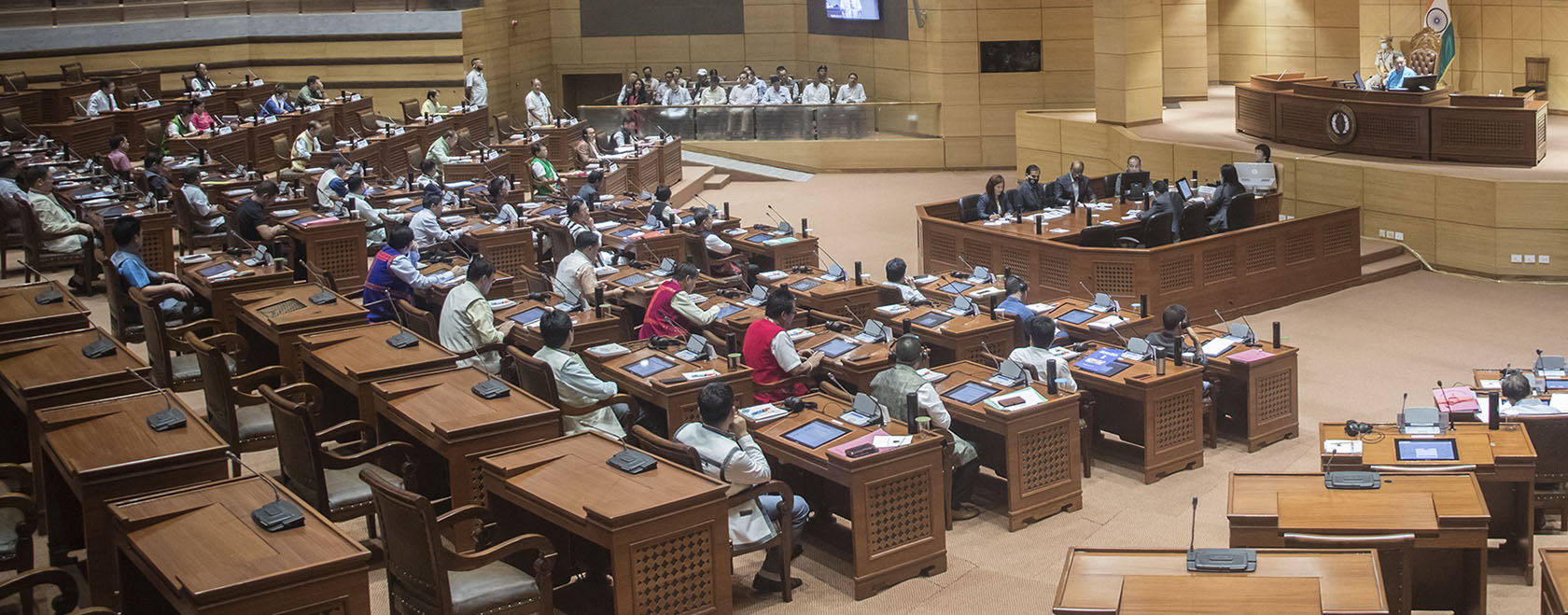
Meanwhile, state Transport Minister Nakap Nalo said that the Northeast Frontier Railway has assured the state government not to disturb the flow of rivers and streams while laying broad gauge line from Ruksin to Pasighat in East Siang district.
Allaying apprehension made by senior Congress member Ninong Ering that the railway line could block the flow of rivers and streams in areas like 12 Mile, Rani, Sile and other adjoining areas of the district, known as the ‘rice bowl’ of the state, Nalo informed the Assembly that the state government had taken up the matter with the railway authorities who have assured not to disturb the rivers and streams along the new railway track.
The railway authorities have agreed to construct bridges over such water bodies without disturbing them, Nalo said and added that the BJP government in the state would work for the welfare of the people.
Raising the issue during Zero Hour discussion, Ering said that if the government would not take preventive measures, rivers and streams would dry up and a drought like situation may prevail in the near future.
The Congress MLA said that the government should adopt a policy on how to tame the rivers and streams in the area to minimise environmental impact, adding the government should moot ideas on how to channelize the rivers so that it create no havoc in the future after construction of the railway line.
Transplantation of Human Organ Act adopted
The Assembly unanimously adopted the Transplantation of Human Organ Act 1994 (Amendment Act 2011), through a government resolution.
Health and Family Welfare Minister Alo Libang moved the government resolution in the House.
The Act was passed by Parliament which received the assent of the President on July 8, 1994 and September 27, 2011 respectively.
Making a statement on the resolution, Libang informed that adoption of the Act was important to regulate removal, storage and transplantation of human organs for therapeutic purposes and for the preventions of commercial dealings in human organs.
“Adoption of this Act will be our first step towards creating suitable infrastructure for implementation, capacity building of hospital staff and doctors, advocacy for promoting deceased organ and tissue donation, conduct IEC for bringing awareness among general public and establishing national networking and registry,” Libang said.
Presently, there are more than 21 states and Union Territories in the country where establishment of regional and state organ and tissue transplant organizations have been initiated after adoption of the Act in their respective states. Later the House adopted the resolution through voice vote.


 20
