
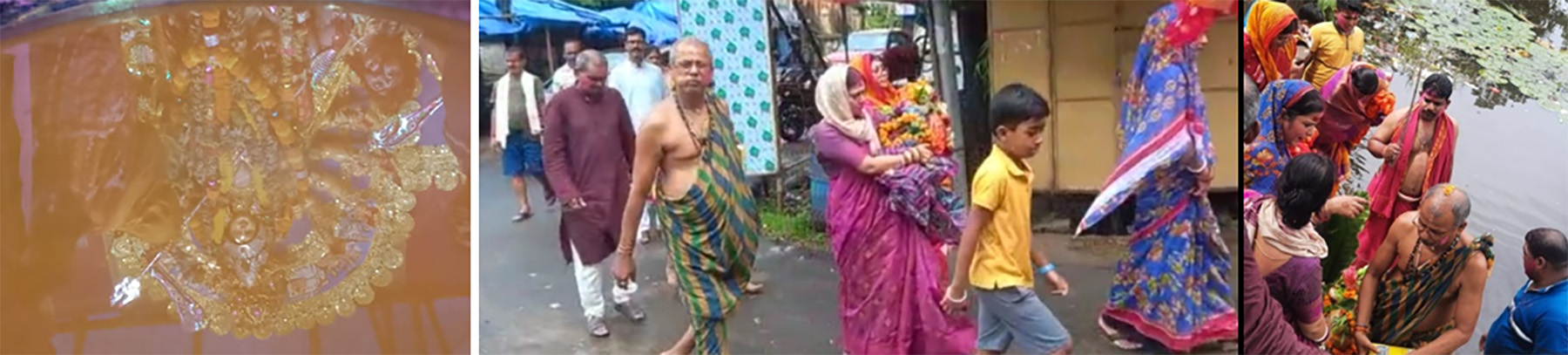
Watching Devi Durga from water filled plate, kalasha procession & immersion
BALASORE, Oct 06: Dura Puja (September 26 to October 5), the nine-day festival of Mahishamardini Durga, is celebrated by almost all sections of the society across India and Bangladesh as a symbol of victory of good over the evil.
Vijayadashami or Dussehra, the 9th day, has special relevance. There are various references to goddess Durga in Hindu epics Mahabharata and Ramayana. Before the great war of Kurukshetra begun, Lord Krishna advised Arjuna to worship Goddess Durga to ensure victory in the battle around 400 BCE.
The 8th incarnation of Lord Vishnu, Lord Rama, had killed 10-headed demon Ravana way back in 5114 BC. Lord Rama, along with his brother Larkshman and stunch devotee Hanuman, trekked to Ravana’s kingdom to fight him and bring back his wife Sita. On their way, Rama first propitiated her by offering 108 blue lotuses and lighting 108 lamps, to seek blessings to defeat Ravan. This ceremony is called Bodhon and Durga had appeared to grant him boon.
The festival begins with first ritual of Ghata or earthen kalash sthapana (Mahalaya), when the pundits with hymns specially invoke Goddess Durga. But her arrival and departure is indicator of status of the year ahead. Apart from the lion, Maa Durga has four vahanas (vehicles) – elephant, horse, boat and palanquin. It is believed that she arrives and departs on two different vahanas and the choice of her vehicle is important for the fate of mankind. It’s also believed that if she arrives and departs on the same vahanas, it means doomsday – it means mankind will have to face natural disasters, political unrest and other social problems.
However, rituals continue throughout puja till last day on Vijaya Dashami. According to Hindu mythology, it is believed that the Goddess Durga visits her earthly abode during this time to bless her devotees and returns to her heavenly abode after showering blessings on her devotees.
Durga Visarjan marks the culmination of the festival, which involves invoking Maa Durga and her manifestations with a ritual of intense praying. This is flowed by immersion of eathen kalasha and idols, which are taken with fanfare, traditional rituals and camaraderie as men and women join the procession to the sound of dhol and kartal.
The Visarjan in nearby rivers sometimes extends to evening hours, depending on the number of idols.
The origin of Durga Puja – Durga’s assassination of the demon Mahishasur – dates back to the late 1500s when the landlords and the zamindars of the Bengal region initiated this festival as a symbol of prestige. The origin of this festival as a community event is credited to 12 friends of Guptipara in Hooghly. They collected contributions from local residents to conduct this puja for the first time in 1790. Sanatan Dharmotsahini Sabha organized a community puja for the first time in Bagbazar of Kolkata with full contribution from the public. These events and developments contributed immensely to the form of Durga Puja that we witness today.


 20
