
From Our Correspondent
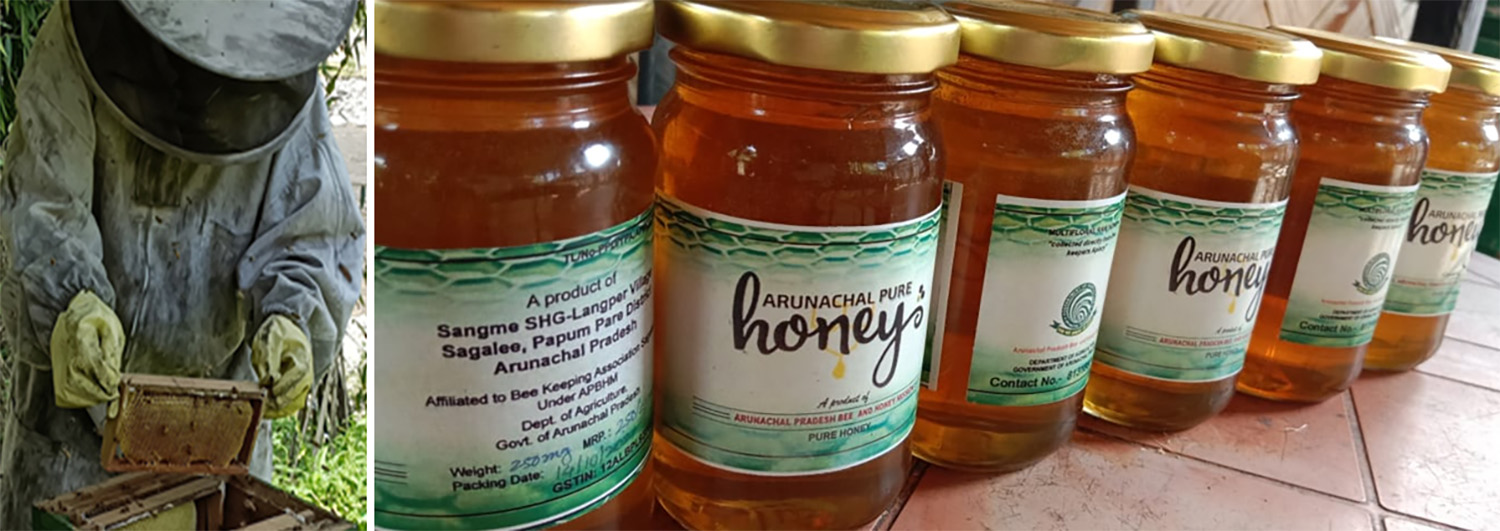
NAMSAI, Oct 29: Arunachal beekeeper Nabam Nigla is holding up a honeycomb filled with hundreds of bees crawling on his hands. Bees and its products are not only well known with high market value but also provide sustainable livelihoods to many smallholder farmers in remote areas.
Asian honeybees or Apis cerana to be precise are found in Northeastern part of India, especially Arunachal Pradesh. Asian honeybees are managed for honey production and are excellent pollinators of many crops, including spice crops, fruits, nuts, oilseeds, cauliflower, okra and onion. The honey produced by bees has high nutritional and therapeutic value; therefore, farmers in Arunachal Pradesh are being encouraged to take up beekeeping to ensure sustainable income.
Pollination in most parts of the world is under immense threat owning to anthropogenic factors, which cause pollination deficits. This deficit can only be controlled by enhancing efforts in beekeeping on a large scale. Up to a 30% increase in the productivity of field crops can be achieved by bee-supported pollination,” said Arunachal University of Studies (AUS) vice chancellor Dr B Mohan Kumar.
There has been increasing demand for honey in the domestic and international markets. Honey as a commodity offers a large potential with minimal investments.
Nigla, 52, of Langper village, had no experience in beekeeping but had picked up this skill through a “Commercial Honey Production” training organised by Itanagar Diocesan Empowerment Association (IDEA) under the Caritas India FARM programme in 2019. He started his small enterprise with three bee boxes of Honeybee colonies and beekeeping accessories. However, over time he started losing interest in beekeeping whereas the boxes were still functional.
IDEA conducted beekeeping training again in August 2022 for a group of farmers, who were trained in having natural bee colonies and the multiplication of such colonies. The initiative was taken for subsistence farmers who are keen to boost their income while raising crop yields through increased pollination.
“FARM interventions have motivated him to start over,” FARM programme coordinator Ratan Lal Deka informed. Nigla increased the number to 36 boxes by dividing the colonies and by collecting the colonies from nearby forest areas within a short span of one year.
“August to starting October is the peak swarming season for beekeeping and several local colonies can be captured which are more stable, strong and disease resistant than the ones procured from distant places,” Nabam said.
Nigla, has succeeded in harvesting 5 times in a year with 2-4 kg of honey per harvest which he sells for Rs. 500/kg and earned Rs. 1,80,000. The IDEA feels proud in promoting small farmers, like Nigla who motivated another 13 smallholders to take up beekeeping as a livelihood option.


 20
