
Green idea to save Tawang Monastery
- MLA’s untimely demise end of an era
By Pradeep Kumar
Beyond the Horizon
Lumla lawmaker Jambey Tashi, 48, who passed away untimely in a Guwahati hospital on 02.11.22 ending a new era of development initiated by him that took deep roots along Indo-China border in his constituency as well as created a milestone in Army-civilian synergy.
Late Tashi was a visionary leader which he had proved by his various actions with far reaching consequences for greater welfare of the people. Thus, he was re-elected from the seat for third term in 2019 on a BJP ticket for brining multi-faceted development to his area.
Lumla, a SDO HQs with an independent ADC, originally Lung La means atop the windy pass, criss-crossed by perennial Nyamjang Chu and Tawang Chu (river) besides numerous waterfalls, has been progressing like glittering gem despite being strategically a very sensitive area with volatile global political ramification.
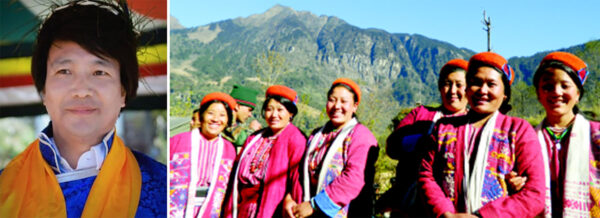
Smiling faces amidst natural beauty punctuated by fearless wild animals all over the clean and green Lumla is the treasure of this hilly subdivision of Tawang district in Arunachal Pradesh, where sun and clouds play hide and seek round the clock.
Right from reaching Lumla to Zemithang, Muchut or Lumpo border post, the direct link of Tashi with his people was visible. People would greet him Tashi Delek smilingly with folded hands where ever his vehicle goes. He would stop in seeing any local to inquire about their wellbeing like the guardian of a family. Hundreds would make a beeline to his house every day for his help and everyone would go back happy, a unique phenomenon in the state, which I saw for myself many times.
Surprisingly pure milk instead of tea was offered by Dorjee Keshang Damo during a brief stopover along the road as per local tradition. The small town dotted with grocery, vegetable, stationery and gift shops remains busy throughout the day, including the hotels. Mani Chotten, a mother of three, who has been running Mamta Hotel for the last eight years in a rented house, says that the income is enough to meet her both ends.
Development activities increased at the initiative of present MLA, said GB Genden of Gispu village, having 800 population. “The erratic supply of PDS items, particularly rice, for the last few years has become very regular with personal intervention of the MLA”, said Muyu GB Kota Lama.
Wild boars, deers, red pandas, wild cats and monkeys roaming on the busy but clear road and many species of birds seen all over in broad daylight was surprising. This is the outcome of a complete ban on hunting and fishing and anyone violates the ban faces action.
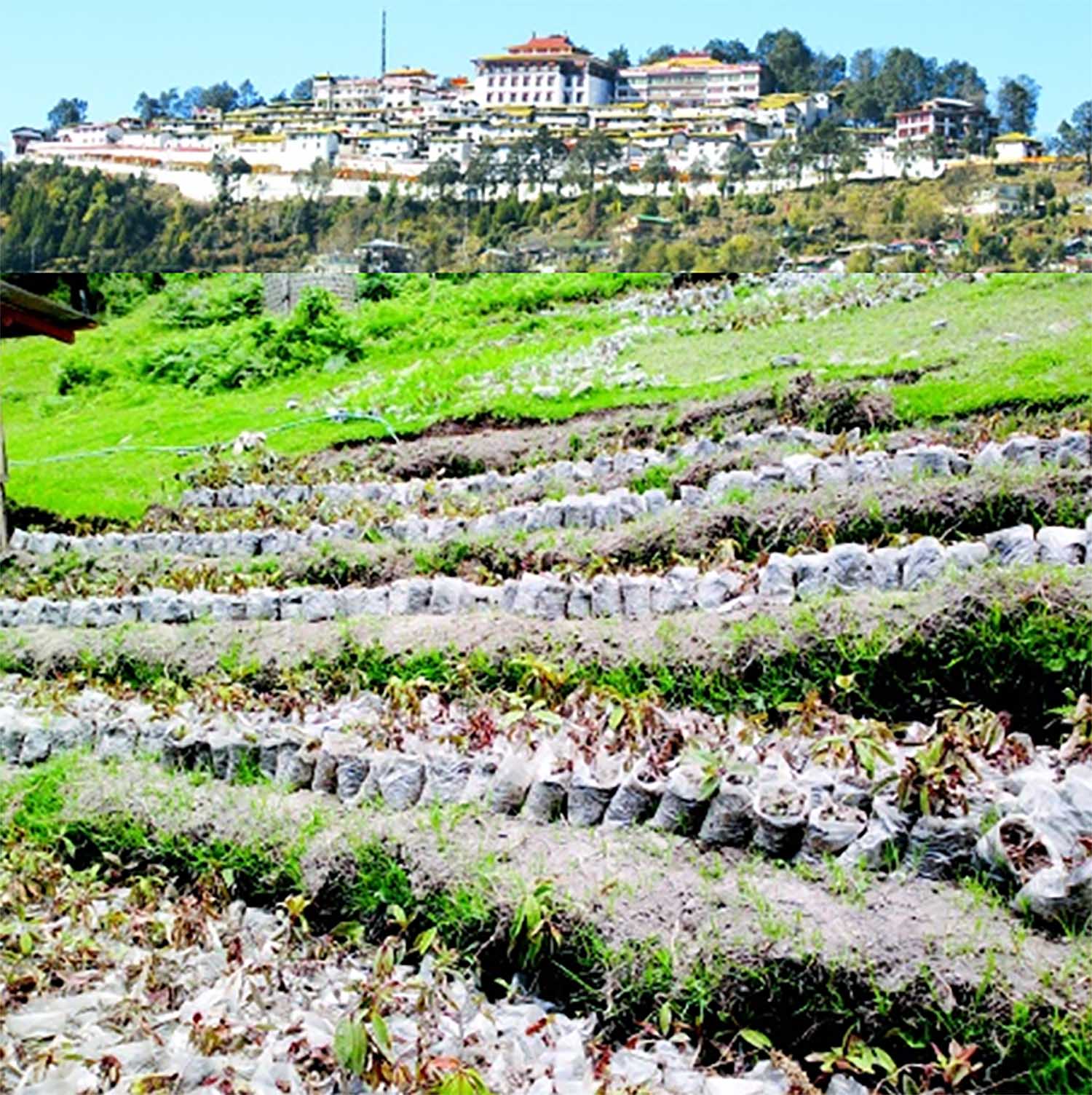
He was instrumental in conceiving the novel idea of integrating ecological knowledge for equipping communities to adapt and combat with impact of climate change with the help of New Delhi-based Winrock International India (WII) by planting 3,000 saplings around the world famous Tawang Monastery, facing serious threat from landslides as reported by this editor from Sakrpti on 02.05.12.
The WII, a national level NGO, engaged in turning the nature’s bounty to bread earner for the locals by making ‘Tawang rhododendron squash’ involving the local community, particularly Sakprit denizens, had found a readymade market among defence establishments besides local consumers.
Tashi had pitched in to support the villagers and helped them buy the saplings grown in village nursery to plant in their lands, WII programme officers Monalisa Sen and Dr Jayahari KM had said.
Considering that Tawang district, like most part of this Himalayan state, has huge degraded forest land lying unused, the WII had conceived the idea of reviving two hectares of degraded forest land in Sakprit village by taking up plantation of rhododendron saplings along with other forest species, which was gladly accepted by the locals in 2009.
When climate change has been worrying earth scientists world over, the WII initiative could set a new trend in this landslide prone Himalayan state that boasts of over 79% forest cover to set an example of afforestation for others to emulate.
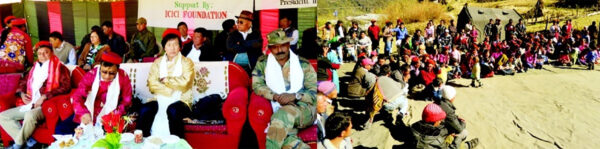
Confirming the WII efforts, Yuva Arunachal president Tsetan Chombay had lauded its genuine initiatives for state people since its association for the last five years.
It may be recalled here that Tawang Monastery, where spiritual leader Dalai Lama stayed on 17.03.1959 after fleeing from Tibet, has been witnessing massive landslides since November 2010.
The 330-year-old monastery, known as Gaden Namgyal Lhatse, stands on the spur of a hill about 10,000 feet above sea level. Landslides had damaged plantation and electric posts around it. Such landslides were normally seen during the monsoon or triggered by cloud bursts, but seldom occur in winter.
The monastery was founded near the small town in same name in the northwestern part of Arunachal Pradesh by Merak Lama Lodre Gyatso in 1680-1681 in tune with the wishes of 5th Dalai Lama, though China often claims Tawang as its own. It has ravines in the south and west, a narrow ridge on the north and a gradual slope on the east, belonging to Gelugpa School. The monks living there are a worried lot. The sludge triggered by the landslide is making the Tawang-Chu River dirty,” an official had told after the landslides.
The monastery, Asia’s second largest, has a three-storied library that boasts of a collection of 400-year-old Kangyur scriptures, large collections of Sutras, Tangym, Sungbhum, old books and invaluable manuscripts, many of them in gold. It has 65 residential buildings, currently housing about 450 Lamas.
Moreover, numerous initiatives, including under CSR provision of CPSUs, were taken up to develop border villages in close cooperation with the Army as excellent army-civilian relation at the initiative of then army commanding officer (CO) Col Jagtap was worth praising.
Local villagers, including women and children remain busy in their daily chores, grazing the yaks even within the Army area without any hesitation. There was no restriction for the local villagers unlike outside visitors. On enquiry, it was learnt that the villagers and Army personnel mingle with each like a family and work as complementary to each other. Medical facility is extended to them besides any humanitarian help needed any time, according to villagers.
The rank and file of Army unit led by the CO expresses their deep gratitude to locals, particularly Tashi for best understanding and cooperation between the uniformed and un-uniformed guards along the sensitive border.
“The locals live with hard realities of life, face harsh winter, hostile topography and agricultural harvest in the hills is much below their requirement. But these simple living people live with very little requirements much away from the hustle bustle of modern life and continue to smile and greet with Jai Hind, an unparallel example found nowhere in the country. Their spirit of life is so influencing that serves as a great source of inspiration for us, the CO had said, adding “We would always be ready to protect their life and our motherland at any cost”.
The honesty was writ large all over the face of the senior Army officer who was interacting at a height of over 10,000 with chilly wind blowing from all directions while Indian and Chinese soldiers positioned themselves almost face to face overlooking the Thagla ridge at 16,500 feet altitude that had triggered the 1962 Chinese aggression between the two neighbouring nations.
Life continues to flow like Nyamjang Chu and Namka Chu while border guards always remain alert to protect their motherland notwithstanding the occasional skirmishes over the different perception of the line of actual control drawn by the McMohan line that demarcates borders of both countries.
The area has huge tourism potential with a 700-year-old Gorsam Stupa (One of the five in the world), Taktsang Gompa & Dobley Monastery under Zimithang and Lumla circles, which are main tourist attractions. The border with China and lakes appear bright turquoise or brooding gray according to the mood of the sky. The Zongatsar (Sangetsar) Lake located at 15,000 feet reflects enchanting natural beauty.
Peace loving Monpas, who live in complete harmony with the nature, are zealously guarding their rich cultural heritage, says Lobsang Dawa, an expert on local customs and traditions. This was evident with school students seen in traditional dresses every Wednesday mandatorily.
Baby-carrying women breaking stones and working on road is a common scene reflecting the dignity of labour. Gambling and alcoholism have been banned as it would be a breeding ground for crime and social unrest, reasoned Tashi, who was behind the decision.
Lumla’s progress had accelerated with Tashi taking a lead for speedy socio-economic development during the last few years, local leader Tsering Tashi had said.
“Our people are Buddhist and not influenced by materialism. Thus, my priority has been holistic development to provide basic infrastructure and administrative support to the people to earn a decent living”, Tashi had said.
Lumla spread in 618 sqkm area with a population of about 20,000 living in 58 villages and over 100 hamlets in Lumla, Zemithang and Dudunghar circles and located in the tri-junction of Bhutan and Tibet at 8,000 feet could take a cue from both the nations’ impressive development in infrastructure and hydropower sectors through public private partnership (PPP) mode.
“Many GoI and GoAP schemes are being implemented effectively to benefit the masses which could be inspected anytime. The blacktopped serpentine BRO road to most part of the assembly constituency, construction of massive infrastructures, particularly buildings for administrative offices, schools, hostels, teachers’ quarters, tourist lodges, circuit houses, roads under PMGSY, helipads, the ADC office, to name a few, are indication of progress. Without naming Bhutan, Tashi was referring to Bhutan’s Gross National Happiness as a yardstick to measure the people’s development.
One of his most vital initiatives was to open Lumla-Tashigang road (in pic), an alternative route to Guwahti, that would have reduced distance of about 200-km and travel time of six hours and permission of Bhutan King was sought during tenure of former chief minister Nabam Tuki. The 400 km-Tawang-Lumla-Tashigang would help reopen age-old traditional border trade between the people of Bhutan and Tawang district.
Bhutan and the Monpas of Tawang district have the same religion, culture and traditions, few GBs had said, adding since olden days Tawang people used to visit religious places, like Gombay Kora, Durang Chorten, Gonja Ney, Tango Ney, Thimpu Dzongkha in Bhutan while the Bhutanese used to visit for pilgrimage to Tawang Monastery, Gorsam Chorten, Zangdopari Gompa, Taksang Gompa, Urgelling Gompa, Khinmay Gompa, Lhu-gyepu Phobrang (Muktur), Thongmin Gompa, Manma-Gyalam Ney, Thanga-Fe Ney, Banga Jang Ney, Sarong Gompa, Changbu Gompa, Gomshin Ney with great difficulties by undertaking foot march for days together.
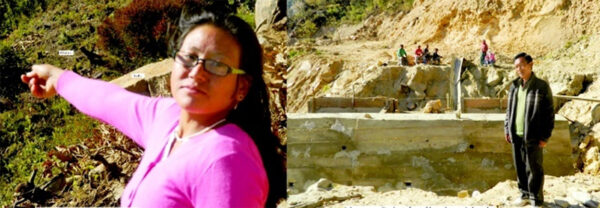
Opening of laissez-faire Lumla-Tashigang road would be useful for Indian Army guarding the border, said then Tawang District Seva Dal chief organizer LobsangDawa, while appreciating the CM for his assurance on reopening of the road soon in his address during the recent Tawang festival.
Jhamtse Gatsal, meaning garden of love and compassion in Bhoti, a private residential school for classes KG to VIII, set up in August 2006 by Lobsang Phuntsok on a hillock at 7,000 feet, was also supported by MLA Tashi. Jhamtse International sends volunteers from abroad for teaching and extends various help.
Brig Jagtap, who served in Lumla & Tawang and Monalisa, both close to the late leader, were shocked beyond expression, while talking to this editor. “We are speechless with god’s action by snatching away a noble soul engaged in translating the almighty’s desire to action to benefit the humanity,” they said in remorse.


 20
