
By A O News Service
ITANAGAR, Dec 14: “Whoever wields the lathi keeps the buffalo” or “Might is Right or Survival of the Fittest” – go the saying. Stick fighting (Lathi khela) is a traditional martial art practiced in India and Bangladesh and a practitioner is known as a lathial. A lathi, normally made of bamboo, measures 6 to 8 feet.
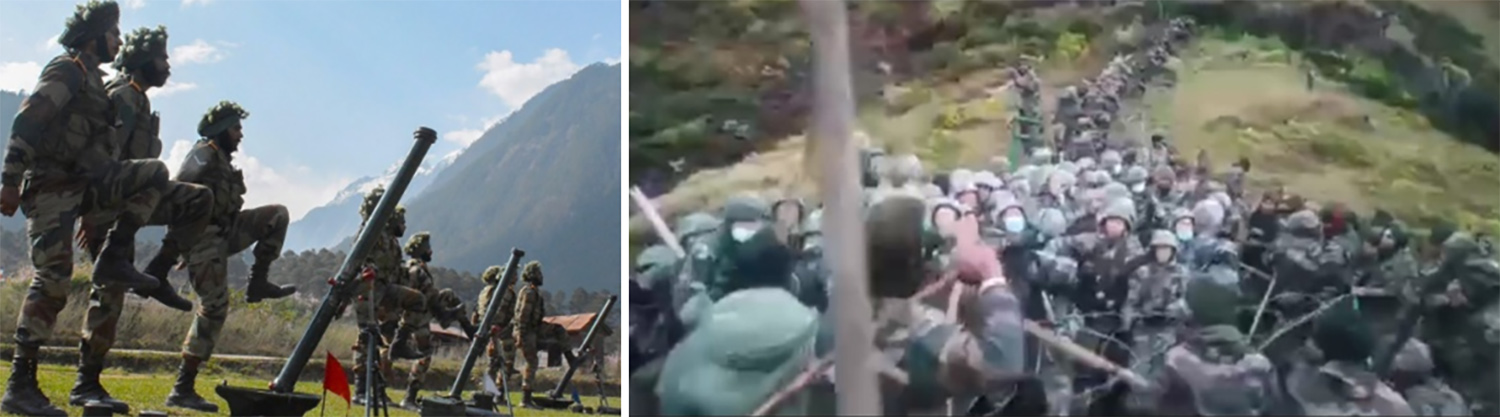
On December 9, this was seen at Yangtse in Tawang sector of Arunachal Pradesh with Indian Army jawans turning lathials to chase away Chinese soldiers who had attempted to intrude into Indian Territory “to unilaterally change the status quo”.
Shouting in Punjabi and wielding lathis, they (jawans of Punjab Regiment) had successfully thwarted PLA’s attempts to enter into Indian Territory as the jawans were visibly expert in the traditional martial art.
Stick fighting has an ancient history in South Asia, tracing back to the region’s aboriginal inhabitants. Rich farmers and other eminent people hired lathial for security and as a symbol of their power. Duels were used as a way to protect or take land and other possessions.
Zamindars (feudal lords) used to send groups of lathial to forcefully collect taxes from villagers. Lathi training was once part of Bratachari education system, which declined by urbanization.
Until 1989, an annual nationwide lathi khela convention was held in Kushtia, Bangladesh, where troupes from all over the country took part. Due to the drop in practitioners and spectators, the convention is now held once every three years. Even lathi khela is most often seen today during festivals and weddings. Matches are held in West Bengal for certain puja rituals and a similar sport, called chamdi, is played during Eid in North Bengal.
Lathial group perform acts like, Baoi Jhak (group fight), Nori Bari (mock fight with sticks), Fala Khela and Dao Khela (mock fight with sharp weapons) and Chhuri dance to music, in presence of hundreds. These groups may learn the arts of dao khela (machete fighting) and fara khela (sword fighting), both of which are preserved today in the form of mock-fights. Matches are generally one-on-one, but the art includes mock-group fights or baoi jhak. In lathi the centre of energy is the heart chakra and practitioners fight in a more upright position. However, the popularity of lathi khela is waning fast.


 20

