
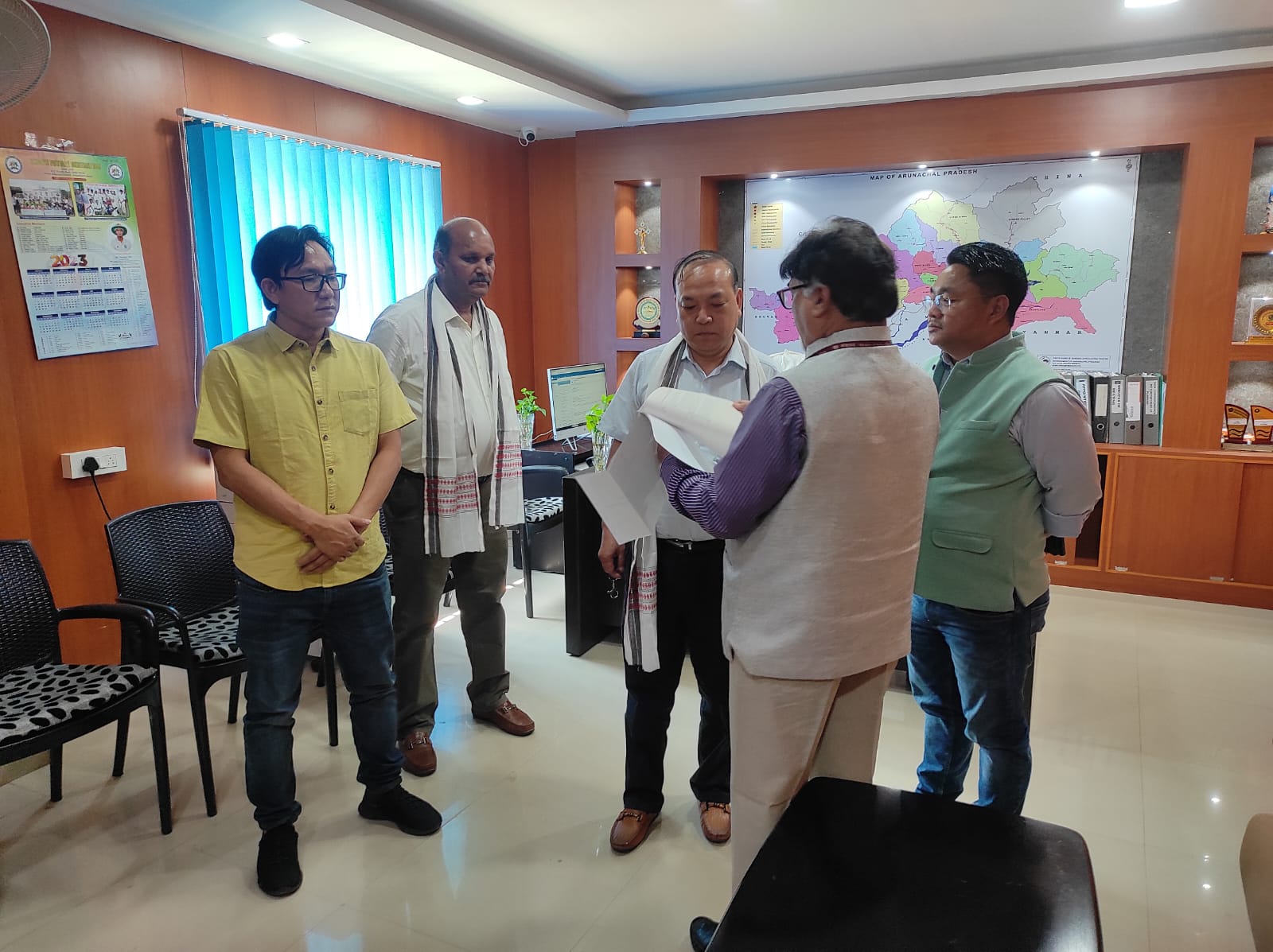
ITANAGAR, Oct 27: Union Ministry of Earth Sciences (MoES)’s National Centre for Seismology (NCS) director Dr O.P Mishra, who concluded his four-day extensive tour of Arunachal Pradesh with scientist and engineers on Friday, was satisfied with setting up of seismic stations in the state.
However, he advocated inauguration of Bomdila and Daporijo seismic stations by union minister in presence of secretary Dr Ravichandran in November or 1st week of December.
While interacting with the media persons here on Friday, Dr Mishra informed that after installation of seismic stations, the seismic tomography would also be carried out to understand sub-surface fault and other structures to understand impact of earthquakes in the area.
This study would be very helpful to develop comprehensive database for creating earthquake resilient structures, he said, adding this would also be useful for understanding climate change and sustainable development by designing earthquake resistant building codes to minimize damages of infrastructure and save lives and properties.
“Arunachal Pradesh is still untouched and a virgin land in terms of earth science research”, he said, adding this hilly state will be densified with seismic stations network by setting upsetting up of eight more seismic stations at Seppa (East Kameng district), Mechuka, Monigaon (Shi Yomi) Anjaw and Longding districts.
Dr Mishra said that the MoES has taken steps to set up comprehensive seismological data receiving and data repository for NE India at Centre for Earth Sciences (CES) here for wide dissemination of earthquake related information among the masses, in tune with National Centre for Seismology of the MoES for which he also inspected the office building here.
He said that Union MoES Kiren Rijiju has provided a positive environment in this state to work jointly with the Centre for Earth Sciences and Himalayan Studies on important issues on earth sciences, like seismic micro zonation of identified state cities, including Itanagar, Tawang, Aalo, Longding and Anjaw.
The final outcome of micro zonation of these cities would be very useful in creating disaster resilient structures and provide precise information about sub-surface features to estimate carrying capacity of cities in the back drop of these fast growing of cities, he added.
He expressed his satisfaction that the state has tremendous scope for geothermal exploration with the help of Norwegian Technical Institute for which few geothermal sites were selected in September last and the detail action plan is being chalked out to work for demonstration of geothermal energy for heating and cooling. This is a three-year scheme with scope for developing capacity and training to scientists of Centre for Earth Sciences and Himalayan Studies (CESHS).
Others important earth science research are equally important for the state, like estimation of geo hazards and prepare large scale maps to demarcate severity of hazards depending upon the magnitude with experts from IITs, universities, he said.
He disclosed that MoES has also planned to set up a geotechnical facility in Itanagar, which will be unique and important, to provide characterization of various slopes in terms of strength parameters and overall output will be used for developing infrastructure facilities for the state like roads, bridges, tunnels etc. Dr Mishra assured all possible cooperation to CESHS for technical training on earth sciences.
Science and Technology secretary Repo Ronya and CESHS director, Tana Tage and scientific advisor Dr. Bhoop Singh were also present, according to a CESHS release.


 20

