
By Pradeep Kumar
NAHARLAGUN, Dec 20: The Border Roads Organisation (BRO) as directed by Defence Ministry is busy in building infrastructures and roads in borer areas of Arunachal Pradesh to facilitate speedy movement of security forces in their vehicles with arms and ammunition, if situation demands.
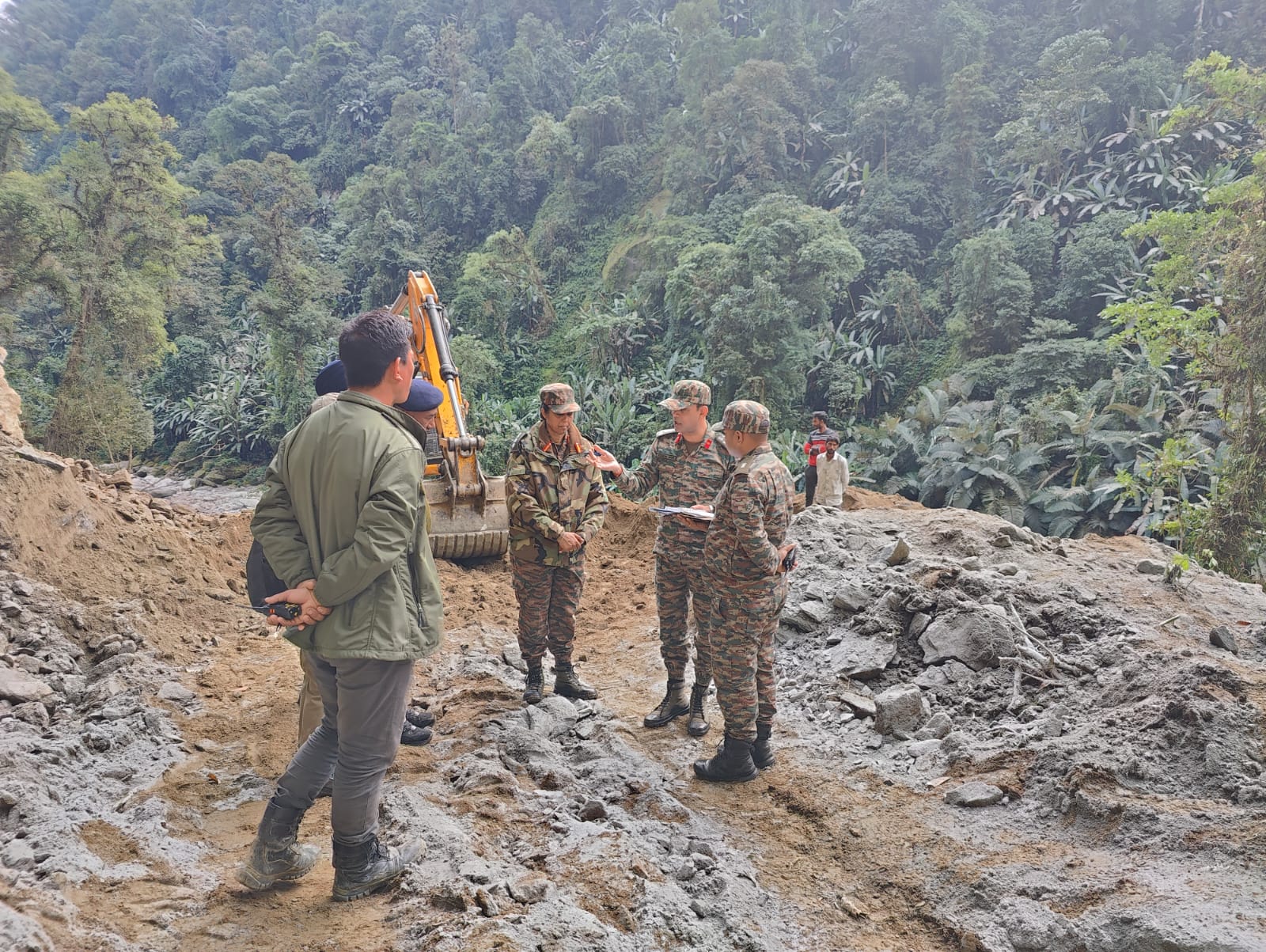
BRO Project Arunank chief engineer Brigadier Yogesh Nair on Tuesday inspected ongoing works in strategic Huri-Tapa sector in Kurung Kumey district along Indo-China border.
The visit aimed at accelerating road connectivity and implementation of Vibrant Village Programme (VVP) in the remote area with commitment so that the border area dwellers live with all basic necessities and also reversing, process of those vacated the border areas for lack of facilities to return to serve as the sentinels, BRO sources told this editor.
The primary focus was fast-tracking processes the process in forward areas due to urgent need for ensuing effective connectivity to border regions to ensure national security. While interacting with engineers on field duty, he stressed on prioritizing projects that enhance connectivity to the Line of Actual Control (LAC) despite various challenges in tough hilly terrains.
Moreover, the CE had important meetings with villagers headed by gaon buras and local administration officials to ensure strengthened collaboration between the BRO and local stakeholders for effective implementation of all ongoing projects and the VVP, launched by Prime Minister Narendra Modi for comprehensive development of infrastructure, healthcare, education and employment in uncovered hilly areas for inclusive growth and security in border regions.
The discussion in meetings centered around specific needs and challenges faced by communities in the sector and ways to remove them besides engaging the local community with thorough knowledge of the area as partners of development in tune with unique requirements of the region. He also advocated their capacity building for employment generation for environmental-friendly sustainable development.
The CE’s visit is important not only reflects addressing strategic and grassroots concerns when Indo-China border remains tense since Chinese People’s Liberation Army (PLA) attacked Indian border posts in Pangong Lake in Ladakh in the west on 05.05.20 and crossed the McMahon line in the east leading to aggressive melee, face-offs and skirmishes that had prompted India to deploy huge troops, who are face to face with the PLA since then. The PLA troops have also intruded into Indian border areas between Sikkim and Tibet Autonomous Region.
Of total 3,488-km disputed Indo-China border, Arunachal alone shares 1,129-km, which have recorded repeated PLA intrusions in the past. The border dispute is different pieces of territory between both nations. The first is Aksai Chin, administered by China though claimed by India as part of Ladakh UT. Another area administered by India is McMahan Line that separates borders of India and China. The McMahon Line part of 1914 Simla Convention signed between British India and Tibet, which China disowns, saw 32-day Indo-China War in 1962 when Indian Army troops were unable to reach border areas for lack of roads.
Moreover, there was a brief border clash in 1967 in Sikkim region. In 1987 and in 2013, potential conflicts over two differing LAC were successfully de-escalated. A conflict in 2017 involving a Bhutanese-controlled area bordering China was successfully de-escalated following injuries to troops of India and China. Despite bilateral agreements signed in 1993 and 1996, including “confidence- measures” along the LAC by joint working group (JWG) to be assisted by special representatives of diplomatic and military expert group set up in 2003 and Working Mechanism for Consultation and Coordination framed in 2012, the border dispute remains unresolved. But China having disputes with 17 nations over land and sea borders due to its chameleon policy in not trust worthy and calls for maintaining vigil against the aggressive land grabber.


 20

