
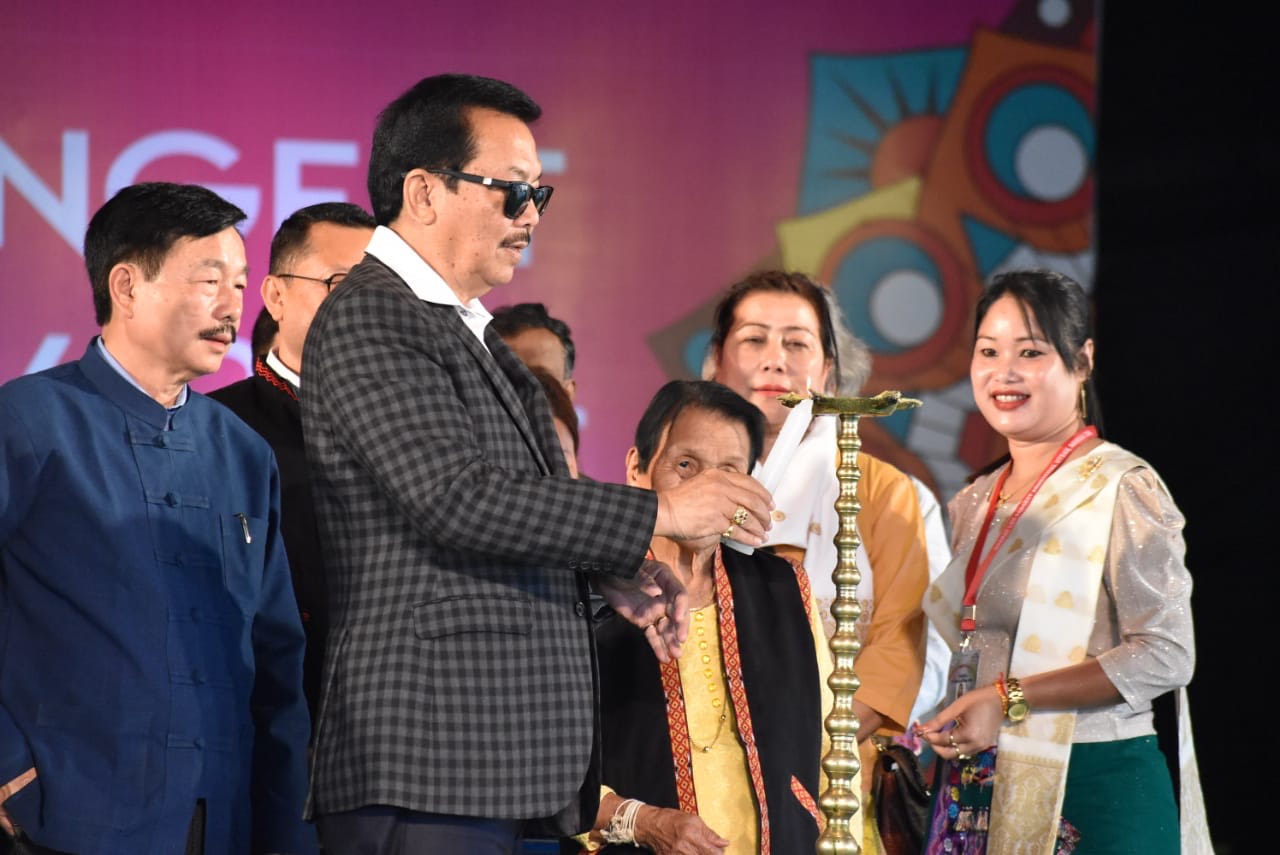
NAMSAI, Mar 03: Namsai hosted first edition of Bharat Lok Sangeet, named Arunachal Utsav 2024, to foster inter-cultural exchange, interaction and mutual respect among different states and union territories of India toeing ‘Ek Bharat Shreshtha Bharat’ spirit at Poi Pee Mau Tai ground here.
In his inaugural address as chief guest on Saturday. Deputy Chief Minister Chowna Mein said that this cultural extravaganza aims to promote sustained and structured cultural connections, learning languages, traditions, music and sharing of best practices.
Twelve cultural troupes from across India, including three cultural troupes from Arunachal Pradesh is taking part in the event to showcase a myriad art forms.
India, known as land of festivals, celebrates a mosaic of religions and cultures, where every festival reflects upon the rich cultural heritage of the nation. Within its diversity, Indians come together for celebration of all festivals collectively, reinforcing the faith and respect for each other’s beliefs.
Mein highlighted that Arunachal Pradesh; in a lot of ways share the same intricacies as found in the cultural tapestry of the nation, amalgamating the faiths and beliefs of diverse people pertaining to different States.
Boasting 26 major tribes with over 100 sub-tribes, each with its unique identity, language, customs and traditional practices, Arunachal Pradesh aptly identifies itself as a land of diversity thriving within the realms of a greater diversified India. Owing to its cultural vastness, Arunachal is a reservoir of folk songs, lores, tales and dances, resonating with the expressions and representations of its indigenous populace. This intangible cultural heritage, transmitted across generations, embodies a sense of identity and continuity, fostering respect for cultural diversity and human creativity overall.
Highlighting the native scripts of the state, Mein said that ancient epics, like the Mahabharata and Ramayana have been written in their Tai Khamti script. He also highlighted natural splendor and biodiversity which lure tourists to the state, particularly famed Golden Pagoda in Namsai district, sacred Parshuram Kund in Lohit district, historical connections with Bismaknagar and Malinithan, ancient Tawang Monastery and underscored GoAP’s initiative to turn these centers into major pilgrimage destinations.
Stressing importance of cultural exchange in fostering unity and combating ignorance peacefully, Mein sought collective commitment to pass on the legacy of cultural celebrations to future generations. He greeted leaders of various art forms present, acknowledging their pivotal role as custodians of cultural values and heritage. He expressed optimism that initiatives, like ‘Bharat Lok Sangeet – Arunachal Utsav’ would revitalize India’s cultural landscape, fostering unity and contributing to nation-building. This would be made a calendar event of GoAP with plans to expand participation in the coming years, he announced.
The inaugural performances included Unity Dance of Arunachal Pradesh by Tani Daughters Crew, showcasing five Tani tribes (Nyishi, Adi, Galo, Apatani and Tagin), followed by Kaa-Kong Tou-Kai (Peacock and Cock Dance) of Tai-Khamti. Other performances of the day include Mukha Bhaona (Assam); Rouf (Jammu & Kashmir), Kali Aattam (Puducherry), Tsungremong (Nagaland), Jabro (Ladakh), Karagam (Tamil Nadu), Chhapeli (Uttarakhand) Ka-Shad-Sngei (Meghalaya), Lai Haraoba (Manipur), Hojaigiri Dance (Tripura), Denjong Cha-Rab (Sikkim), Buhza Aih Cheraw (Mizoram), Chutkuchuta (Odisha) and folk fusion concert by Maylula Band and Chorun Mugli (Headliner).
Final day performances on March 3 will include Unity Dance of Lekang Circle, followed by Nocte War Dance of Tirap District, Yaku Chi Joh Ameh Dance of Idu-Mishmi of Lower Dibang Valley, Mukha Bahona (Assam), Lastot Thonpo (Ladakh), Mayilattam (Puducherry), Kabui Naga folk dance (Manipur), Emma Len Chig (Sikkim), Kavadi (Tamil Nadu); Chheihlam (Mizoram), Ka Shad Phor Symbai / drum dance (Meghalaya), Moastu Dance (Nagaland), Kai Silambattam (Tamil Nadu), Jhoda Chanchari (Uttarakhand), Nyoma dance (Ladakh), Dailo Kolmo dance (Tripura) and Likiri Jhikiri Daal Kuria (Odisha). Tomorrow’s programme will also feature a curated performance of Assam comprising Bardoi Sikhla, Leeatana dance, Lohoriya dance, Jhumur dance, Goalporia dance, Gumrag dance, Barat (Fasting) dance, Lailung kham, Hamjar dance, Domahi Kikan dance of Karbi, Bihu dance. Final day Folk Fusion concert will be performed by David Angu (Aalo).
MP Tapir Gao, MLAs Gum Tayeng, Chau Zingnu Namchoom, Mutchu Mithi, Jummum Ete Deori, Dasanglu Pul, Mopi Mihu, GI Expert, Human Welfare Association GS Dr. Rajanikanth, Cultural & Indigenous Affairs secretary Tai Kaye, directors K. N. Damo (tourism), Tabang Bodung (cultural affairs) and V. Kaliaperumal (art & culture, Puducherry), Namsai, Lohit & Changlang DCs, among others, were present. (PRO)


 20

