
By A O News Service
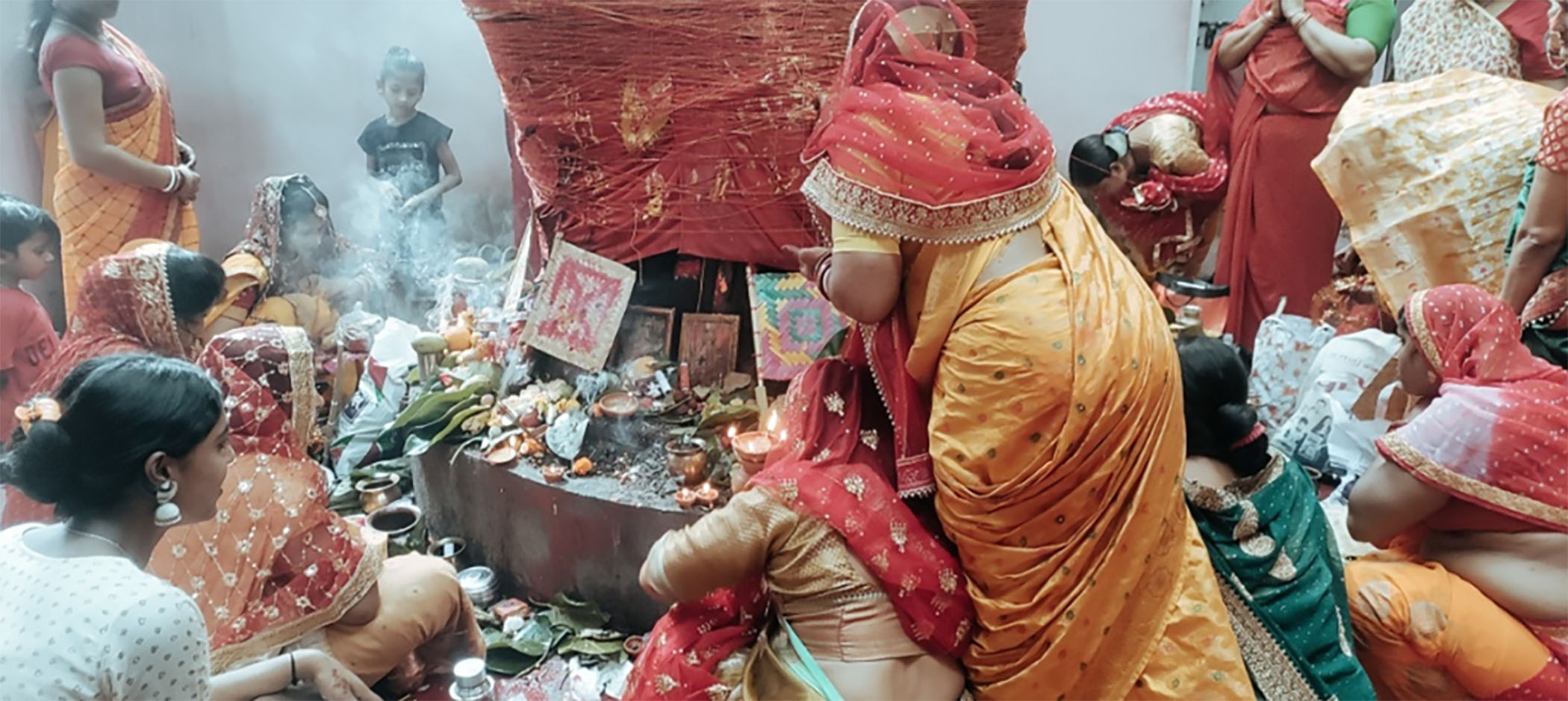
NAHARLAGUN, June 06: Dozens of young and old Hindu women observed Savitri Amavasya in C-sector Shiv Temple here on Thursday, coincidentally a pious day there are some days dedicated to Lord Vishnu, according to astrology.
The women worshipped a a banyan tree in the temple campus, poured water, tied a coloured thread around it seeking longevity of their husbands and applied vermilion on each other’s forehead.
Savitri Amavasya or Savitri Brata is a fasting day, commemorating the pious act of Savitri who rescued her husband Satyaban from death god Yama. It occurs on the new moon day in month of Jyestha. Married Hindu women observe a fast to promote a long, healthy life for their husbands. It is celebrated across Indian including in Nepal.
The same festival is observed on Vat Purnima, the full moon of Jyestha, particularly in Maharashtra, Goa, Gujarat and Karnataka
The story of Savitri is noted in the Hindu epic Mahabharata. The vrata was named after Savitri, the beautiful daughter of King Ashvapati. She selected Satyavan as her life partner, a prince in exile who lived in the forest with his blind father Dyumatsena. Before marrying him, she was foretold that Satyavan would only live for a year, although this did not stop her decision.
After a year, Satyavan, accompanied by Savitri, went to the forest to chop wood, but fell unconscious and died. Yama appeared to take away Satyavan’s soul. Seeing this, Savitri followed them, believing it to be her duty as a wife. Yama, moved by the devotion of Savitri, returned the life of her husband. Soon Satyavan regained his lost kingdom and his father Dyumatsena regained his sight.
Savitri’s virtue of faithfulness and devotion towards her husband has made her an exemplary figure of Hinduism. The rituals related to Savitri Vrata are collectively compiled under Vat–Savitri puja which is mainly derived from the Sanskrit text Skanda Purana. Rituals are also noted in later literary works, like Chaturvarga Chintmani and Vratarka, inspired by and extracted from the Skanda Purana.
During Savitri Vrata, reverence is offered to Savitri and a banyan tree by pouring water and wounding a thread around it. Besides its medicinal qualities and national symbolism, the banyan tree is offered homage because it is believed that Savitri attained spiritual prowess through its shade during her encounter with Yama.
In Odisha, women offer worship to a grinding stone (sila pua) which is considered to be a symbolic representation of Savitri.


 20

