
From Special Correspondent
PURI, June 22: Lord Jagannatha is given a special bath on this full-moon (Purnima) day of Jyestha month (Devasnan Purnima), to commemorate HIS appearance on the earth. It is 16 days before famous Ratha Yatra, but he becomes sick and remains confined to rest for 14 days under special care until he comes out for Ratha Yatra.
According to Skanda Purana when Raja Indradyumna installed the wooden deities (Dharu-brahma), he had arranged this bathing ceremony. Thus, the day is considered to be HIS birthday and attracts thousands of and pilgrims from all over the country.
Niladri Mohadaya, a religious Oriya text, records the rituals of the festival. Sriharsa in his Naisadhiya Charita also refers to this festival of Purushottama. This bathing ceremony has a specialty. As this festival does not find mention in early religious texts, it is believed to be a tribal ceremony. Lord.Jagannath in HIS early form was being worshipped as Nilamadhava by Savara chief Viswabasu. Till now it is the Daitas and Savars (tribals) who have exclusive right to conduct the festival. The tribals called Saoras of southern Orissa still perform a rite to bath their Deities ceremonially on the last day. For this they collect water from remote Jungles where it remains untouched even by shadow of animals.
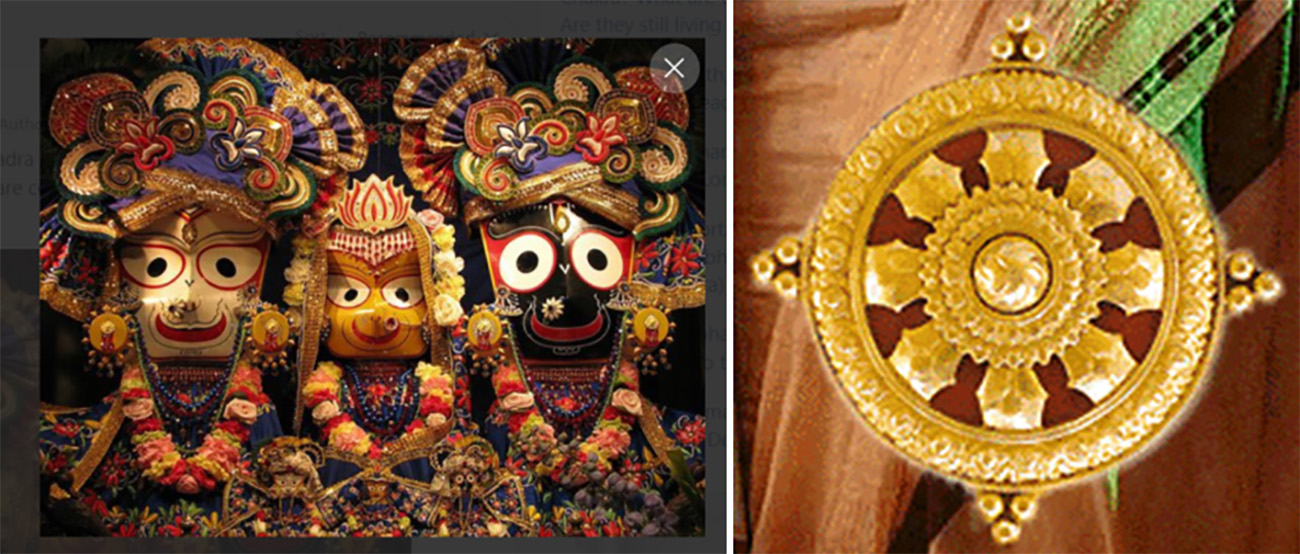
On the previous day of Snana Yatra, the images of Jagannath, Balabhadra and Subhadra along with the image of Sudarshana Chakr are ceremonially brought out from the sanctum in a procession to the Snana-vedi (Bathing pandal), a special pandal in the temple precinct located at such height that visitors standing outside the temple get a glimpse of the Deities.
On this 14th day, the Deities are taken out in procession, known as Pahandi Vijay to the tune of music and beating of indigenous drums to the Snana Vedi, well decorated with traditional paintings of trees and gardens besides putting flags and arches strung with mango leaves. The deities are profusely decorated with flowers and various perfumes, like incense, oils etc. are offered. As the Pahandi of the deities takes place thousands of devotees jostle and crave for a look at the deities.
After Mangala Arati, the Suaras and Mahasuaras go in a ceremonial procession to fetch water from golden well in 108 gold vessels with their mouths covered with a piece of cloth not to contaminate it even with their breath. All filled vessels are preserved in Bhoga Mandap. The Palla pandas (Brahmin priests) purify the water with turmeric, whole rice, benachera, chandan, aguru, flowers, perfumes and medicinal herbs. Prior to the bathing ceremony, the three deities covered in silken cloth and smeared with red powder, are taken in procession to a platform which is specially decorated and purified with water and incense.
The filled vessels are then taken to Snana Vedi by the Suaras in a long single-line procession, called Jaladhibasa for the bathing festival in morning hours to the tune of vedic chanting, kirtana and blowing of conch shells.
Due to such bathing offered to cool the Lord’s transcendental body during this hottest time in India before monsoon rains, HE suffers from fever for 14 days called ‘Anabasara’, when they are offered only fruits and water mixed with cheese and Dasa mula medicines to cure his fever. Like human beings they are considered to have fallen ill and are treated by Raj Vaidya or the King’s physician with specific medicines (Dasamulas).
After the Snana Yatra, the Deities are kept away from public view for 14 days when all rituals of the temple remain suspended. As Jagannatha himself instructed, after this ceremony, he is not seen for a fortnight. The Deities are kept on a special “sick room” called Ratan Vedi inside the temple. This period is called Anabasara kala (improper time for worship). During 15 days (recuperation period), the Daitas (descendants of Viswavasu) repaint and restore the Deities’s fine form. This period is divided into seven short periods, each of two days and last day for giving finishing touches.
On the 16th day, the Deities in their new forms appear for public darshan, called Netrotsava (festival for eyes) or Nava Yauvanotsava (festival of ever new youth). According to priests, the devotee washes away all sins having a glimpse of the Lord this day..
The Shilpa Shastras and Agamas testify that the Deities are suitable for worship only after performance of ‘Chakshyu Unmilana’ (Opening of eyes) rite. Then the Deities come out of the temple for Rath Yatra to bless everyone. To keep a wonderful mood of seeing the Lord in an uplifting manner, the Lord is decorated for Hati Vesha festival when Lord Jagannatha and Lord Balaram are clad in elephant dress while Goddess Subhadra wears lotus flower.
It is believed that a staunch devotee of Lord Ganesh, a profound scholar visited during Snana Yatra. He was amply rewarded by Orissa king for his knowledge. When the king asked him to accompany him to see Lord Jagannath, he refused saying that he wouldn’t worship any God other than his Ishthadevata Ganesh. He was persuaded to go to Snana vedi and to the utter surprise of all, Lord Jagannath appeared in an elephantine form resembling Ganesh. Since then during Snana Yatra, the Deities are dressed like elephants – resembling Ganesh.
During the sacred bath the colours painted on the images generally fade. Thus, the images are immediately dressed in the Hati vesha in which they remain mostly covered.
Traditionally the Snan Yatra has been going on since the time of carving of the Dharu-brahman, three Deities in Sri Purushottam Kshetra (Jagannath Puri) thousands of years ago, commemorating their sacred appearance for their devotees, primarily saintly King Maharaj Indradyumna.
Lord Sri Krishna is Lord Jagannath (Lord of the Universe), who as charioteer of archer Arjuna during Mahabharata War, said “I am Lord Vishnu, Ganesh, Shiva, Surya, Laxmi, Durga, Kali and Saraswati. I am the doer, I am the doeth and nothing beyond me”.


 20

