
One radio-tagged Amur Falcon
reaches Somalia in 5 days, 17 hrs
IMPHAL, Nov 23: Two Amur falcons were radio-tagged this month. Wildlife Institute of India (WII) scientist R Suresh Kumar, who is monitoring the bird’s migratory route, said “Chiuluan2” started an onward non-stop journey from Guhagar in Maharashtra’s Ratnagiri on Sunday morning around 10.30 am and reached Somalia on Tuesday around 7pm (India time).
One of the two Amur Falcons (Falco amurensis), “Chiuluan2” named after a village in Manipur’s Tamenglong district, has reached its first stopover site in Somalia in five days and 17 hours after flying non-stop and crossing the Arabian Sea.
Guangram, another satellite-tagged female falcon, is still in the Chiluluan roosting site in Tamenglong, said DFO Kh Hitler Singh. (Agency)
Beyond the Horizon
By Pradeep Kumar
India with 28 states and eight union territories is a country rich in biodiversity and home to various birds and animals. But, eight North East states are unique in one way or the other. If Arunachal Pradesh, with natural beauty, mountainous landscapes and relatively untouched environment , one of the 12 biodiversity hotspots of the world, is known as ‘Last Sangri-La on Earth’, Nagaland drew worldwide attention by earning the sobriquet ‘Falcon Capital of the World’.
Nagaland earned this honor officially on 06.11.13. due annual migration of large number of Amur Falcons through the state. Pangti village of the state hosts over a million Amur Falcons during their annual migration. These small birds halt in Nagaland while traveling from Siberia and China to southern Africa.
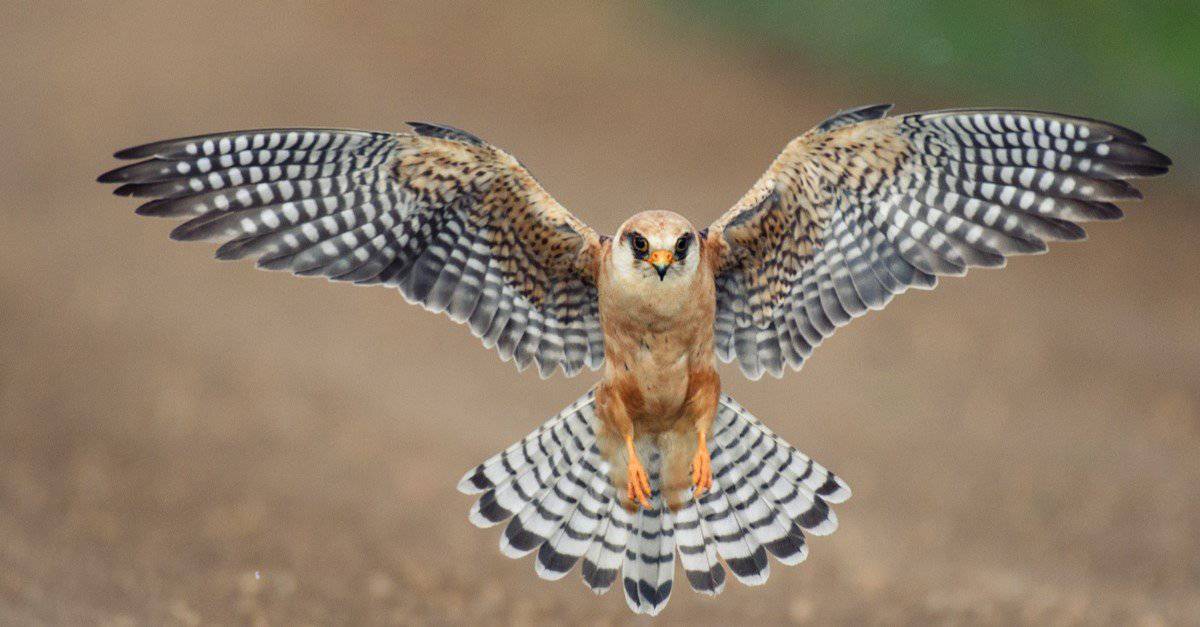
Amur Falcons are small, agile birds with striking looks. Their dark feathers, white wing linings, reddish-orange eyes and feet make them stand out. These birds are known for their long migration journey, breeding in southeastern Siberia and northern China and flying all the way to southern Africa.
In 2012, mass trapping and capture of migrating Amur falcons at Pangti village was reported in media and a successful campaign was begun to prevent their killing. As part of this campaign, three birds were fitted with 5 gm satellite transmitters that allowed them to be tracked during their migration.
A study into the drivers that helped turn Amur falcon hunters into protectors at Pangti, suggests that strong leadership and shared responsibility among village institutions were key. It found that local leaders successfully navigated power struggles over limited NGO and Govt funds, leading to a unified conservation effort.
Media praise, awards and the growth of tourism fostered a sense of pride within the community, contributing to a shift in attitudes toward conservation. These efforts also had positive spillover effects, including air gun bans and shorter hunting seasons. However, villagers continue to seek development opportunities as part of the conservation agreement. For long-term sustainability, it’s essential to build trust by respecting local institutions and engaging in fair, transparent negotiations.
Amur Falcons migrate to find food and better living conditions. They leave their breeding grounds in northern parts of the world, like Siberia and China, as the weather becomes colder. They fly thousands of kilometers to reach southern Africa, where they spend the winter months. These birds face several challenges that threaten their survival, including habitat Loss (destruction of forests and wetlands can take away their natural homes) and hunting and illegal trapping (some people hunt or trap these birds to put them in danger).
As Nagaland serves as a significant stopover for the Amur Falcons during their long migration, the state Govt has made efforts to protect these beautiful birds by preventing illegal hunting and mass awareness about importance of protecting these birds.
This bird was long considered a subspecies or morph of the red-footed falcon, but it is now considered a distinct species, but red-footed falcon’s closest relative as their relationship to other falcons is more enigmatic. The genus name Falco is Late Latin and derives from falx, falcis, a sickle, referencing the claws of the bird. The species name amurensis is from Amurland in south-eastern Siberia.
The Amur falcon breeds in East Asia from Transbaikalia, Amurland and northern Mongolian region to parts of North Korea. They migrate in a broad front through India and Sri Lanka, sometimes further east over Thailand and Cambodia and then over Arabian Sea, sometimes in passage on Maldives and other islands to reach southern Africa.
Birds going over India are thought to be aided by strong winds blowing westward. These winds are strong at an altitude of about 3000m and the birds are thought to fly at a height of above 1000m during migration. The route taken to return to their breeding grounds runs slightly more northward. Because of its tendency to wander long distances over the ocean while migrating, this falcon has been found in locations far outside its normal range, like Italy, Sweden, Tristan da Chuha, St. Helena & United Kingdom.
The bird feeds mainly late in the evening or early in the morning capturing a wide range of insects in the air or on the ground. They capture most of their prey in flight, sometimes by hovering, but will also pick prey by alighting on the ground. The winter diet appears to be almost entirely made up of insects, but also take small birds, mammals and amphibians to feed their young in their breeding range.
The rains in Africa produce swarms of termites, locusts, ants and beetles that provide ample food. Their migration over the Arabian Sea coincides with the timing of the migration of dragonflies and these are thought to provide food during the most arduous part of their migration route.
During migration they stay in open forest or grasslands, roosting colonially on exposed perches or wires. Their breeding habitat is open wooded country with marshes. The breeding season is May to June and several pairs may nest close together. Abandoned nest platforms belonging to birds of prey or corvids and even tree hollows are re-used for nesting. Three or four eggs are laid at two day intervals. Both parents take turns to incubate and feed the chicks which hatch after about a month. The young birds leave the nest after about a month.
The Amur falcon hosts three species of lice, Degeeriella rufa, Colpocephalum subzerafae, and Laembothrion tinnunculi.


 20

