
Tibet: It is now or never!
On 5 May 2020, China’s PLA with its ‘dog-tailed foreign policy’, engaged in aggressive melee, face-offs and skirmishes at locations near disputed Pangong Lake in Ladakh and the Tibet Autonomous Region along the (LAC) of Sino-Indian border. On 07.09.20 for the first time in 45 years, shots were fired along the LAC, with both sides blaming each other for the firing.
However, partial disengagement from Galwan, Hot Springs and Gogra occurred in June–July 2020 while by 29.10.24, troops of both sides had completed 80-90% disengagement, including removal of all types of infrastructure, at Depsang and Demchok in Eastern Ladakh.
According to highly placed sources, intervention of Prime Minister Narendra Modi had forced China to to behave sensibly. If it acted in Ladakh as desired, PM Modi could act for Beijing to straighten its tail on Tibet too. It is now or never, a geo-political affairs expert said.
By Pradeep Kumar
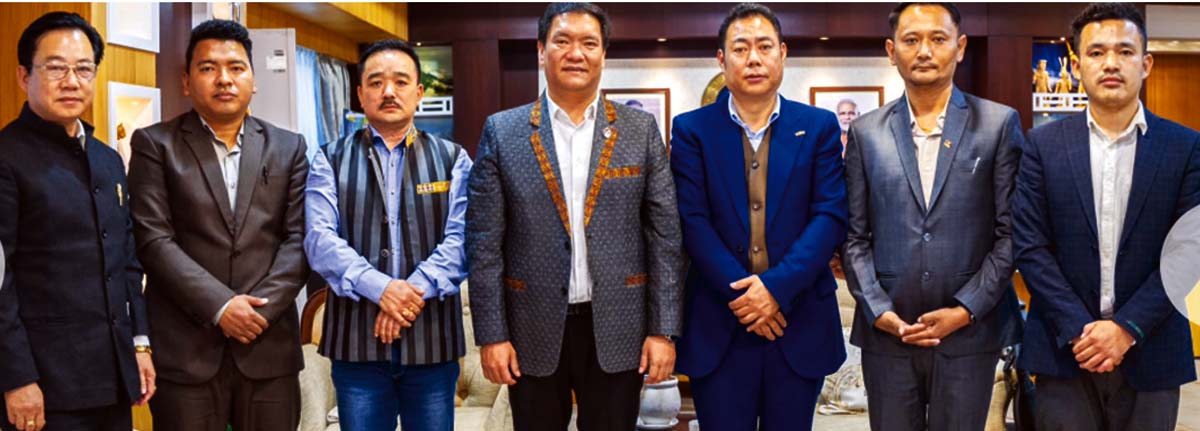
ITANAGAR, Dec 01: “The Tibetans have played a pivotal role in preserving ancient Indian knowledge, philosophy and Buddhist traditions. Their selfless efforts have ensured the survival of our rich cultural heritage, said Chief Minister Pema Kahndu while discussing future strategy for their settlement with Tibetan Settlement Officers.
Dharamshala-based Central Tibetan Administration (CTA), in Tibet.com, quoted CM Khandu as saying, “I had the opportunity to meet with Tibetan Settlement Officers and members of Tibet Support Group of Arunachal Pradesh (TSGAP)”. He assured all possible support to Tibetan community living in settlements, like Tenzingaon, Miao, Tezu and Tuting, which is doing rounds in social media platform.
The CM also lauded proactive role of TSGAP, particularly president Tarh Tarak and secretary general Nima Sange (who were in the team).
In appreciation, Kalsang Tseten wrote: “Thank you so much, Honorable Chief Minister of Arunachal Pradesh, Pema Khandu Ji, for your unwavering support for Tibet and the Tibetan cause. Your genuine dedication to the Tibetan people and your steadfast faithfulness to His Holiness the Dalai Lama will forever be remembered and cherished by Tibetans worldwide.
“May the blessings of His Holiness empower you with wisdom and strength to continue leading Arunachal Pradesh with grace and vision, ushering in progress and prosperity for your state and its people. Your leadership is an inspiration, and we are deeply grateful for your enduring solidarity with Tibet”.
The TSGAP and Core Group for Tibetan Cause-India (CGTC-I) are off springs of 1959 Tibetan uprising and giving momentum to the case.
Facilitated by India Tibet Coordination Office (ITCO), the CBTC-I, had met in New Delhi’s Bureau of His Holiness The Dalai Lama, chaired by its national convener R.K. Khrimey, to mainly focus on its by-laws..
The meeting was attended by prominent figures, including Bureau of His Holiness The Dalai Lama representative Jigmey Jungney, CTA Information and International Relations department additional secretary Tenzin Lekshay, national co-conveners Ven. Lama Chosphel Zotpa, Delhi CGTC-I regional convener Pankaj Goyal, Surender Kumar and Arvind Nicose. .
After address of ITCO acting coordinator Tashi Dekyi and keynote address of Khrimey, all had indepth discussion on new and existing suggestions of members which generated a positive and energetic atmosphere, reinforcing the collective commitment to the cause of Tibet and the pursuit of truth.
The CGTC-I serves as the central apex body of all Tibetan Support Groups (TSGs) across India, dedicated to advocating for the restoration of basic human rights and freedoms for the people of Tibet.
Moreover, the TSGAP led by Tarak is meeting often besides visiting Tibetan settlement areas to take stock of prevailing situation and apprising the inhabitants on various ongoing initiatives to ensure their return to Tibet.
Tibetan uprising on 10 March 1959, which erupted in Tibet capital Lhasa following invasion of of the People’s Republic of China (PRC) after the Seventeen Point Agreement was reached in 1951 that changed the course of political history.
The Tibetan protesters feared that the PRC might arrest their spiritual leader the 14th Dalai Lama. Though the uprising initially was peaceful protests, but clashes quickly erupted as the Chinese People’s Liberation Army (PLA) used force to quell the protests.
The 14th Dalai Lama escaped from Lhasa, while the city was fully retaken by Chinese security forces. Thousands of Tibetans were killed during the uprising. The U.S. Central Intelligence Agency (CIA) began had given covert support to the rebellion and the rebellion had spread to Lhasa which had filled with refugees. Opposition to the Chinese presence in Tibet grew in Lhasa.
In mid-February 1959 the Central Committee of Chinese Communist Party’s administrative office circulated an internal report in Xinhua News Agency on how “the revolts in the Tibetan region have gathered pace and developed into a nearly full-scale rebellion,” in a “situation report” for top CCP leaders.
On 10.03.1959, the 14th Dalai Lama with members of his family and his Govt disguised in PLA uniform left Norbulingka palace and entered Lhuntse Dzong on March 26 when the Dalai Lama he sent a letter to Indian prime minister Jawaharlal Nehru explaining the political situation in Tibet and requesting asylum.
The CIA also cabled Nehru’s office seeking permission for the Dalai Lama’s party to cross the border.In response, Nehru sent a detachment of the Assam Rifles to the border post in Chuthangmu near Tawang. The Dalai Lama and his entourage crossed the McMahon Line on March 31. The same day, Nehru made an announcement in the Parliament that the Dalai Lama should be treated with respect. He had reached Tawang adnd stayed in Tawang Monastery before proceeding to Dharamshala where the GoI had allowed to set up the Tibetan Govt in Exile headquarters.
. About 80,000 Tibetans followed the Dalai Lama to India within the next year, but data put global Tibetans diaspora at around 1.5 lakh.


 20