
- World’s largest peaceful gathering of humans
By Staff Reporter
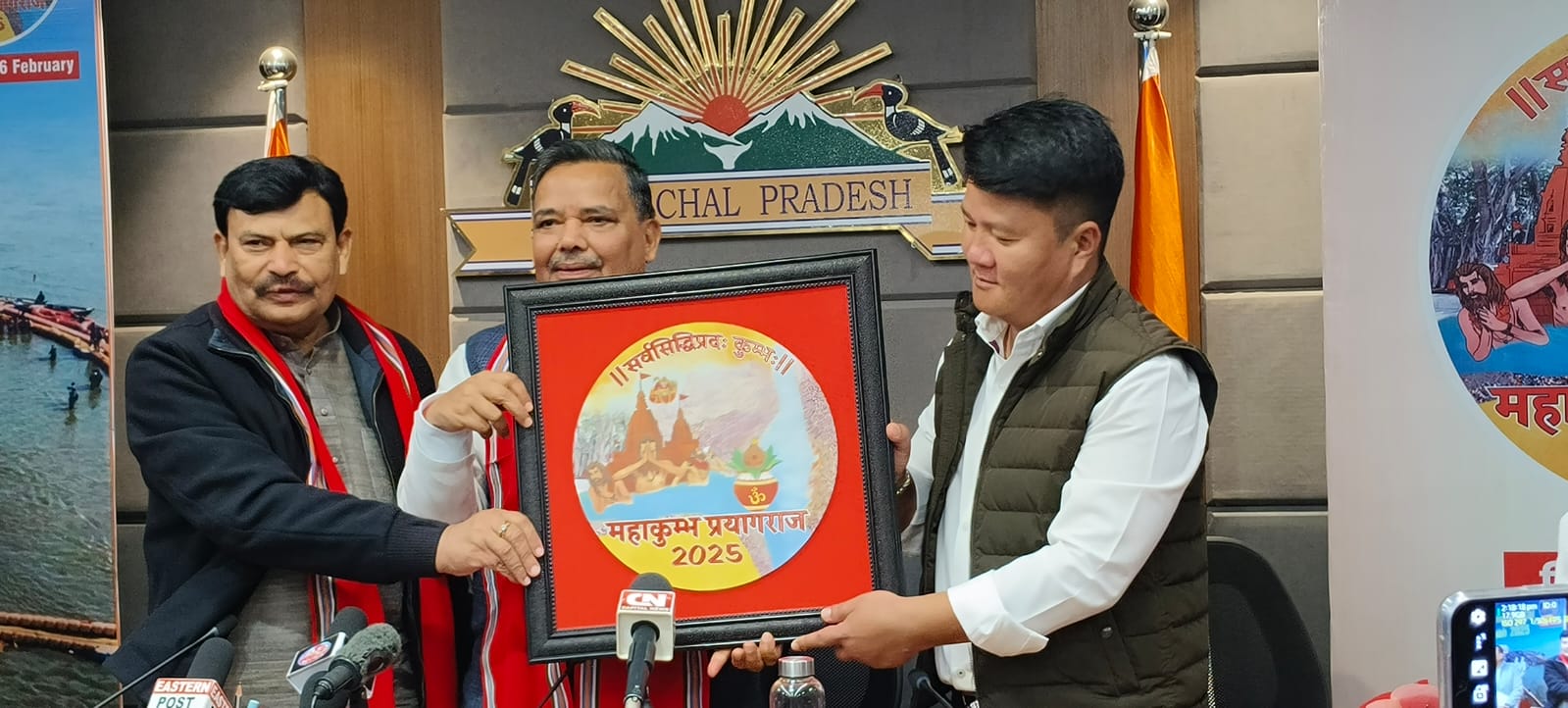
ITANAGAR, Dec 22: Uttar Pradesh Tourism Minister Jaiveer Singh, accompanied by state’s Forest & Environment and Climate Change Minister K P Malik and officials on a two-day visit to state capital here, has invited Arunachal Pradesh people to be a part of Maha Kumbh Mela-2025, scheduled from January 13 to February 26 next.
“We will invite state chief minister and governor for the event,” he said, adding Maha Kumbh Mela, which comes after every 12 years, is a platform for cultural exchange where people from different states and backgrounds come together and more than four crore visitor from within the country and abroad are expected this year, he told media persons here on Sunday.
“Like Arunachalees believe in Donyi-Poloism, Maha Kumbh is a Hindu traditional mela and visitors can engage in wide range of ritual practices and discussion on philosophy of Hinduism,” he said.
The UP Govt would ink memorandum of understanding (MoU) with NE states to boost their tourism. “We would not confine only to Maha Kumbh Mela but also strengthen NE tourism with certain regular activities.
About Arunachal visitors, he assured to evolve a policy for exposure tour which include interaction for mutual understanding and respect for each other’s cultures.
The Maha Kumbh Mela is a celebration of faith, spirituality and cultural exchange but a symbol of togetherness and enlightenment, he said, adding necessary facilities and security arrangements have been completed for the visitors. He assured that the visitors’ safety during the auspicious occasion would be their priority. Advisor to Minister Home & Education, Mutchu Mithi was present as GoAP representative.
Maha Kumbh Mela, conducted at four pilgrimage riverside sites, namely: Prayagraj (confluence of Ganges,Jamuna & Saraswati Rivers), Haridwar (Ganges), Nashik (Godavari) & Ujjain (Shipra), witnesses the largest peaceful gathering of humans ever recorded in the world. The other rejuvenated Kumbh Mela is celebrated at Bansberia Tribeni Sangam, confluence of Hoogly & Saraswati Rivers in West Bengal, which dates back to thousands of years but stopped 700 years ago before reopening since 2022.
The festival is marked by a ritual dip in the waters, but it is also a celebration of community commerce with numerous fairs, education, religious discourses by saints, mass gatherings of monks, and entertainment. The seekers believe that bathing in these rivers is a means to atonement, penance, restorative action for past mistakes by washing away all sins.
The festival is traditionally credited to 8th century Hindu philosopher and saint Adi Shankara, as his efforts to start major Hindu gatherings for philosophical discussions and debates along with Hindu monasteries across the Indian subcontinent. However, there is no historical literary evidence of these mass pilgrimages called “Kumbha Mela” prior to 19th century. But, there is ample evidence in historical manuscripts and inscriptions of an annual Magha Mela in Hinduism – with periodic larger gatherings after 6 or 12 years – where pilgrims gathered in massive numbers and where one of the rituals included a sacred dip in a river or holy tank.
According to Kama MacLean, the socio-political developments during the colonial era and a reaction to Orientalism led to the rebranding and remobilisation of ancient Magha Mela as the modern era Kumbh Mela, particularly after the Indian Rebellion of 1857.


 20

