
- Arunachal bird counting up to 426
By Pradeep Kumar
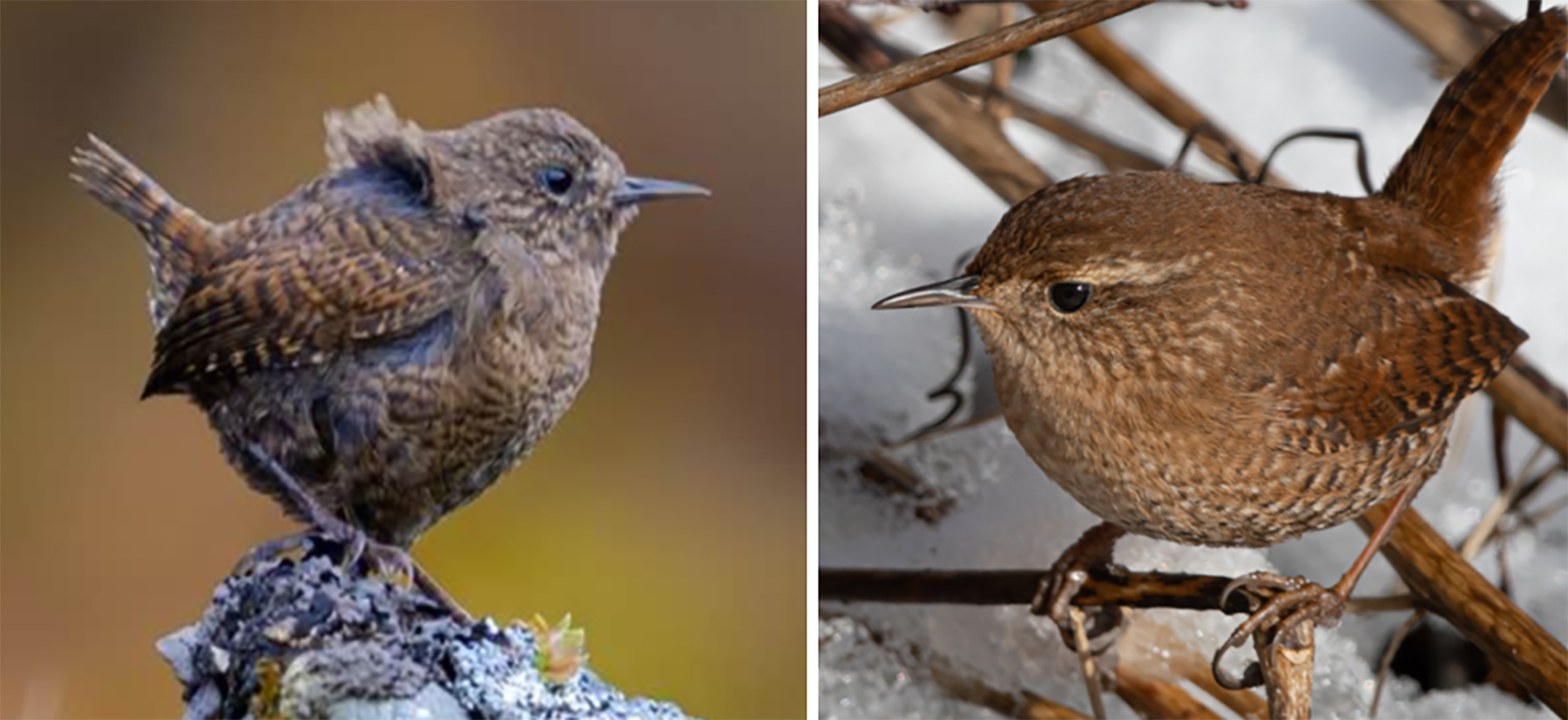
ITANAGAR, Dec 22: Winter wren spotted by Rubul Saikia at Sela Pass in October last and posted on Indian Birds Facebook “A bird that hunts a reptile sustains the cycle of life, ensuring that the scales never tip too far, but always maintain harmony in the wild”, to justify Arunachal Pradesh as a treasure trove.
The winter wren (Troglodytes hiemalis) is a very small North American bird and a member of the mainly New World wren family Troglodytes.
It breeds in coniferous forests from British Columbia to the Atlantic Ocean. It migrates through and winters across southeastern Canada, the eastern half the United States and (rarely) north-eastern Mexico. Small numbers may be casual in the western United States and Canada.
The scientific name for its genus is taken from the Greek word troglodytes (from “trogle” a hole, and “dyein” to creep), meaning “cave-dweller”, and may refer to their tendency to nest in cavities or their foraging behavior, in which the winter wren almost exclusively ground-gleans in thick underbrush.
The winter wren was described and illustrated in 1808 by American ornithologist Alexander Wilson. By applying a molecular clock to the amount of mitochondrial DNA sequence divergence between two species, it was estimated that Troglodytes pacificus and Troglodytes troglodytes last shared a common ancestor approximately 4.3 million years ago, long before the glacial cycles of Pleistocene, which are thought to have promoted speciation in many avian systems inhabiting the boreal forest of North America.
The bird with 7.9–11.9 cm length, 8.5–11.3 g wight and 12–16 cm wingspan and a small tail is often cocked above its back, and short neck.
The distance of British Columbia from India is 11,359-km and it is intriguing that the bird has been spotted in this remote state of India?
The state’s rich diversity of birds in wildlife sanctuaries and national parks is beyond comprehension. Known as “Land of Orchid”, this Himalayan state has Eaglenest Wildlife Sanctuary (EWS) in West Kameng district, Pakke Wildlife Sanctuary & Tiger Reserve (PWSTR) in East Kameng district, Daying Ering Wildlife Sanctuary in East Siang district and Namdapha National Park in Changlang district. Arunachal boasts of The state bird.
The World Wildlife Day 2022 had recorded rare and uncommon species which make a count of around 425, including spectacular Bugun Liocichla in EWS, a rare and critically endangered bird and state bird Hornbill in PWSTR.
The unique ecosystem of this state has made it a natural habitat for different species of birds including migratory birds, like cranes, wild ducks, storks, waterfowls etc, which come from Siberia and Mongolia from September to February every year. The Black-necked Cranes, a threatened species on the IUCN Red List, which migrate from Tibet and China’s Xinjiang province every winter and stay for about one and a half months, had landed in Sangti Valley in West Kameng district on 10.01.24 and in Zemithang in Tawang district in November 2last: The Monpas consider these cranes to be symbols of good fortune being embodiment of the 6th Dalai Lama.
The spotting of the new bird species has increased the number to 426. But how many new species might be migrating to the state, whose forest cover is on the rise, would be known only by conducting a systematic counting through bird watching by involving Bird Count India, an informal partnership of organizations and groups working together to increase collective knowledge about bird distributions and populations.


 20
