
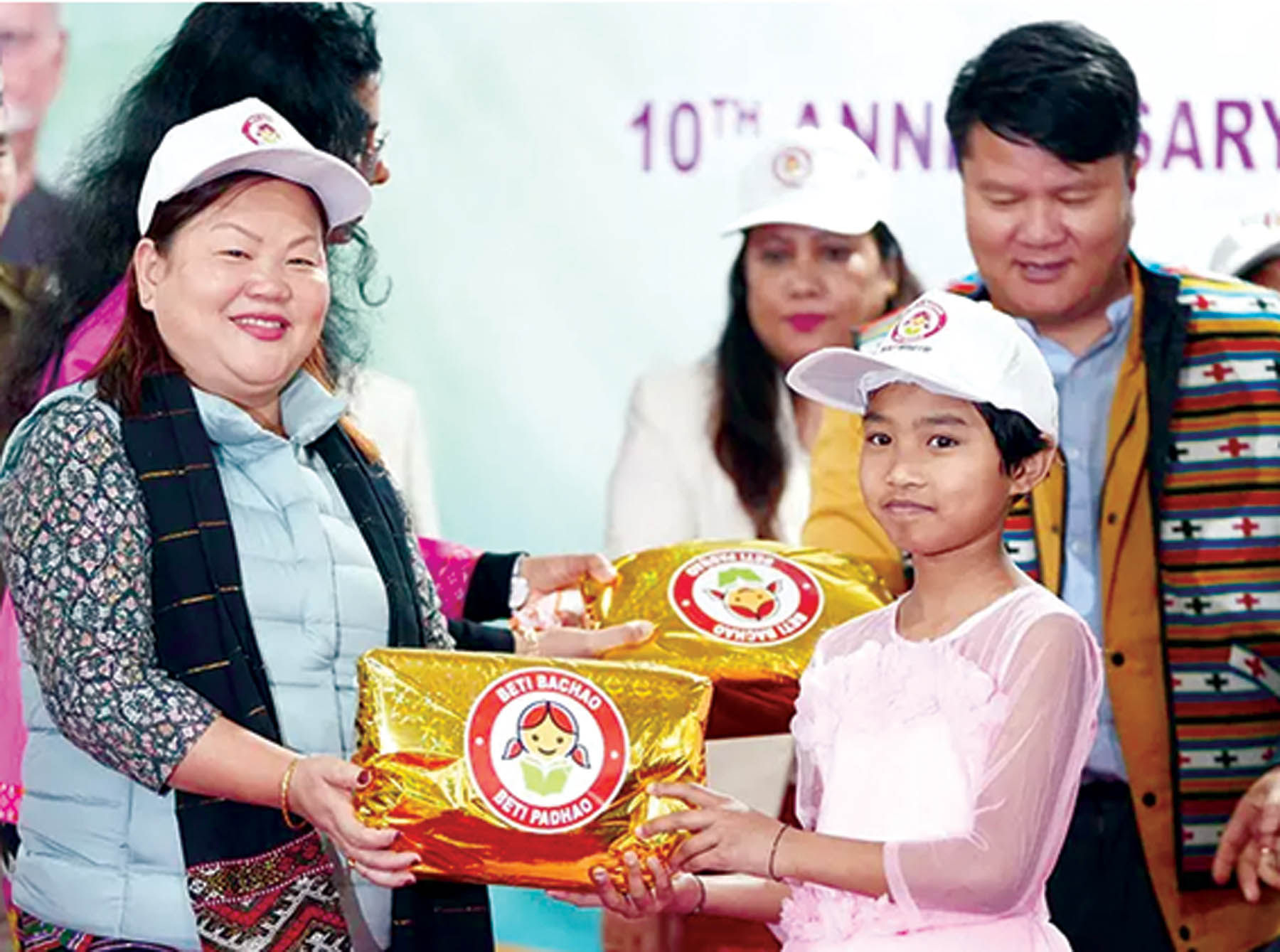
ROING, Mar 04: The Beti Bachao, Beti Padhao (BBBP) scheme implementation has improved sex ratio of Arunachal Pradesh, with 14 out of 25 districts recording over 900 females per 1,000 males in 2023-24, according to Women & Child Development (WCD) Minister Dasanglu Pul.
Addressing a ‘Beti Janmotsav’ event in Lower Dibang Valley district HQs here on Monday to mark 10th anniversary of the scheme, she said that the state’s sex ratio stands at 948.68 females per 1,000 males, surpassing the national average of 930. Five districts – Shi-Yomi, East Kameng, Kamle, Upper Siang, and Tawang – recorded sex ratios above 1,000 in 2023-24, she said.
The minister also noted a significant decline in dropout rate among girls at the secondary and higher secondary levels, from 30.89% in 2019-20 to 12.5% in 2021-22. Moreover, the first-trimester ANC registration, crucial for early pregnancy care, has improved substantially, she informed.
Highlighting benefits of BBBP scheme, she urged women to avail the Govt scheme for their empowerment. She also called for greater awareness about girl child trafficking and parental support to ensure their safety.
She outlined key GoAP decisions regarding child adoption, including prioritizing intra-district and intra-state adoption, creating contractual posts to manage child and women helplines and allocating funds for CDPO quarters and working women’s hostels.
Local MLA Mutchu Mithi lauded achievements of women across various sectors and stressed their role in shaping the society. He advocated discussions on polygamy, terming it as a practice that undermines women’s self-respect.
MLA Puinnyo Apum spoke on various Govt schemes for women’s welfare and urged them to avail of the benefits.
WCD joint secretary Sangeeta Yirang, Lower Dibang Valley DC Soumya Saurabh and Mission Shakti state nodal officer Bahe Koyu also spoke.
Child Welfare Committee member Rema Mito and Nani Maria Society chairperson Desai Linggi shared success story of Roing child care institute (CCI).
The event, attended by SP Ringu Ngupok, other officials, anganwadi workers and students, conluded after a BBBP pledge and distribution of gifts to newborn girls and CCI children. (PRO)
AONS adds: The National Family Health Survey (NFHS-5) estimated that India’s sex ratio in 2023 was 1,020 females per 1,000 males. The rural sex ratio was higher at 1,037 females per 1,000 males, while the urban sex ratio was lower at 985 females per 1,000 males.
The Ministry of Statistics & Programme Implementation (MoSPI) had notified it in “Women and Men in India”, which included data on key socio-economic indicators for both women and men. The publication was a centralized resource that consolidates information from various sources.
The sex ratio of some states was: Meghalaya: 986 females per 1,000 males, Manipur: 987 females per 1,000 males, Odisha: 978 females per 1,000 males, Chhattisgarh: 991 females per 1,000 males, Andhra Pradesh: 992 females per 1,000 males, Tamil Nadu: 995 females per 1,000 males, Puducherry: 1,038 females per 1,000 males and Kerala: 1,084 females per 1,000 males.


 20
