
Beyond the Horizon
By Pradeep Kumar
Modern education began in India under British rule. Before the British, India had its own educational systems like the Gurukulas and the Madrassas. The East India Company (EIC), during their first 60 years of rule didn’t care much for the education of those they ruled in India. (Even in England, universal education came about at a much later stage.)
The Charter Act of 1813 was the first step towards education being made an objective of the EIC. The Act sanctioned a sum of Rs.1 lakh towards the education of Indians in British ruled India and also gave an impetus to the missionaries who were given official permission to come to India.
Although there were a few Englishmen who wanted to spread education for its own sake, the EIC was chiefly concerned only with its own concerns. There was a huge demand for clerks and other administrative roles in the EIC’s functioning.
It was cheaper to get Indians rather than Englishmen from England for these jobs. This was the prime motive of British education. No doubt, the EIC spreaded western education among Indians, but the rate of literacy was abysmally low during British rule. In 1911, the illiteracy rate in British India was 94%. In 1921, it was 92%. Scientific and technical education was ignored by the British Govt.
The state of women education was pathetic. This was because the EIC did not want to displease the orthodox nature of Indians and also because women could not generally be employed as clerks.
The present dismal status of Indian education system is because of EIC introduced system, which has embedded into Indian metabolism so much that three major education commissions – University Education Commission (1948), Secondary Education Commission (1952) and Indian Education Commission (1964-66) could hardly bring any change. Thus, New Education Policy (NEP) 2020, was launched to transform Indian education system, moving from a 10+2 structure to a 5+3+3+4 structure, emphasizing holistic development, inclusivity, and 21st-century skills.
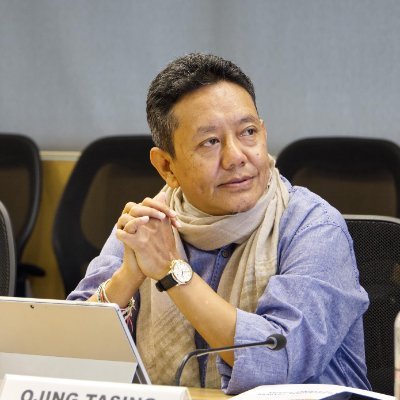
Though the NEP was introduced in the state, but no system whatsoever could sustain without solid foundation, which was realized by Education Minister Pasang Dorjee Sona, whom I often term as most creative lawmaker of the state for his ability to turn any negative aspect to positive, which he had proved during en interview after his return from the UK.
The ‘Mission Shikshit Arunachal 2029’, a visionary three-year roadmap aimed at bringing fundamental changes to state’s education system unveiled in state Assembly on Friday by him, proved me right as he said “This is not just a transformation, but a metamorphosis. We have set a deadline and the results will be defined by our collective efforts”, to thunderous applause of all members.
The roadmap lays foundation for key reforms in learning outcomes, teacher training, school infrastructure, and governance to ensure quality education for every child in the state.
Designed to address long-standing challenges, like more-teachers-less students or vice versa, poor infrastructure, and thus low learning outcomes, the roadmap is a result of months of extensive groundwork carried out by himself with support of Chief Minister Pema Khandu.
After maiden Chintan Shivir-cum-Education Conclave 2024, where stakeholders identified priority areas, Sona-led team visited districts for six months to assess prevailing ground realities and worked closely with local communities to shape this plan.
Emphasizing the commitment behind this initiative, Sona had said, “We often see that after every symposium, people go back, and there is no follow-up. But this time, it was different. After the three-day Chintan Shivir, we visited every district of Arunachal Pradesh over the next six months. Thanks to our energetic team, our advisor and the members, we were able to translate those discussions into this roadmap. Education is the foundation of progress, and we must confront our weaknesses head-on. The more you hide your weaknesses, the weaker you become. And here we are, committed to finding solutions. This is not just a transformation, but a metamorphosis. Deadlines amuse me, and this three-year deadline will be defined by the efforts we put in together. And today, we proudly present this roadmap to this house.”
One of the major reforms under the mission is school rationalization to consolidate low-enrolment and single-teacher schools to ensure better resource allocation and higher-quality education. A School Infrastructure Validation Survey has been launched to assess and upgrade school facilities across the state. The roadmap also prioritizes competency-based learning, digital tracking of student performance, and a structured training program for teachers.
Highlighting the need for political will and commitment Sona said, “We have to do what we commit. Every child in Arunachal Pradesh is our child, and their education is our responsibility.”
With technology-driven governance, stronger teacher training, improved infrastructure, and an outcome-based approach, ‘Mission Shikshit Arunachal 2029’ sets the stage for a complete overhauling of education system. The Education Department under Sona’s leadership, has taken a decisive step towards ensuring that every child has access to quality education, shaping a brighter future for the state.


 20

