
- Tallest grass indivisible part of Arunachalees’ life
By AO News Service
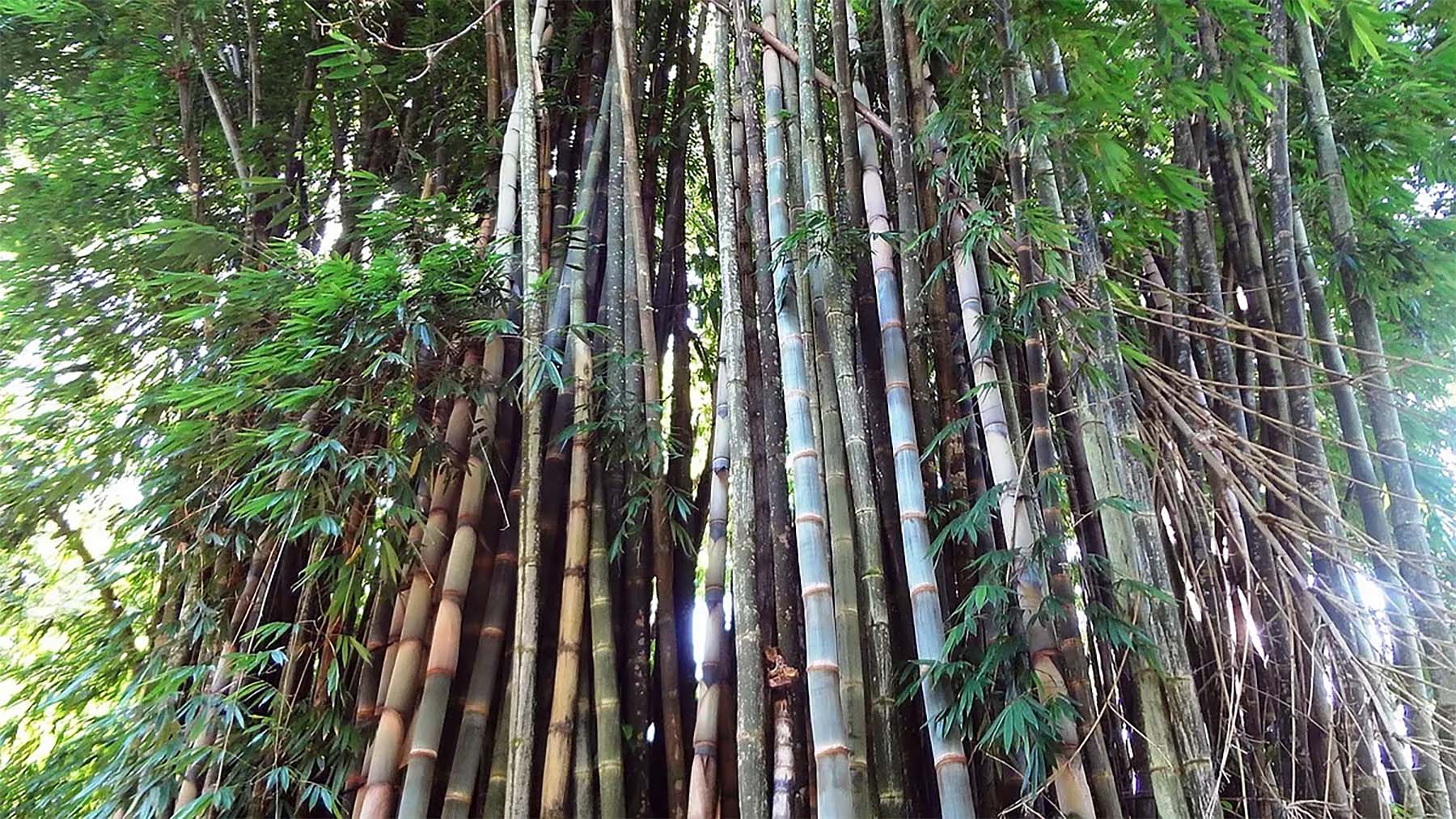
ITANAGAR, Apr 09: A collaborative research by Bhilai’s Indian Institute of Technology (IIT) and the North Eastern Regional Institute of Science and Technology (NERIST) has unveiled groundbreaking findings on Bije bamboo (Phyllostachys bambusoides), a rare species found in Ziro Valley. Funded by All India Council for Technical Education (AICTE), the study highlighted the bamboo’s remarkable mechanical strength and antibacterial properties, closely resembling Japan’s Madake bamboo.
Led by project fellow Priyam Kashyap under the guidance of Dr Santosh Tamang (NERIST) and Dr Jose Immanuel (Bhilai IIT), the research reveals that Bije bamboo is an excellent for advanced composite materials and sustainable engineering applications.
The study confirmed that integrating this bamboo into polymer composites would significantly improve wear resistance, mechanical durability and frictional stability under dynamic conditions.
With high tensile strength and superior wear resistance, Bije bamboo has the potential to replace synthetic fibres in composite materials. Moreover, its strong antibacterial properties open up new possibilities for biomedical and hygienic applications.
As the global demand for sustainable and high-performance materials rises, this bamboo would emerge as a key player in advanced composite research.
Therefore, the GoAP, forest and climate change department in particular, should develop a system to tap this bamboo and market for the local handicraft artists could get and use them not only to earn decent livelihood but also the handicraft sector to flourish.
Because, bamboo is vividly linked to the life of Arunachalees and they have mastered the art of using the tallest grass on Earth as roti, kapda, makan and mala.
Arunachal Pradesh is known as a “Land of Festivals” with each 26 major and over 100 sub-tribes celebrate their festivals reflecting unique age-old rich culture, customs and traditions. But, bamboo plays a crucial role in every aspect of life, including festivals, as seen during recent Mopin Festival celebration.
Right from making the pandals, its decoration, sitting arrangements, bamboo ornaments used by male and female dancers as head gears and around their bodies, chungas used for serving local brew apong and last but not the least the pandal for worshipping is also made of only bamboo. This amply proves the relevance of bamboo in this tribal state.
As everything has positive and negative aspects, fire incident in the past used to reduce upto 1,000 bamboo-made houses to ashes in Ziro Valley. But its residents Apatanis used to rebuild the same bamboo houses within short time reflecting their community spirit.
Though, concrete buildings have replaced most bamboo houses in Ziro, but the time-tested bamboo-human being relations would continue as long as life survives on earth.
Bamboo grooves are seen all over this Himalayan state and the locals make their best use for their daily life. But, there is no system to monitor the bamboo scenario of the state.


 20
