
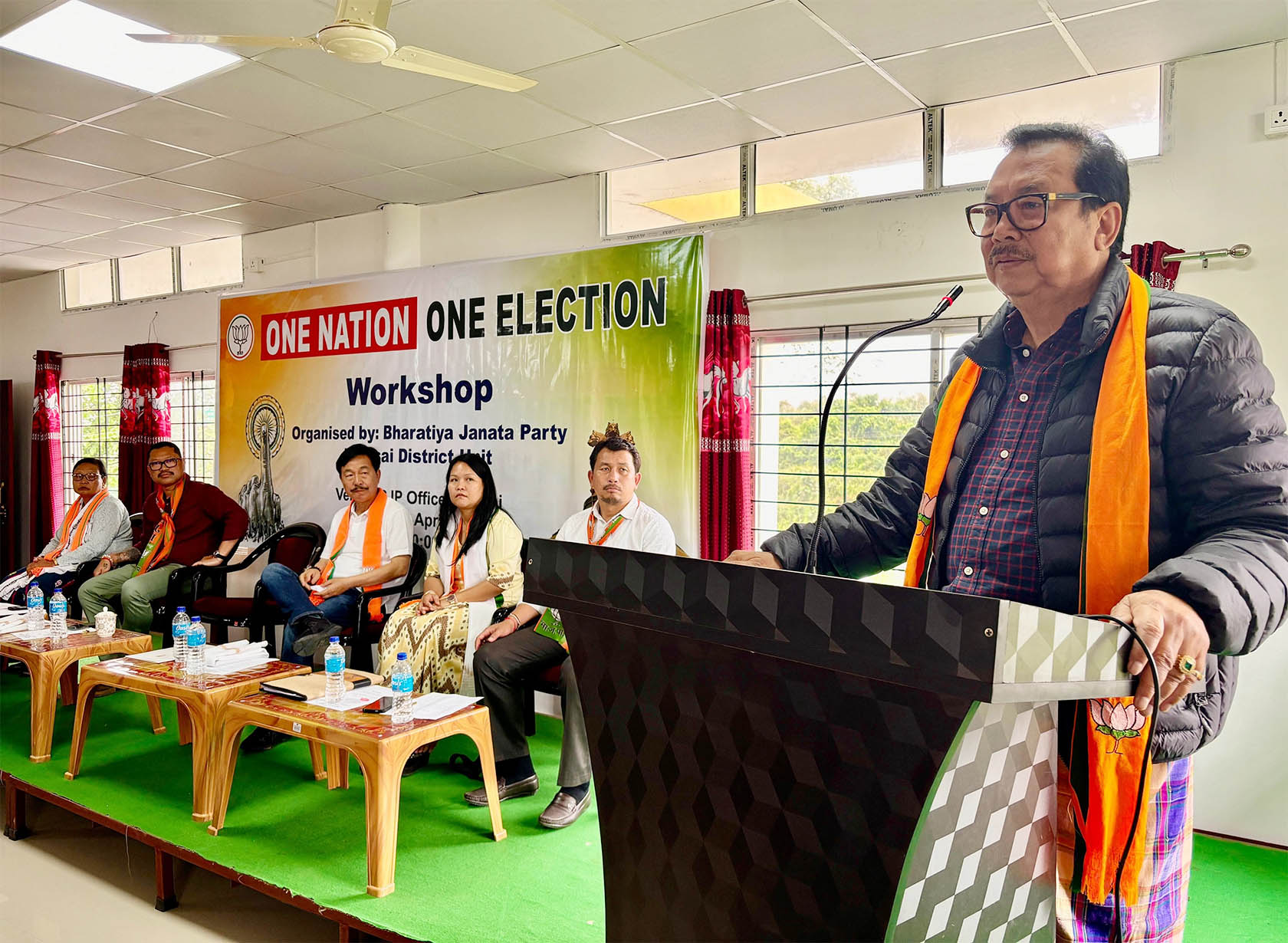
NAMSAI, Apr 21: Deputy Chief Minister Chowna Mein, while addressing a workshop on “One Nation, One Election”, organized by Namsai district BJP here on Sunday, termed it as a transformative initiative for more efficient governance.
Simultaneous elections to Lok Sabha and state assemblies would greatly reduce burdens on administrative machinery, minimize election expenses, and ensure governance continuity without frequent disruptions, he said and exhorted all party leaders and workers to understand and support this vision which aligns with broader goal of national integration and administrative effectiveness.
Advocating party discipline and unity, he reminded them to strength the party which not only depends on leadership but also collective effort, integrity and dedication of members at all levels. He reiterated adherence to party’s core principles for sustained success.
Focusing on local governance, he urged them to begin preparations for ensuing PRI elections as Panchayati Raj system plays a critical role in reinforcing democracy at the grassroots level and advised them to identify committed candidates.
He cautioned against factionalism, group-ism to resentt after denial of tickets that would send negative message and advised them to supporting party candidates.
Asking them to ensure that benefits of all Govt welfare schemes and projects reach remotest parts of the state, Mein called for united and committed action for overall growth of the party and state building.
Highlighting pressing issues of state national significance, East Lok Sabha member Tapir Gao, hinted at Govt’s commitment to transparency, accountability, and protection of state’s rich cultural heritage.
The ongoing Enforcement Directorate’s probe into National Herald case is court-monitored and not politically motivated, he clarified and strongly condemned Congress for its bid to politicize the matter and distract public attention.
Expressing serious concerns over administration of Waqf Board properties, he called for greater transparency and public accountability in managing religious and charitable assets.
Advocating implementation of Arunachal Pradesh Freedom of Religion Act, 1978 in tune with high court directive, he said that while the Constitution guarantees freedom of religion, this Act would give additional legal safeguard tailored to state’s unique socio-cultural context for which rules are being framed.
Proper awareness is need of the hour to counter misinformation as the Act is not against any faith but would safeguard all religious practices and promote peaceful coexistence in the state.
Namsai MLA-cum-BJP general secretary Zingnu Namchoom highlighted cost-effectiveness, administrative efficiency and long-term governance benefits of a unified electoral framework. He urged them to recognize broader national interest in this initiative and to spread awareness about its benefits at the grassroots level.
He encouraged them to initiate discussions on several important issues, including ‘One Nation, One Election’, National Herald case, Waqf Board, AFRA Act), The legacy and vision of Dr. B.R. Ambedkar.
He recommended that these topics be discussed widely in every polling booth, particularly during upcoming PM’s Mann Ki Baat to generate public understanding, he added.
State vice president Junty Singpho, as resource person, spoke in-depth on perspective of the topic and explained its rationale, saying simultaneous elections could bring greater political stability and reduce frequent disruption of governance caused by repeated polls.
District president Ningroo also addressed participating ZPC Nang Urmila Mangcheykhun and ZPMs, according to media co-convenor Nima Sangey.


 20

