
By A O News Service
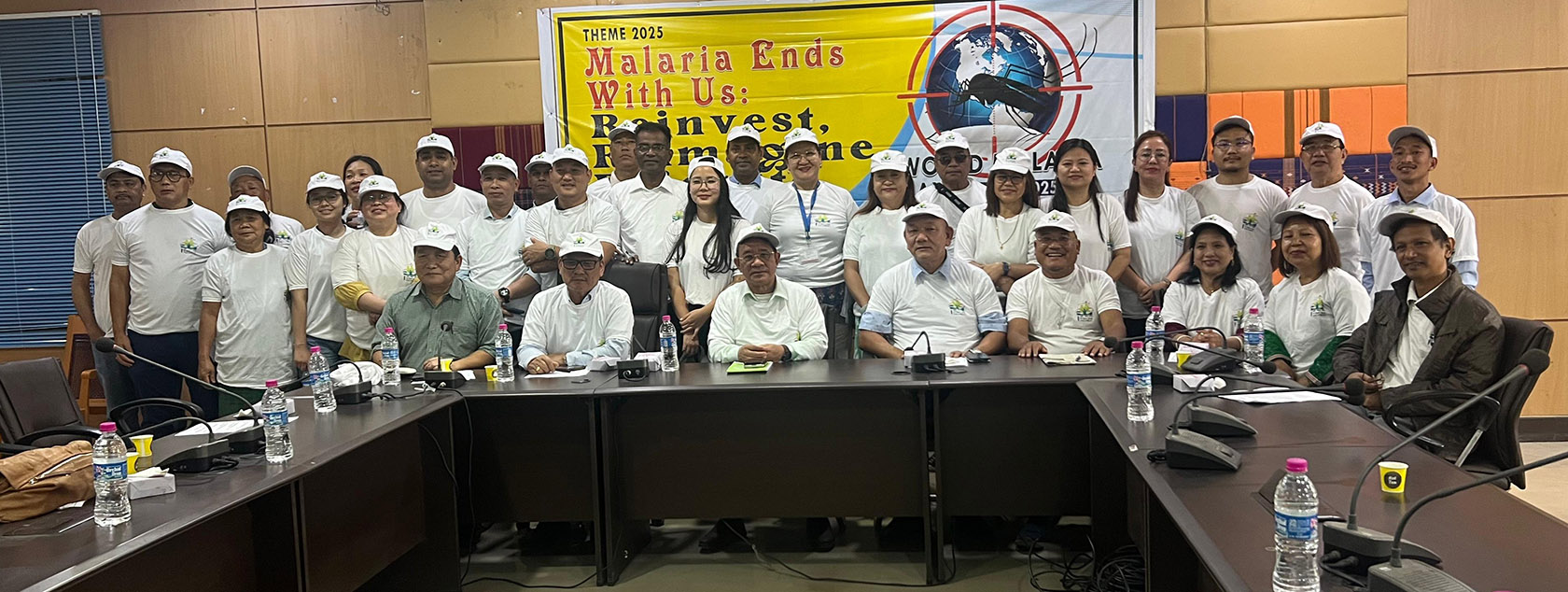
NAHARLAGUN, Apr 25: The National Centre for Vector Borne Disease Control (NCVBDC) under health services department of Arunachal Pradesh, observed World Malaria Day-2025 with a strong message: “Malaria eds with us: Reinvest, Reimagine, Reignite”.
The event organised in DHS conference hall here on Friday, highlighted major strides in fight against malaria in the state.
Health services deputy director-cum-NCVBDC state programme officer Dr K T Mulung, in his address, disclosed that 16 of state’s total 27 districts have been officially declared malaria-free.
“This achievement reflects relentless efforts of our health workers, field teams and community volunteers,” Dr Mulung said and announced the department’s commitment to make the state malaria-free by 2027.
The malaria-free districts are: Tawang, West Kameng, East Kameng, Pakke Kessang, Lower Subansiri, Kra Daadi, Kurung Kumey, Kamle, Upper Subansiri, Dibang Valley, Anjaw, East Siang, Siang, Namsai, Longding, Lower Siang and Lower Dibang Valley.
NCVBDC state IEC consultant Mum Lego, in his address earlier, stressed the importance of mass awareness and involvement of local people in malaria prevention while PSCM consultant Dr Gopi Basar also acknowledged contributions of all stakeholders in the achievement.
It was followed by health services director Dr Riken Rina administering pledge to all to continue sustained efforts to eradicate malaria from the region.
A short video was screened to showcase real-life impacts of anti-malaria initiatives across the state.
“Malaria has been a big challenge confronting humanity for four thousand years. Even at the time of independence, it was one of our biggest health challenges. Today, I can say with satisfaction that the countrymen have collectively, strongly fought this challenge,” Prime Minister Narendra Modi said in his message, wishing march towards a Malaria-Free India.
World Malaria Day is observed globally on April 25 each year, following its institution by World Health Organisation’s (WHO) member states during 2007 World Health Assembly.
This year’s theme calls for renewed global commitment to end malaria through innovation, collaboration, and sustained action.
Once among the world’s highest malaria-burdened countries, India has demonstrated remarkable progress through sustained political will, grassroots participation, and targeted interventions. A defining milestone came in 2024, when India exited the WHO’s High Burden to High Impact (HBHI) group, signaling a paradigm shift in the country’s malaria trajectory. Backed by National Framework for Malaria Elimination (2016–2030) and National Strategic Plan (2023–2027), India has aligned its strategy with global standards while tailoring solutions to local needs.
With an 80.5% reduction in malaria cases and 78.3% reduction in deaths between 2015 and 2023, and over 122 districts reporting zero cases in 2024, the country is advancing with renewed momentum towards achieving zero indigenous cases by 2027 and setting a global benchmark in public health elimination efforts. India reaffirms its steadfast commitment to eliminating malaria by 2030.


 20

