
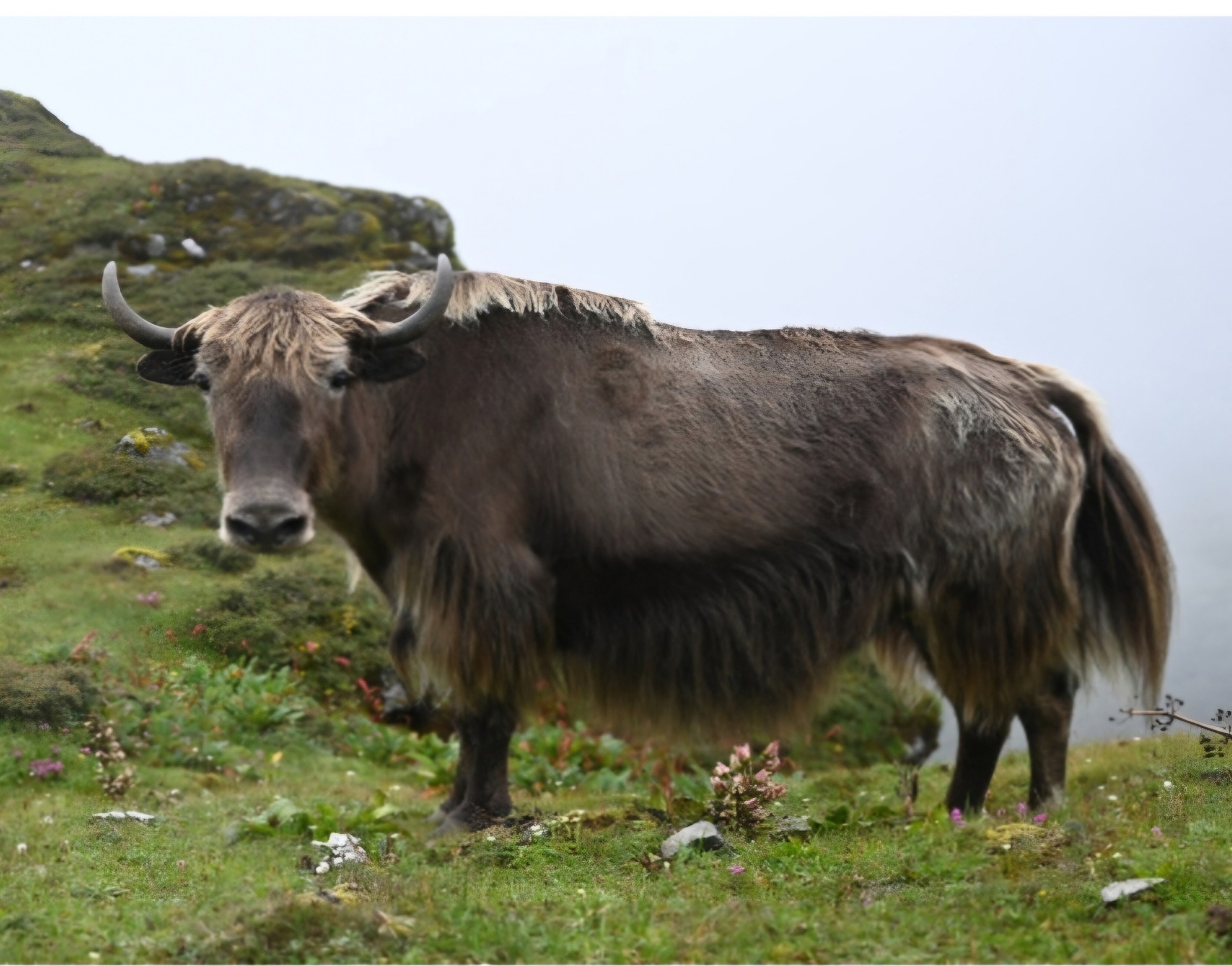
In a remarkable leap for yak genomic science, first ever chromosome-level genome of Indian yak (Bos grunniens) has been successfully assembled by collaborative effort of four ICAR institutions led by Dr. Martina Pukhrambam, Dr. Vijay Paul and Dirang-based ICAR-NRC on Yak director Dr. Mihir Sarkar.
The research teams led by directors Dr. Sujay Rakshit (Ranchi ICAR-IIAB), Dr. A.K.Mohanty (Meerut ICAR-CIRC), and Dr. Y.G. Prasad (Nagpur ICAR-CICR) with ICAR-NEH funding made a significant milestone that promises to revolutionize yak breeding, conservation and understanding of genetic complexities of this vital species and its ecological role in the Himalayan landscape.
Indian yak, an integral part of for earning livelihood of communities living in high-altitude regions who depend on it for meat, milk and transportation, has long been recognized for its resilience and adaptability to extreme conditions. Yaks in India are found in Ladakh, Sikkim, Arunachal Pradesh and Himachal Pradesh but their population faces numerous challenges, including reduced grazing area, climate change, disease and genetic erosion.
The research team utilized cutting-edge long read sequencing technology and bioinformatics tools to generate chromosome-level assembly which maps the genes to their specific locations on the chromosomes, offering a significantly clear and comprehensive picture.
“This collaboration showed a unique opportunity to utilize the budget earmarked for NE hills for devoting targeted development of commodities of importance for NE hills. Moreover, a comparative genomics study between other bovine species with generated data would open up allele mining for useful genes contributing to biotic and abiotic stresses and quality traits,” Dr Rakshit said, adding availability of a detailed genome is expected to benefit both scientific research and local livestock management practices.
“With this genome, we can better understand how to sustain yak population, which are critical to both biodiversity and rural economies in the Himalayas,” noted Dr Mohanty.
“This is a major breakthrough for yak research which calls for concerted efforts to translate these findings into practice, especially for conservation and sustainable development,” said Dr. Sarkar.
Stressing the significance of this achievement, lead scientist Dr. Pukhrambam said, “This resource will be invaluable for developing targeted breeding programs, identifying genetic markers for traits like cold tolerance, disease resistance and milk production with much greater precision, which will ensure the long-term sustainability of yak populations and ultimately leading to socio-economic uplift of yak herders”.
The findings are expected to have far-reaching implications for identifying and protecting genetically diverse yak populations, enhancing desirable traits like milk production and disease resistance, elucidating genetic mechanisms behind the yak’s unique adaptation to extreme environments and insights into the evolution and adaptation of other bovine species. The genome assembly has been made publicly available to the scientific community to foster collaboration and accelerate research on this unique animal.


 20