
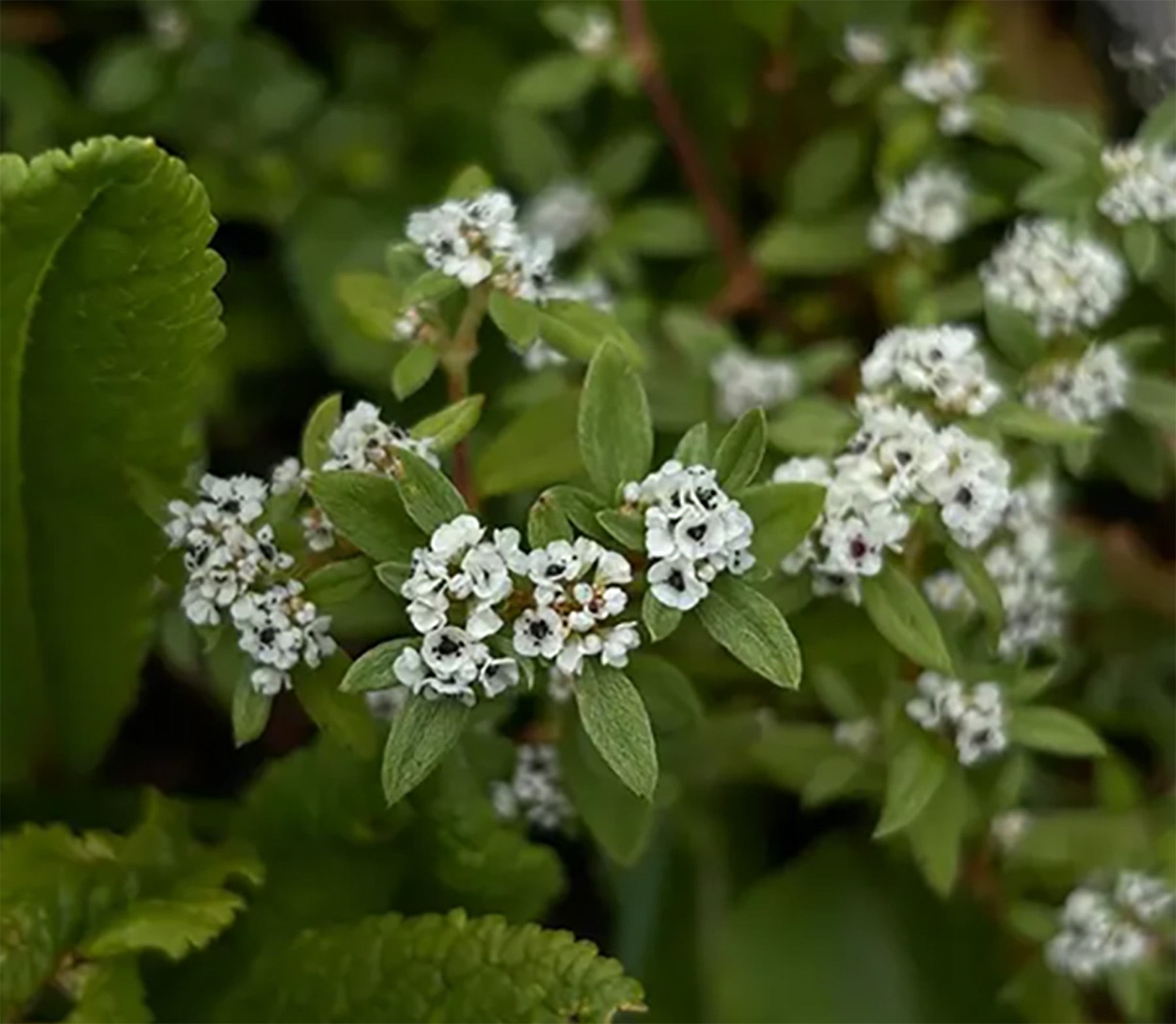
ITANAGAR, May 29: A team of researchers from Assam’s Jorhat-based North East Institute of Science and Technology (NEIST) has discovered a small herbaceous plant species belonging to the family Polygonaceae in Tawang district. It has been named after Arunachal Pradesh as Koenigia arunachalensis.
The study was led NEIST scientist Dr Pankaj Bharali, PhD scholar Bipankar Hajong and Dr Magnus Lidén of Uppsala-based Uppsala University’s Evolutionary Biology Centre (Systematic Biology) in Sweden.
The Koenigia members in this region are not well known and represent one of the poorly studied complex groups of Polygonaceae family. There may be additional taxa within this group that require further study, the team believes.
However, Koenigia arunachalensis is unique in being an erect herb with profusely hairy habit, lanceolate leaves, bipartite ochreas with long hairs on the outer surface, and many compactly packed terminal white flowers with dark purplish centre.
This new species is flowers in July to October. It is closely related to Koenigia nepalensis, but there are many distinguishing characteristics, like the larger and longer leaves, different ochrea shape and nature, large bract, a large number of flowers in the inflorescence, long pedicel, greater number of stamen, and absence of staminodes.
This new species is predominantly distributed in alpine habitats across Tawang district. The scientists have located the species in Potak, Chuna, Tsechu, Bum La, Nagulapaas, Se La and Bangajaan areas of the district so far.
It grows on open alpine stony slopes at an altitude of 3,650?4,300 metres above sea level, and is associated with other herbaceous species, such as Ligularia spp, Bistorta sp, Persicaria sp, Senecio sp, Meconopsis sp, etc.
As per the team, Koenigia arunachalensis is highly abundant in the study areas, with an estimated population of approximately 500 to 700 individuals in every spotted location. They have recorded the presence of this species in the Indo-Bhutan border to the Indo-Tibet border.
The species is preliminarily assigned as ‘data deficient’, following the IUCN (2022) guidelines. The discovery has been published in Nordic Journal of Botany, a journal of Nordic Society Oikos, Sweden.


 20

