
By A O News Service
ITANAGAR, MAY 30: Chief Minister Pema Khandu on Friday said a public hearing would be conducted once the pre-feasibility report (PFR) for proposed Siang Upper Multipurpose Hydropower Project (SUMP) is completed and said that consent of local residents would be key to the government’s decision on the project.
His comments come days after a meeting on the PFR for the contentious project in Upper Siang district spiraled into chaos on May 27 after villagers opposing the mega hydropower project stormed into the meeting and disrupted the proceedings.
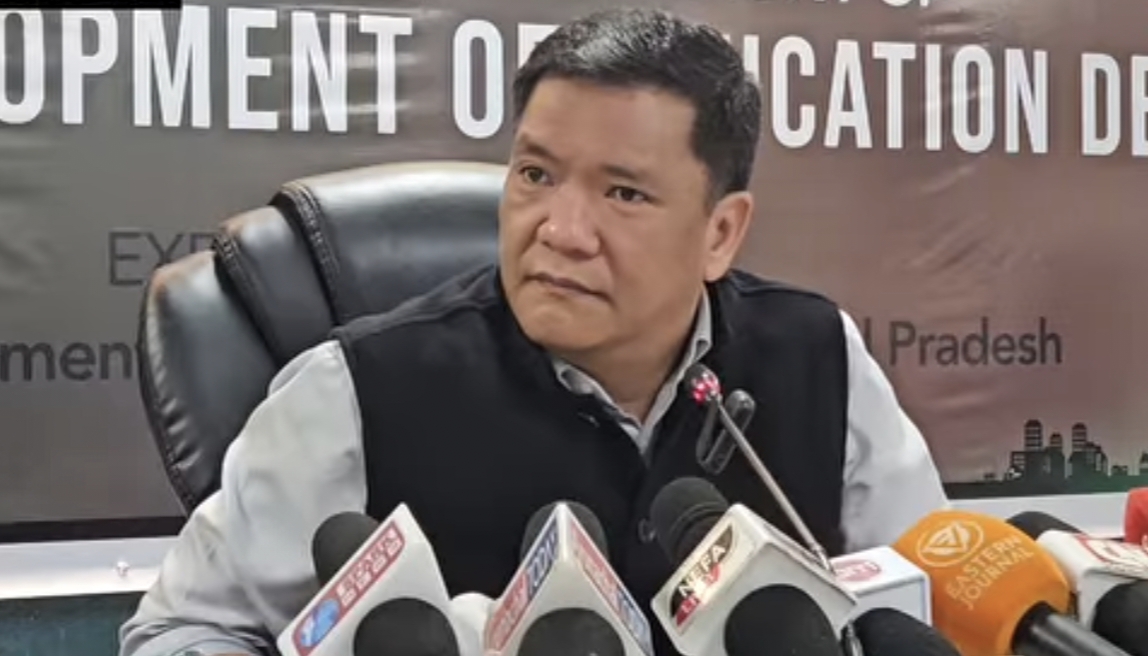
Khandu, while talking to media persons after laying foundation stones of infrastructure projects of education department, stressed that the PFR was a preliminary, non-intrusive assessment only focused on geological viability.
“Once the PFR is complete, we will hold a public hearing and only proceed based on the will of the people,” he said. The PFR, he noted, will identify the likely submergence areas, number of affected villages and necessary mitigation measures.
The project was of strategic value and was not just a project aimed at generating electricity, he said. “This is not just a hydropower project. It is a national security necessity.” He also hinted at China’s plans to build a 60,000-MW project near Indian border.
“China’s unilateral dam construction poses serious challenges to flow of Siang River. If they release excess water, it could trigger devastating floods in Arunachal Pradesh and Assam. Conversely, if they withhold water, the river could reduce to a narrow stream in winter,” he feared.
In December, China approved construction of world’s biggest hydropower dam on eastern rim of the ecologically fragile Tibetan plateau which had triggered concerns about its adverse impacts on millions downstream in India and Bangladesh.
China, not a signatory to the United Nations Watercourses Convention, is not legally obligated to share hydrological data or consult with downstream nations on transboundary rivers, he said, adding “In absence of a water-sharing treaty, we must act responsibly and construct necessary safeguards on our side.”
Drawing a comparison with the Indus Water Treaty between India and Pakistan, Khandu warned that during hostilities or national emergencies, such treaties may be suspended, leaving countries exposed. “We must prepare for all contingencies. Water security is as critical as national defence,” he added.
He also affirmed that both the GoAP and GoI are on the same view about the project. “Let the PFR be ready first. Only then will we comprehensively address all technical, environmental, and social aspects, including compensation and rehabilitation,” he said.
The SUMP has faced resistance from civil society groups. The Siang Indigenous Farmers Forum (SIFF), in particular, has been vocal against it, accusing the GoAP and local legislators of pushing the plan without adequate research or public consultation.


 20
