
By Pradeep Kumar
ITANAGAR, Aug 19: The people of India are powerful today because democracy is thriving at the grassroots level due to enactment of Panchayati Raj Act by 73rdAmendment to Indian Constitution in 1993, which established a three-tiered system of local self-government in rural India, known as Panchayati Raj Institutions (PRIs).
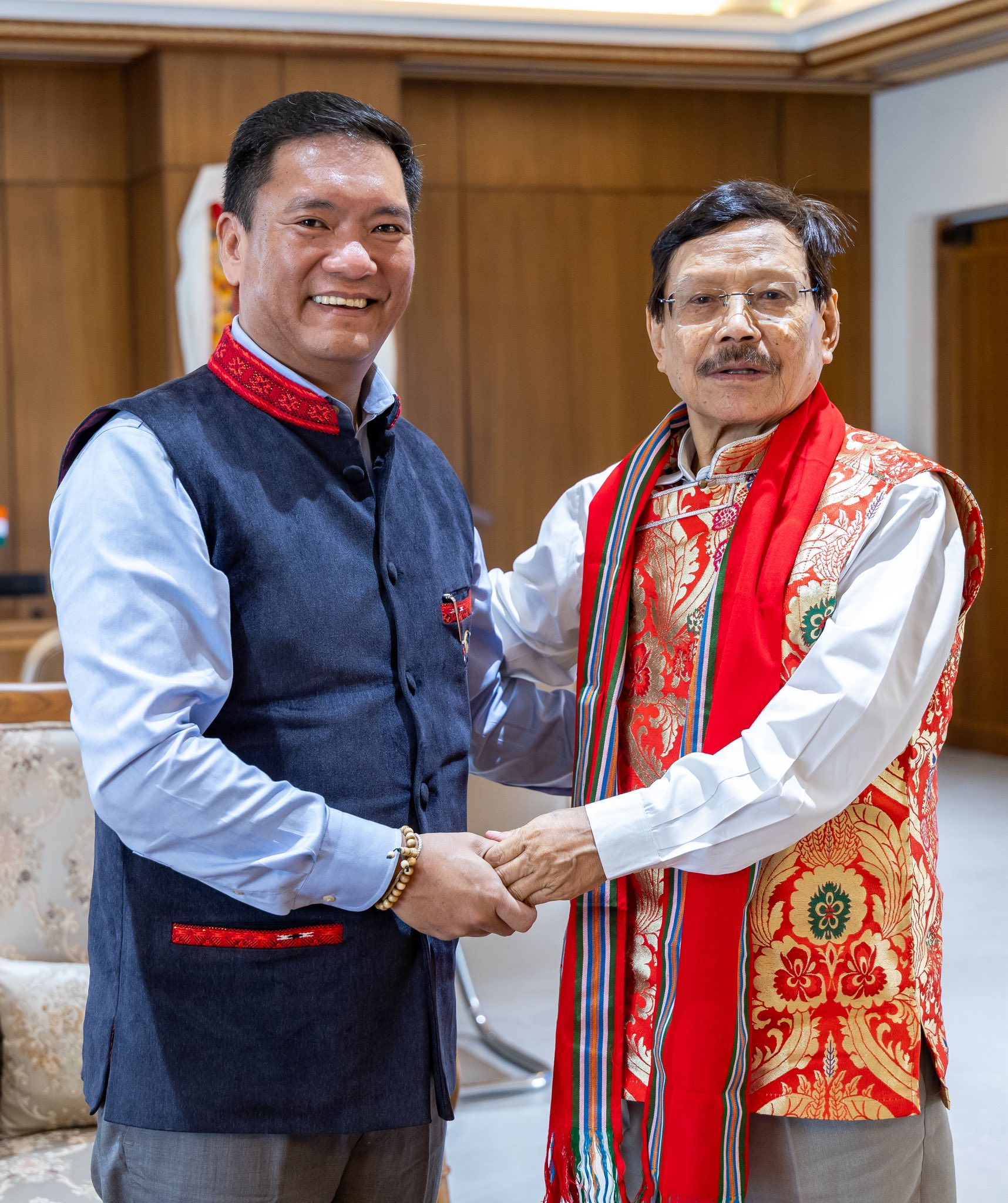
This Act, intended to decentralize power by involving local communities in the planning and execution of development programmes, has a calculated tactic of then Congress Govts in the Centre, said Arunachal’s septuagenarian politician Prem Khandu Thungon, who had. fathered the Act and enshrined it in the Constitution.
India’s first Prime Minister Jawaharlal Nehru had enshrined socialism and secularism to neutralize influence of USSR-China communism. The situation continued till PM Rajiv Gandhi (1984-89) when the Centre-State relationships then were such that it was felt that the Panchayati Raj plan clearly aimed at depriving the states of the power to manage their local bodies. Then Chief Ministers Karunanidhi, (Tamil Nadu) Jyoti Basu (West Bengal), Devi Lal (Haryana) and NT Rama Rao (Andhra Pradesh) made it clear to PM Rajiv Gandhi that this was an issue that required national consensus.
In 1984, PM Gandhi had called a meeting of Home Affairs Parliamentary Committee meeting to discuss the issue, where I as member had suggested to announce giving more power to the people through the panchayats, which was supported by all members. PM immediately announced a committee headed by me to study and submit a report.
“I was given a joint sectary and full-fledged office”, he told this editor in an exclusive interview today, adding, constitutional recognition for local government bodies. “P.K. Thungon Committee recommendation in 1989 had recommended a constitutional amendment to provide for periodic elections to local government institutions, and enlistment of appropriate functions to them along with funds.
Thungon, who served Arunachal Pradesh as first Chief Minister of NEFA (14.03.1978 to 06.09.1979), was elected uncontested from Arunachal West Lok Sabha seat in 1977 on a Congress ticket, and served as Deputy Minister for Supply and Rehabilitation (1980-1982) and Deputy Minister Education, Culture and Social Welfare (1982-1984) in Indira Gandhi ministry, MoS of Commerce and Industry (1991-1992), MoS of Heavy Industry and Public Enterprises (1992-1993), MoS of Urban Affairs and Employment (1993-1995) in P V Narasimha Rao ministry.
Though Prime Minister Rajiv Gandhi in 1989 had introduced the 64th Constitutional Amendment Bill in the Parliament to constitutionalize Panchayati Raj Institutions, it was not passed. It finally got passed under PM PV Narasimha Rao in 1992. As it was not rectified by state assemblies for its implementation, I as MoS UD (Panchayati Raj and Municipality) had drawn attention of Speaker Shivraj Patil as it was “breakdown of the Constitution and urged to direct states to rectify it within a given timeframe.
“I had also ensured strengthening municipality as elected urban bodies and proposed 50% reservation for women in PRI (which was revised to 33% later,” he recalled.
After the Speaker’s directive was notified, states were in hurry and about 90% state assemblies had passed ordinances to rectify it for lack of time to hold assembly session.
Democracy is thriving at the grassroots level in India now for which the credit undoubtedly goes to Thungon, who had again raised PRI issue during National Development Council meeting, chaired by PM Gandhi, which had evoked massive support from participating state CMs.
‘Arunachal and APLA growth highly Impressive’
Thungon, who was invited to address Arunachal Pradesh Legislative Assembly (APLA) during its Golden Jubilee celebrations here, said, “I am extremely happy to see the robust growth of APLA, one of the best buildings in India, which I originally had built in 1974 as an Assam-type structure near present Rajiv Gandhi Stadium at Naharlagun with the help of Assam Assembly expert Handique.”
“My happiness is also because I never expected to be alive to see this day, including this majestic stricture and on 50-year political journey, it is long history. Two/three generations of MLAs have been elected leaders. My colleague’s son is MLA/minister and another a Union Cabinet minister now (Kiren Rijiju). Present Chief Minister Pema Khandu is doing exceptionally good for the prosperity of the state. What more progress could be expected,” he wondered.
“We are happy which does not mean should remain silent. Time good or bad poses challenges. We should be always ready to face and tackle them,” Thungon said.
On 21.01.1972, North-East Frontier Agency (NEFA) rechristened as Arunachal Pradesh, became Union Territory and placed under charge of chief commissioner K A A Raja. NEFA with Agency Council having five members continued to function at Shillong till 1974. The turning point came when its political HQs was transferred from Shillong to Itanagar in 1974 and Chief Councilor Prem Khandu Thungon as in-charge of CPWD was instrumental in developing the temporary capital at Naharlagun and the assembly building,
The NEFA, converted to a Provincial Legislative Assembly on 15.08.1975, graduated to parliamentary democracy with installation of Thungon-led Janata Party Govt. on 14.03.1978, youngest chief minister at the age of 29 after the first general election to the 30-member house of the union territory conducted on 25.02.1978. Thungon ministry had collapsed on 06.09.1979. United People’s Party of Arunachal (UPPA) formed the ministry headed by Tomo Riba on 18.09.1979, but lasted only for 44 days because of re-defection. This saw seeds of “turncoat politics” in the state, Thungon admitted without mincing any words.


 20

