
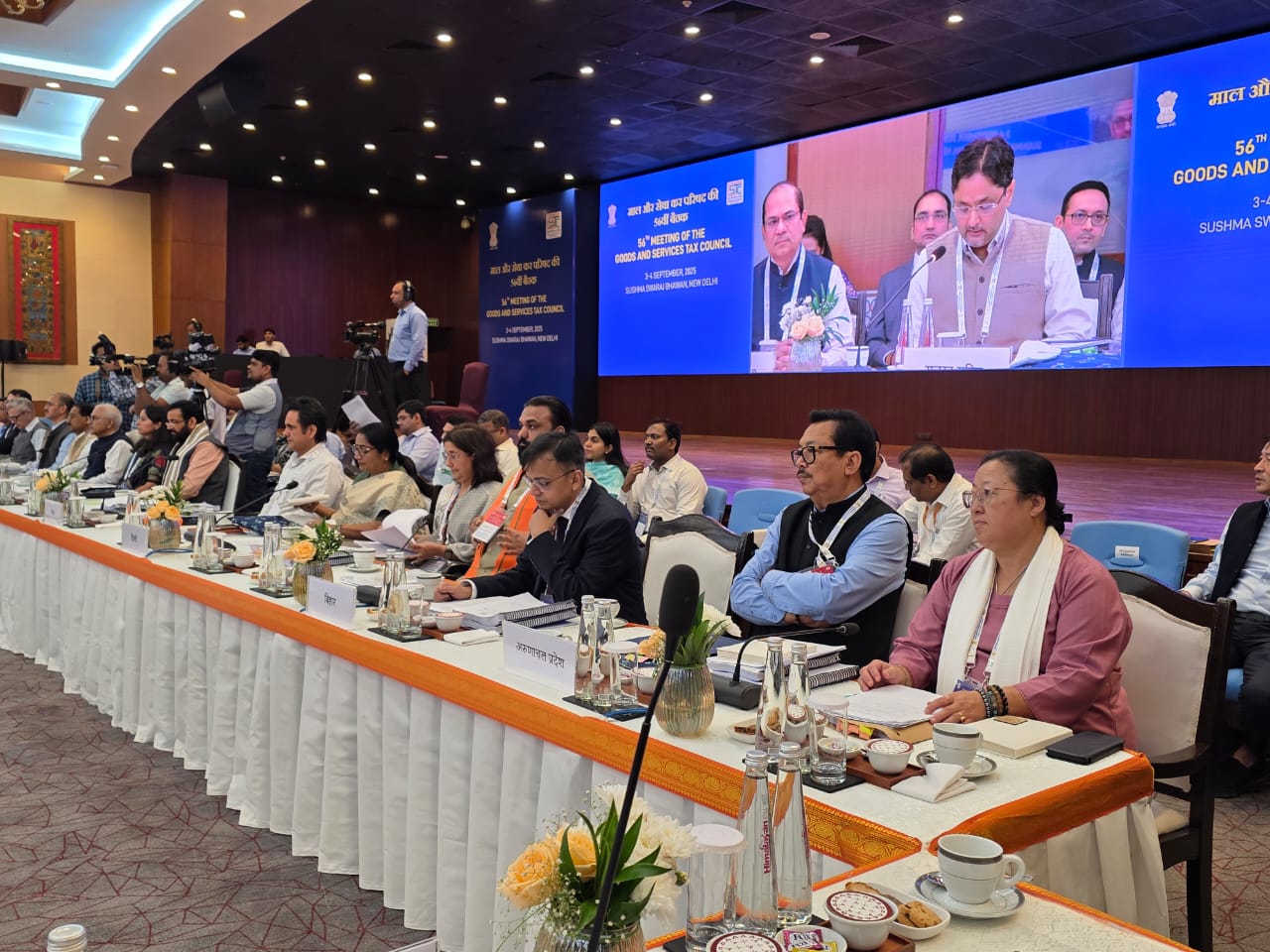
NEW DELHI, Sept 04: Arunachal Pradesh Deputy Chief Minister Chowna Mein, attended 56thGST Council meeting, chaired by Union Finance Minister Nirmala Sitharaman, here on Wednesday.
The meeting deliberated on India’s next-generation GST reforms, with a focus on rationalisation of tax rates, simplification of compliance and correction of inverted duty structures.
Briefing the media after the meeting, Sitharaman announced that the GoI has reduced GST on several items across different categories with the new rates coming into effect from September 22.
For households and common citizens: GST on everyday items such as hair oil, toilet soap, soap bars, shampoos, toothbrushes, toothpaste, bicycles, tableware, kitchenware, and other household articles reduced from 12% or 18% to 5%.
GST on ultra-high temperature milk, chena, paneer reduced from 5% to nil.
GST on food items including namkeen, bhujia, sauces, pasta, instant noodles, chocolates, coffee, preserved meat, cornflakes, butter, and ghee reduced from 12% or 18% to 5%.
GST on items like air-conditioning machines, televisions above 32 inches, all types of TVs, and dishwashing machines reduced from 28% to 18%.
GST on all agricultural equipment reduced from 12% to 5%.
GST on small cars and motorcycles up to 350 cc reduced from 28% to 18%.
GST on buses, trucks, and ambulances reduced from 28% to 18%.
GST on three-wheelers reduced from 28% to 18%.& uniform GST rate of 18% on all auto parts.
GST on 33 life-saving drugs and medicines reduced from 12% to nil.
GST reduced from 5% to nil on 3 critical life-saving drugs used in treatment of cancer, rare diseases, and other severe chronic diseases.
GST reduced from 12% to 5% on several other drugs and medicines.
Exemption of GST on all individual life insurance policies, whether term life, ULIP, or endowment policies, along with reinsurance.
Exemption of GST on all individual health insurance policies, including family floater policies and policies for senior citizens, along with reinsurance.
She underlined that these wide-ranging measures, strongly supported by labour-intensive industries and welcomed by the farming and agriculture sector, are designed to ease the burden on citizens while strengthening the overall economy.
She said that Prime Minister Narendra Modi has set the tone for next-generation tax reforms, ensuring that people receive benefits at the earliest. The government has also corrected inverted duty structure issues, resolved classification-related matters, and worked towards greater stability and predictability in the GST regime.
The meeting was attended by Union MoS (Finance) Pankaj Chaudhary, Delhi, Goa, Haryana, Jammu & Kashmir, Meghalaya and Odisha chief ministers; Bihar, Madhya Pradesh& Telangana DCMs, Manipur governor and Finance Ministers of several states and UTs along with senior officials.
Mein, speaking on the sidelines of the meeting, expressed satisfaction with the outcomes and said, “The decisions reflected the GoI’s strong commitment to ease of living for citizens, ease of doing business for enterprises, and long-term growth for the economy. These reforms will benefit farmers, MSMEs, the middle class, women, and youth alike. Arunachal Pradesh will continue to play a proactive role in ensuring that these benefits reach every section of society.”
The meeting was a landmark step in India’s economic journey bringing it closer to a transparent, simplified and growth-oriented indirect taxation system aligned with Viksit Bharat vision, according to an official release.


 20
