
- GoAP needs to name Religious Routes
Beyond the Horizon
By Pradeep Kumar
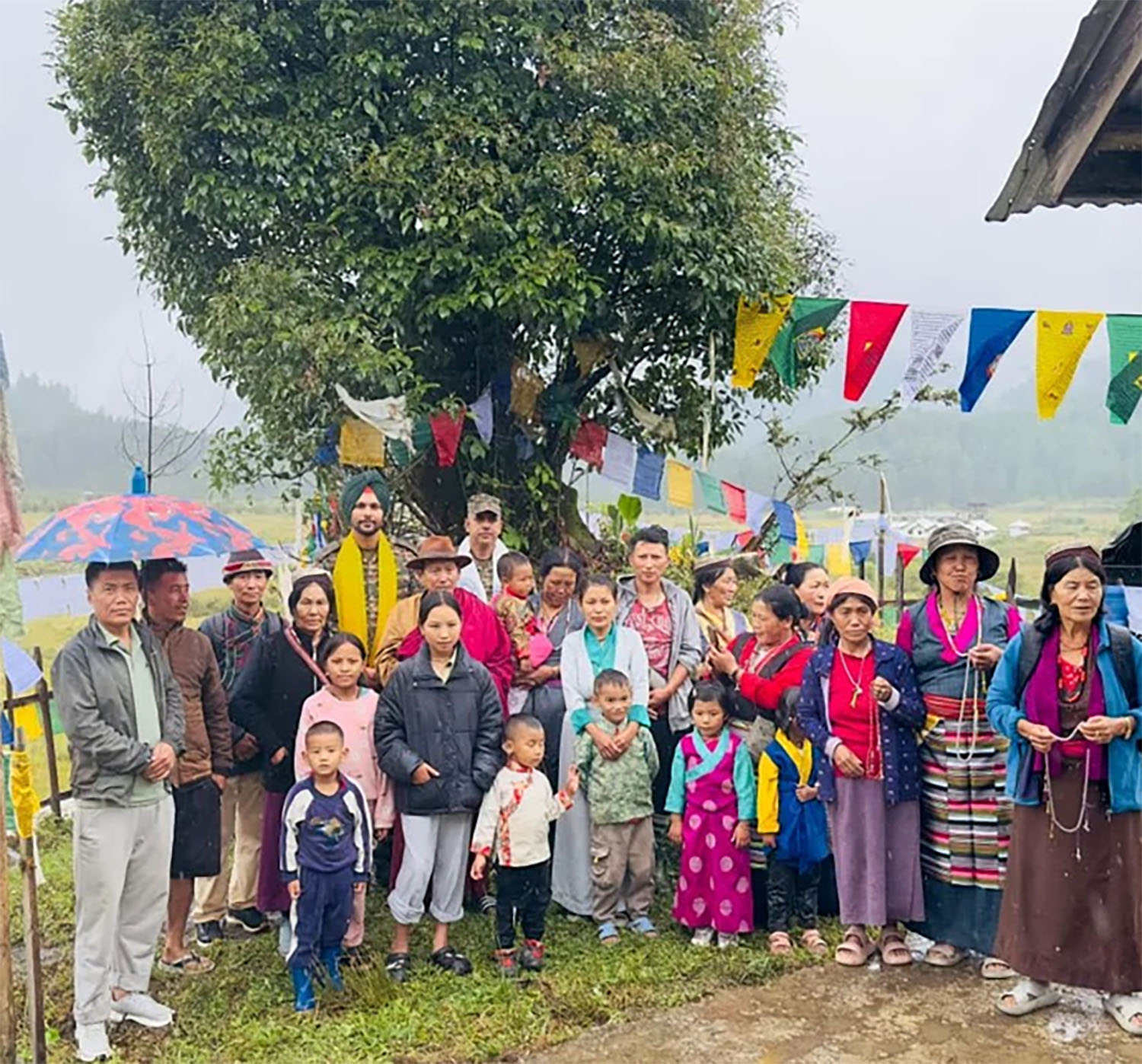
It is shocking and suppressing that after 40 years I came to know about500-year-old Chandan tree in Lhalung village in Menchuka Valley of Shi-Yomi district where worship is conducted by large number of devotees annually with cultural and religious fervor, facilitated by Indian Army.
I personally knew Mechukha lawmakers late Tadik Chije and late Pasang Wangchuk Sona (formers), Passang Dorjee Sona (present) and my student Sanjoy Mosing. But none of them even mentioned about the Chandan tree as they either never judged its environmental value or ignorant about its age.
Thanks to Guwahati-based defence PRO Lt Col Mahendra Rawat for bringing it to limelight to justify my repeated pleas to the GoAP for a scientific survey of this Himalayan state, one of the 12 biodiversity hotspots of the world.
Arunachal Pradesh has 12 distinct tourist circuits identified by the North Eastern Council, each offering unique cultural and geographical experiences. These circuits provide planned routes for travelers, connecting popular destinations and attractions across the state.
Over 550-years-old Thimmamma Marrimanu, world’s largest Banyan tree, dep in Kadiri village of Andhra Pradesh, stands apart not just a botanical wonder but also a cultural icon. This tree’s vast canopy spreads over 19,107 square metres, almost four football fields combined is asymbol of strength and survival.
In 1989, the Guinness Book of World Records recognised it. The tree’s unique growth pattern helps it expand continuously. Aerial roots descend from branches, creating new trunks. This allows it to spread laterally without losing strength. It has survived cyclones and harsh weather and its continuous growth shows its adaptability and resilience. Located between two mountains, it stands as a living monument. Whether seen as a spiritual site or scientific marvel, it remains awe-inspiring. Its presence invites reflection on nature’s wonders and human beliefs.
Unlike the towering General Sherman Tree in California, this tree grows wide, not tall. Its interwoven network of roots makes it look like a forest. Its ability to survive extreme conditions makes it a symbol of endurance.
Myths, history and ecology: It is named after a local woman Thimmamma. Legend says she committed sati on her husband’s funeral pyre. The tree is believed to have sprouted from that spot. This site attracts thousands of visitors every year. Many believe it grants fertility blessings to childless couples. Others say removing its leaves invites misfortune.
If Thimmamma Marrimanu attracts thousands of visitors every year, it is high time for the GoAP to give a new dimension to vast tourism sector as the state is a divine land.
I propose religious circuits:1) Dong (Anjaw district which receives first ray of Sun), 2) Parshuram Kund in Lohit River (Lohit district) where Lord Parshuram (Rama with an axe), 6th incarnation of God Vishnu born in Treta Yuga (2,163,102 BCE to 867,102 BCE), had taken a dip to get rid of his matricide sin. Renowned for his unparalleled martial prowess, he had served as guru of Bhisma, Drona, Rukmi and Karna of Mahabharata. One of the immortals, he will appear at the end of present Kaly Yuga to be the guru of Vishnu’s last and 10th incarnation Kalki,
3) Bhismak Nagar (Lower Dibang Valley district), ancient archaeological site of Bhismaknagar Fort, from where Lord Krishna, 8th incarnation of God Vishnu, to explain philosophy of life through Bhagavad Gita during Mahabarata War, (3228 BCE-3102 BCE, Dvapara Yuga), had eloped with his principal consort Bhismaka princess Rukmini;
4)Tawang Monastery, where colossal and gilded statue of Lord Buddha is seated in a meditating posture, holding a lotus throne and flanked by his attendants. This magnificent, 25-foot-high statue is a central feature of the monastery, largest monastery in India & 2nd largest in Asia, built (in 1680-1681) by Merak Lama Lodre Gyatso as wished by 5th Dalai Lama Ngawang Lobsang Gyatso. Belonging to Gelu school of Vajrayana Buddhism having a religious association with Lhasa’s Drepung Monastery during the British rule.
Lord Buddha, originally Prince Siddhartha Gautama, was born a prince in Lumbini, Nepal around 563 BCE. After a sheltered life, he encountered suffering through the “Four Sights” (old age, sickness, death and an ascetic), leading him to renounce his princely life at 29 to seek enlightenment. He meditated under a Bodhi Tree, realizing that self-mortification was not the path to freedom. He then followed a “Middle Path,” practicing moderation and meditation, and eventually achieved enlightenment at age 35. As the Buddha (the awakened one), he founded Buddhism and spent the rest of his life teaching the Eightfold Path to end suffering, He died at 80 in Kushinagar.
5) Golden Pagoda of Namsai or Kongmu Kham (in Tai-Khamti language), built in Burmese architectural design and style in a complex spread over 20 hectares of land where a 5-foot glided statue of Lord Buddha statue in a meditating pose, is donated by Thailand. Wat Aranjikavas temple Chief monk Ven Prakhu Pabhavana. Founded by veteran politician, philanthropist, educationist and entrepreneur Chowna Mein and his wife Sati Mein, it was consecrated in February 2010 with participation of over 10,000 devotees from within and outside India.
The Golden Pagoda complex houses a spacious shrine hall, a meditation hall, a multipurpose hall, a guest house, a library, a monastery to accommodate around 100 Bhikkhus and living quarters for the monks and novices. Within the complex there is an old age home as well as a dispensary for treatment of local people for free of cost. New cottages have been built for visiting tourists.
6) Tserteng Gompa, Over 700-year-old located, in Lumpo village of Zemithang circle of Tawang district, whose 15-feet tall statue of Lord Jowa (other name of Lord Buddha) made up of brass with gold coat all over bore the brunt of 1962 Chinese aggression. A bullet shot by a Chinese soldier had hit the statue’s chin, failed to pierce it but hit the rock wall during 1962 Chinese aggression. The soldier had fainted inside the Gonpa premises while others had fled away;
6) Buddhist monastery at Motongsa or Kongmu, located in inaccessible jungle along Jairampur-Pagsau Pass route in ‘Patkai Bum’ ranges near Myanmar border,
Emperor Ashoka after victory in Kalinga war in 261 BCE had embraced Buddhism to turn Dhramasoka from Chandasoka and his children Mahendra and Sanghamitra to propagate Buddhism across SE Asia, including Sri Lankd and returned through. Motongsa, also known as Kongmu located in inaccessible jungle along the Jairampur-Pagsau Pass route bordering Myanmar gives evidences of the spread of Buddhism. A huge stone slab with stone engraving and serenity justifies the divinity and importance of the pilgrimage. Buddhist monks from far and wide reach the place of pilgrimage by trekking on foot for two to three days. They worship and mediate there for days together and take shelter in the ‘staging hut’ built by former Speaker late Setong Sena.
The ‘Land of the Rising Sun’ is a shining example of peaceful coexistence where tourism will flourish in times to come, benefiting India in general and Arunachal in particular.
The Centre’s‘Cultural and World Heritage Sites of India’ campaign, including ‘Come to India and walk with the Buddha’ launched during 2004-05 to capture the predominantly tourism markets in South East Asian and East Asian regions in the domestic market to promote cultural tourism and worldwide publicity campaign on India’s cultural heritage including Buddhist heritage through official websites in India and abroad.
Arunachal, strategically positioned between Sarnath in Bihar, Lhasa in Tibet, Fulsiling in Bhutan and SE Asian countries, could be the hub of Buddhist tourism in India, if its potentials are tapped. The sacred regions of Pemako in Upper Siang district, the Tsari area of Upper Subansiri district and Motongsa under Nampong circle of Changlang district are of immense importance for the Buddhists.
The Buddhist belt of Tawang boasts of many a monasteries and stupas, but Gorsam Chorten (stupa) occupies a special place as it is entry-less and opens once in every 12 years for the believers to pay their obeisance.
The Khathing festival, the Shanken festival or the water festival are occasions reflecting the great traditions of the Buddhists. 84,000 candles symbolizing the same number of stupas built by Ashoka during his lifetime are lighted during the festivals for world peace.
Moreover, Lathao had witnessed first ever 308-hour nonstop chanting of the Tripitakas (Suttra, Vinaya and Abidhama) in October 2016. Such a chanting was organized privately for the first time after King Ashoka did so ages ago.


 20
