
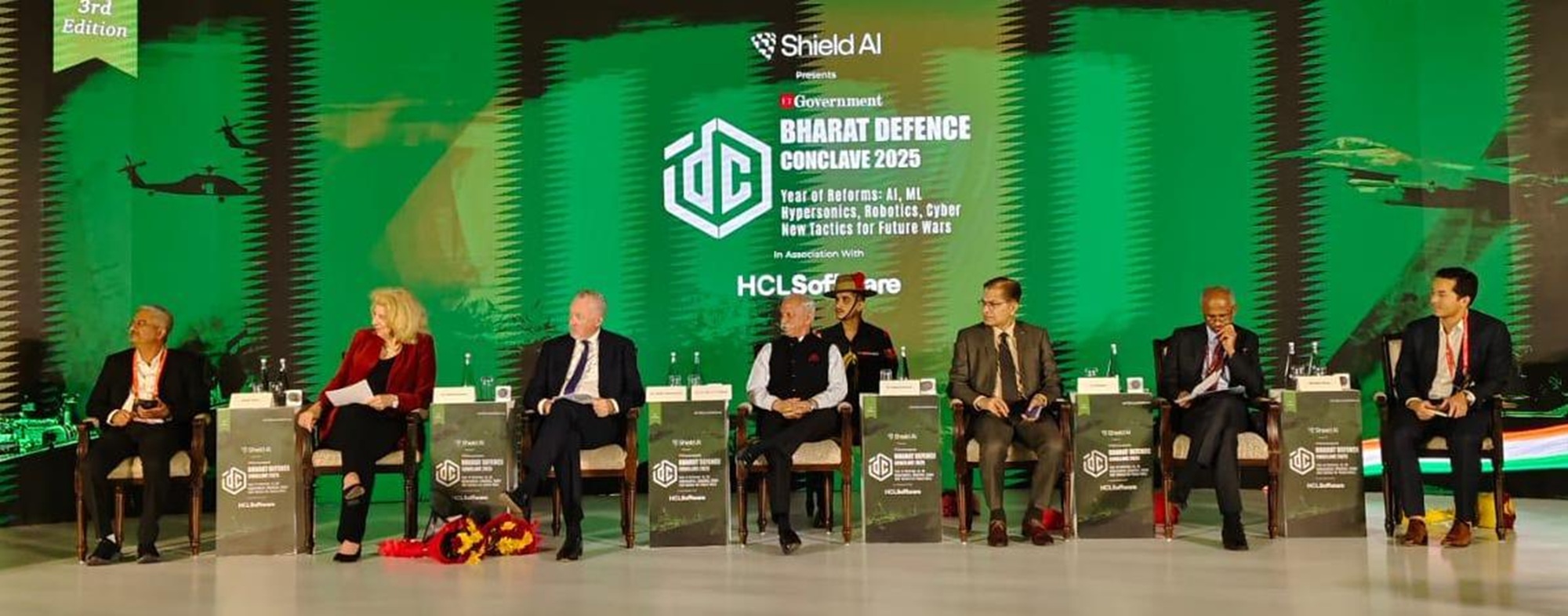
NEW DELHI, Sept 25: Arunachal Pradesh Governor Lt. General (Retd) K.T. Parnaik, in his keynote address to inaugural session of 3rd edition of Bharat Defence Conclave, here on Thursday, spoke on ‘Emerging technologies, transforming geopolitics and new tactics for future warfare’.
Nation in their security interst are increasingly entering into treaties and alliances while simultaneously enhancing their defence capabilities to create deterrence and avoid conflict, he said as chief guest.
India’s foreign policy evolving from non-alignment to multi-alignment, alliances are now chosen strictly based on national interests rather than external influences, he said adding that wars would continue despite peaceful mechanisms of dispute resolution, often arising from ideological differences, competition for resources or quest for power.
However, the nature of warfare is undergoing a profound transformation, driven by rapid advancements in complementary and disruptive technologies, he noted.
Reiterating Prime Minister Narendra Modi’s vision of Viksit Bharat@2047, anchored on economic resurgence, aatmanirbharta, defence reforms, technological innovation and national security, he gave a detailed overview of ongoing military reforms.
He spoke on changing face of warfare, revolutionary, cognitive technologies and importance of strengthening military aatmanirbharta through the GoI’s indigenous initiatives.
Drawing on his rich experience as a former Army commander, he shared insights on border management challenges, security imperatives and national development. Hehighlighted border area development through critical initiatives, like border fencing, Bharatmala Pariyojana, termination of Free Movement Regime, maritime surveillance under Sagarmala Pariyojana and Border Area Development Programme.
Particular emphasis has been given to Vibrant Villages Programme (VVP), a centrally sponsored scheme, targeting northern borders of Himachal Pradesh, Uttarakhand, Sikkim, Arunachal Pradesh and Ladakh, he said.
The VVP is not only accelerating infrastructure, education, health, communication and housing in sensitive border areas, but also reversing migration trends. The communities choosing to remain in their villages would serve as “eyes and ears” against external threat to the he reasoned.
Referring to bonhomie between civil administration and armed forces in border areas, he noted that local villagers, farmers and entrepreneurs are supplying fresh vegetable and ration items to the armed forces and the military in turn mentoing youth for careers in sainik schools, Armed and paramilitary forces besides encouraging sports, conducting medical and veterinary camps and supporting community initiatives.
Recalling his tenure as commander of Northern Command, he praised the Indian Armed Forces as one of the finest professional forces in the world. Highlighting their unmatched experience in combating terrorism, insurgencies and radicalization, while serving as first responders during natural or man-made disasters, they are contributing to UN Peacekeeping Missions. The Indian armed forces are among the strongest pillars of nation building, he said.
Ambassador of the Netherlands to India Marisa Gerards, Ambassador of Belgium to India Didier Vanderhasselt, Ministry of DefenceDirector General (Acquisition) A. Anbarasu, Secretary (Defence Production) Sanjeev Kumar and Secretary (Border Management) Dr. Rajendra Kumar also addressed the inaugural session. (PRO)


 20
