

ITANAGAR, Oct 23:As Arunachal Pradesh Freedom of Religion Act (APFRA), 1978 caught in a quagmire between the state Govt and indigenous faith believers, led by Indigenous Faith and Cultural Society of Arunachal Pradesh (IFCSAP), for inordinate delay in framing rules of the Act, IFCSAP President Dr. Emi Rumi has confirmed that the Act is active and enforceable.
The Act was legislated by first chief minister P K Thungon in 1978 aimed at preventing conversion forcefully or by allurement.
Addressing huge number of rallyists here on October 18, Dr. Rumi had clarified that though the rules of the Act are yet to be framed as directed by Gauhati High Court, the legislation itself continues to be in force, enabling citizens to lodge complaints under its provisions.
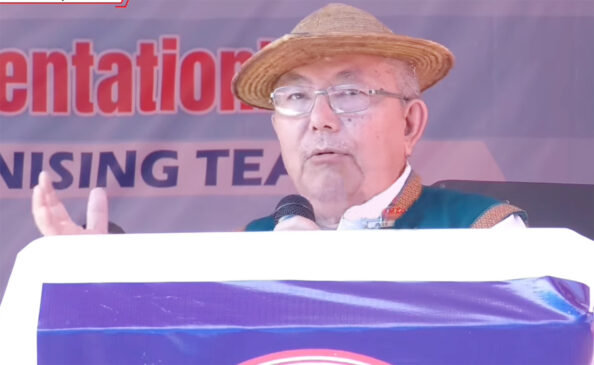
Over 10,000 indigenous faith believers from Tawang to Longding took out a mega rally, organised by IFCSAP, to register strong resentment over the delay and urged the GoAP to fulfil its constitutional and judicial obligations.
The Gauhati High Court, disposing of a public interest litigation (PIL) filed in September 2024, had directed the GoAP to frame rules of (APFRA, 1978 within six months by March 31 last. Despite repeated submissions of memoranda by the IFCSAP, the rules were not framed.
State’s first IAS officer-cum-former chief secretary Tabom Bam had earlier verified active status of the Act, Dr. Rumi recalled.
During his tenure as Tirap DC, Bam had reportedly invoked APFRA, 1978 provisions to deny Inner Line Permit to TezpurBishop, who was allegedly then planning a mass conversion event in the region.
Reiterating the importance of safeguarding the indigenous faith and cultural ethos of the state, Dr. Rumi said the Act continues to serve as a legal instrument against forced or induced religious conversions.
The IFCSAP would continue to advocate for implementation of the Act in toto, including formation of its rules to ensure greater clarity in enforcement, he added.
Donyi-Poloism, followed by large number of Arunachalees, a religion that makes no distinction, is more relevant in present-day context as its believers pray for the greater welfare of the entire humanity while practicing the much-needed tolerance towards other cultures.
“Culture is our identity and if it is lost, our identity is lost,” they reemphasizeto drive home the message that indigenous faith is the mother of all religions as has been proved across the world.
Indigenous faiths and cultures are universal cultures. Mayans, who are nature worshipers like the Arunchalees, believe that the Eagle (representing materialism) of the North and Condor (representing spiritualism) of the South would fly in the same sky, symbolizing the much-desired balance. The conference ‘Return of the Ancestors’ belonging to all indigenous faiths, organized at Arizona annually since 2007, is the right step towards the goal,


 20
